
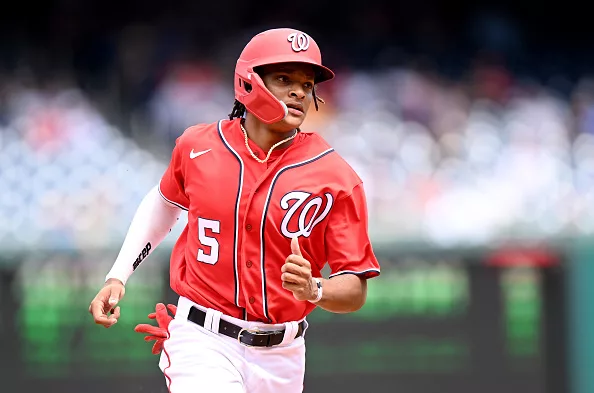
There’s no more projection needed with CJ Abrams—no more waiting, no more “if it clicks.” It already has. The former centerpiece of the Juan Soto trade is no longer just a return asset for the Washington Nationals—he’s become the identity of the franchise.
Acquired from the San Diego Padres in 2022, Abrams has steadily evolved, and in 2026, he’s putting it all together in a way that demands attention across the league.
A True Breakout—Not a Mirage
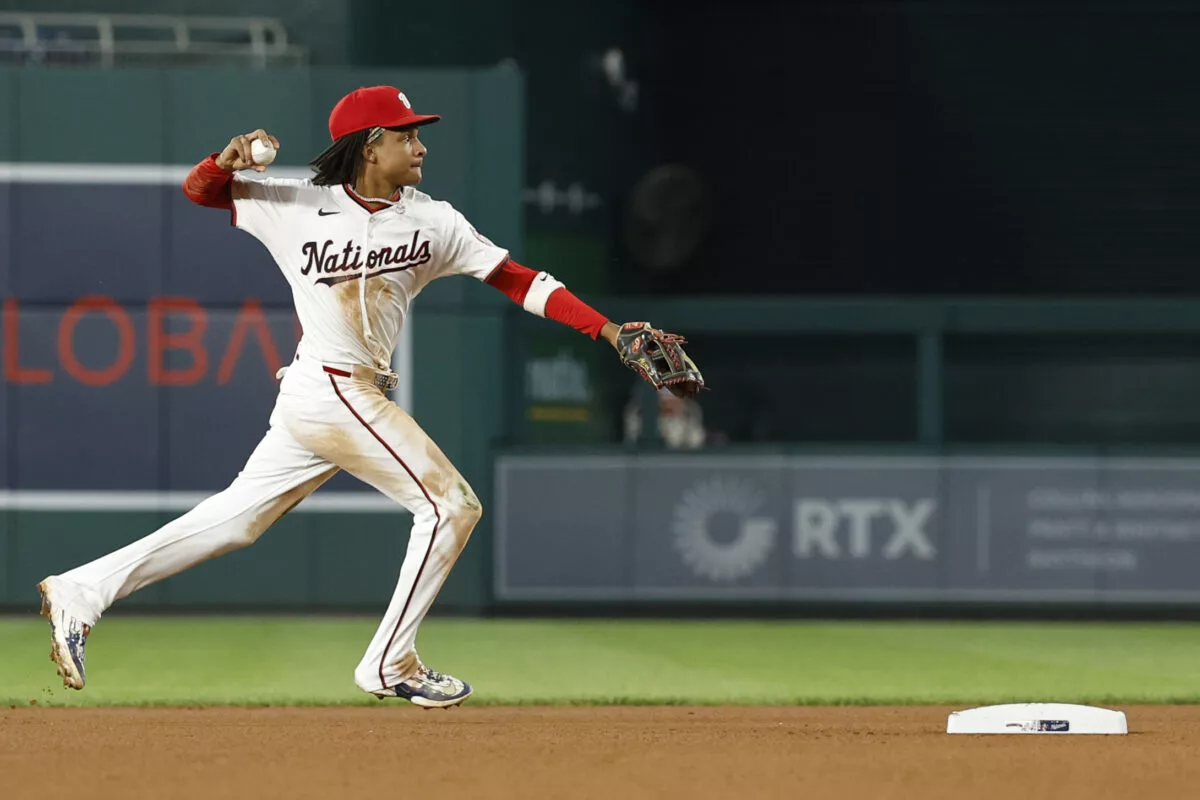 Sep 12, 2024; Washington, District of Columbia, USA; Washington Nationals shortstop CJ Abrams (5) makes a throw to first base after fielding a ground ball by Miami Marlins outfielder Cristian Pache (not pictured) during the fourth inning at Nationals Park. Mandatory Credit: Geoff Burke-Imagn Images
Abrams’ 2026 season reflects a player who has made the leap from exciting talent to legitimate star. His offensive profile is more complete than ever: improved plate discipline, consistent hard contact, and the ability to impact games both with power and speed.
He’s no longer chasing pitches at the same rate that defined his early MLB struggles. Instead, he’s working counts, taking walks, and forcing pitchers into mistakes. When they do miss, Abrams is punishing them—driving the ball into gaps and over fences.
On the bases, he remains one of the most dangerous runners in baseball, combining elite speed with sharp instincts. Defensively, his growth has been just as important. What was once considered a question mark is now trending toward a strength, with smoother mechanics and improved decision-making at shortstop.
This isn’t a hot streak—it’s a transformation.
Where the Nationals Stand
The Washington Nationals are still navigating a rebuild, and their sub-.500 record reflects a roster that’s not quite ready to contend. The NL East remains one of baseball’s toughest divisions, with the Atlanta Braves and Philadelphia Philliescontinuing to set the pace.
Washington’s playoff odds in 2026 are slim. There simply isn’t enough pitching depth or lineup consistency behind Abrams to sustain a serious run.
But Abrams’ emergence changes the conversation. The Nationals aren’t just rebuilding anymore—they’re identifying their core.
The Contract Clock: Why Timing Matters
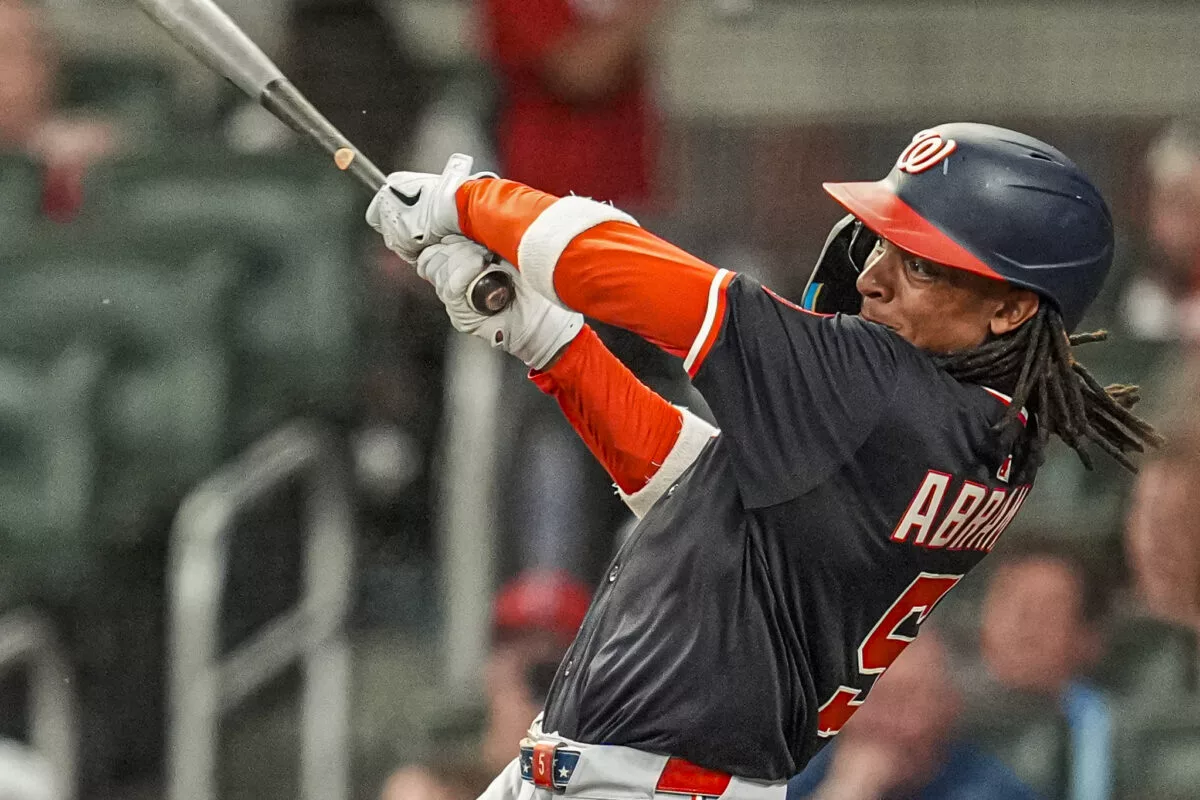 Sep 23, 2025; Cumberland, Georgia, USA; Washington Nationals shortstop CJ Abrams (5) hits a single to drive in a run against the Atlanta Braves during the third inning at Truist Park. Mandatory Credit: Dale Zanine-Imagn Images
Here’s where the decision becomes urgent.
Abrams is under team control through the 2028 season, meaning he is set to hit free agency ahead of 2029 (barring any extension). That gives Washington a clear but limited window—roughly 2–3 more seasons after 2026—to either:
Build a contender around him
Extend him long-term
Or trade him before he reaches peak market leverage
This timeline is everything.
If the Nationals wait too long and fall out of contention, Abrams’ value could still be high—but not as high as it is now with multiple years of control remaining.
Build Around Him or Cash In?
There are two very real paths here.
Option 1: Build Around Abrams
This is the cleaner, more optimistic route. Abrams is exactly the type of player you hope to develop during a rebuild—dynamic, marketable, and entering his prime.
If Washington believes its young pitching and positional prospects will mature quickly, then keeping Abrams is the obvious move. Pair him with emerging talent, spend strategically, and aim for contention before his contract expires.
The bonus? Abrams becomes the face of the franchise—something the Nationals have lacked since the Soto era ended.
Option 2: Trade at Peak Value
This is the colder, more calculated strategy.
Because Abrams is performing at an All-Star level and still has multiple years of team control, his trade value would be enormous. A contender in need of a franchise shortstop could offer a package that includes elite prospects and MLB-ready contributors.
But make no mistake: trading Abrams would signal a longer rebuild. It would mean resetting the timeline yet again—and that comes with risk, both competitively and from a fan engagement standpoint.
The Right Move Isn’t Complicated
Unless the Nationals are blown away by an offer, the answer is simple: you keep CJ Abrams and build around him.
Players like this are not easy to replace. They’re the payoff for years of rebuilding, scouting, and development. Moving him would create more questions than answers.
The real pressure isn’t whether to trade him—it’s whether the Nationals can build fast enough to convince him to stay long-term.
Because with free agency looming after 2028, the clock is already ticking.
And if 2026 is any indication, CJ Abrams is the kind of player worth racing against time to keep.