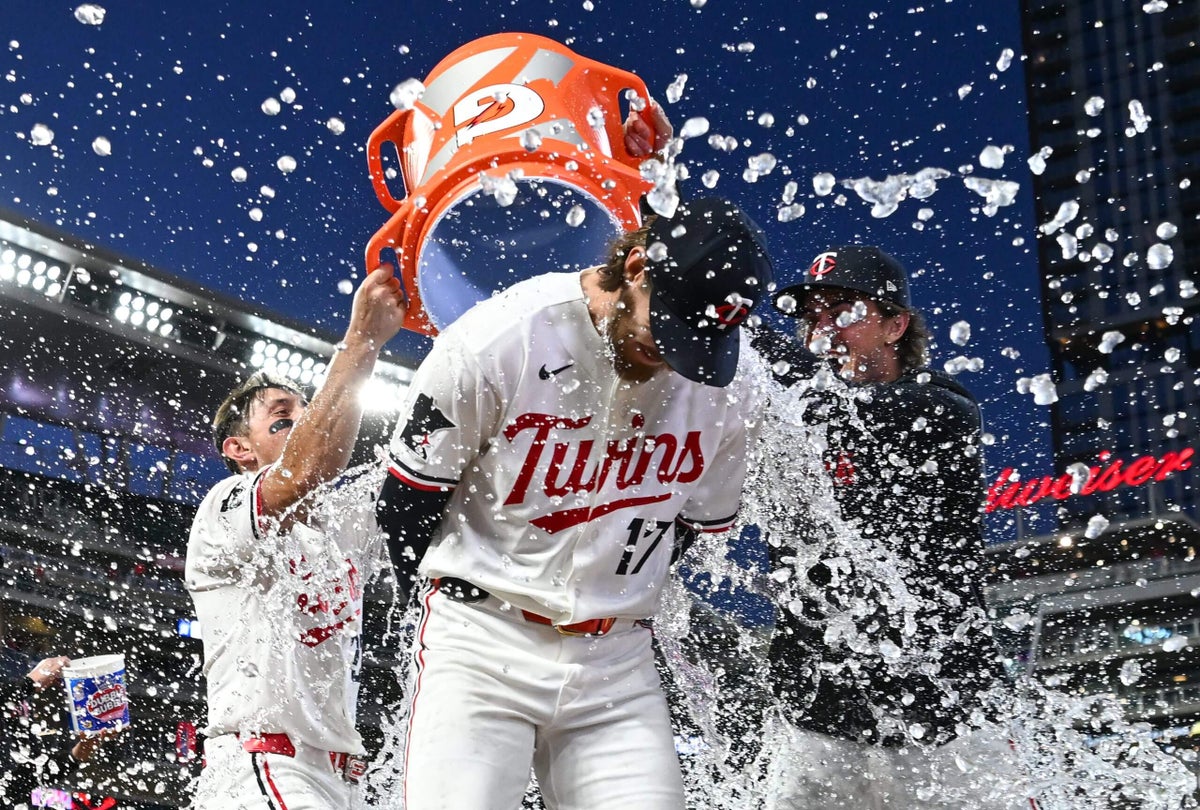
Bailey Ober’s fastball averaged 88.6 mph on Tuesday night, but he nevertheless assembled a masterful two-hit shutout.
Ober’s “Maddux” in a 3-0 win over the Miami Marlins was the latest strong effort from the Minnesota Twins pitcher as he adjusts to life with reduced fastball velocity.
Coming off the worst season of his life since Little League, one impacted by his diminished heater, limited command of all of his pitches, and entirely too many home runs allowed, Ober is rebounding without the return of his velocity.
In fact, Baseball Savant notes Ober’s fastball is down more than 1 1/2 miles per hour in 2026 from last year’s career-low average of 90.3 mph. Even with occasional struggles, Ober is 4-2 with a 3.46 ERA in 52 innings through nine starts.
So how’s he doing it?
“It’s just pitching,” Ober said recently. “The lost art of pitching. People are trying to throw as hard as they can all the time. Right now I don’t have my best velo. But being able to mix off-speed and get it to my locations that I want to throw it to, getting the changeup down, and when needed, throw some fastballs up and in, and try to get guys off balance, that’s the name of the game. Especially if you look over the last 20 years.”
Look to the final 16 at-bats by Marlins hitters on Tuesday as further evidence Ober can be successful while currently averaging 88.6 mph, well down from a career-best 92.3 mph in his rookie season (2021). Ober retired all 16, the longest stretch of consecutive outs recorded by a Twins pitcher this season. He did so in classic Ober fashion, mixing and matching, generating enough swing and miss with his off-speed pitches, and inducing weak contact.
Of the 22 balls put in play against Ober on Tuesday, only five qualified as hard-hit. This season, Ober’s limiting opposing hitters to a career-best 31.3 hard-hit percentage, which is 84th percentile in the big leagues.
Twins manager Derek Shelton attributes the success to Ober’s precision.
“One of the things we’ve seen out of Bailey is the ability to execute, and the ability to add and subtract,” Shelton told reporters in Minneapolis. “That’s what guys with his stuff do. … When you have everything working like the changeup and curveball like he did (Tuesday), you end up getting a really strong outing out of it.”
Execution and command are clearly drivers of Ober’s ability to get outs. But Ober’s achievements begin with good health.
Last March, Ober tweaked his knee in spring training, ultimately leading to a nagging hip issue. He pitched well enough early before bad habits formed by overcompensation resulted in a 30-inning nightmare in June. During that stretch, he gave up 14 home runs, tied for the third-most in baseball history in a calendar month.
Ober attributed his struggles to a mixture of reduced velocity and limited command.
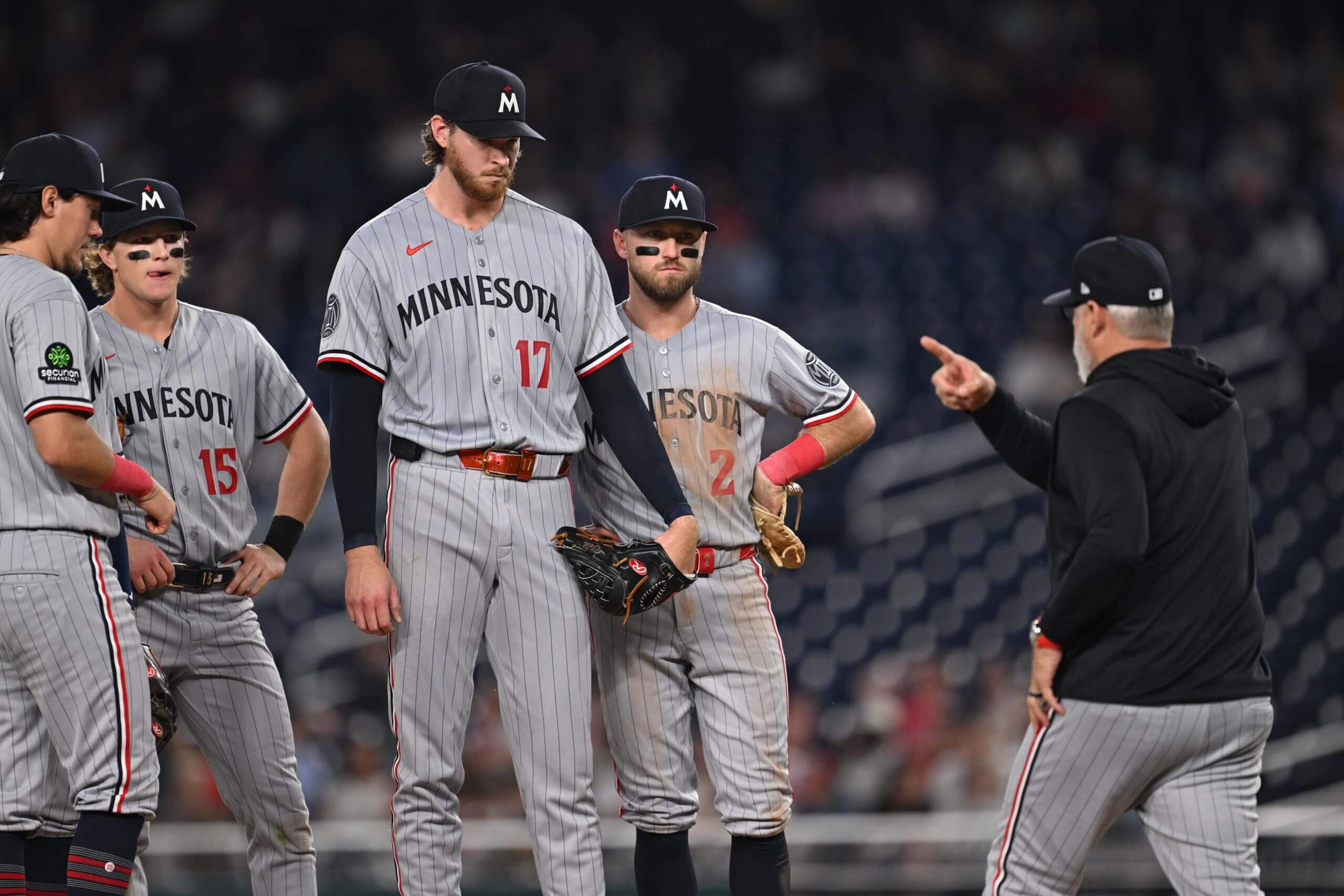
Bailey Ober had a 5.10 ERA in 27 starts last season. (Jamie Sabau / Getty Images)
“Sometimes I’d have 10 throws in a row where it felt great and the next 10 are like, ‘I don’t know where this is going,’” Ober said at TwinsFest in January.
This offseason, Ober worked with a specialist to strengthen his hip, regain mobility and iron out the kinks in his delivery.
After reaching 90 mph on the radar gun before TwinsFest, Ober was optimistic his hip was healthy and the velo would return. The Twins privately were optimistic about Ober’s ability to rebound. But while Ober’s ability to command his pitches returned, he’s still waiting for the velocity to resurface.
Ober’s best fastball velocity in any start this season is 89.8 mph on March 29 in Baltimore. As much as his velo has dropped, Ober contends it’s not a concern as long as he’s commanding pitches.
“I’ve never really relied on my velocity,” Ober said. “Now, I just feel like the way I’m going about it, the way I’m setting up guys is a little bit different.”
Before, Ober used his height to generate swings and misses by riding his fastball to the top of the zone and featuring a north-south game. Now, he works more off the edges with the four-seamer.
But the real key is being able to use all of his off-speed pitches.
In 2025, Ober’s slider had a minus-8 Run Value while his sweeper and curveball were minus-4. This year, his slider is plus-3, the sweeper is plus-2 and the curveball is neutral. Both plus pitches last year, his fastball and changeup are plus-2 this season, giving Ober a complete mix with which to work.
“My hand position is way better this year,” Ober said last month. “I think that’s a credit to my hip being in a healthy spot and I’m not second-guessing my landing spot or where my hand is going to be. My release point right now is a lot more consistent compared to last year. I think that’s just allowing me to manipulate, set guys up and throw it to the spots that I want.”
A slow start to spring training for Ober helped, too.
The team delayed Ober’s first exhibition outing until March 6 to allow him to work on his delivery in controlled environments. They’ve done the same with other pitchers before, but Ober’s slow beginning initially led to questions about his health. Ober finished with a 4.15 ERA in four spring starts.
“He’s trying to do everything he can to be as efficient in his delivery as possible,” general manager Jeremy Zoll said in early March. “The more efficient you are, the better your stuff plays. It’s an opportunity to iron those things out early.”
Ober struggled in his first two starts of the regular season, allowing six earned runs in eight innings. But a solid 5 2/3 innings effort against Detroit on April 8 spurred a good run as Ober posted a 2.70 ERA over his next five starts.
Still, Ober is susceptible to getting hit hard. His 4.49 expected FIP suggests there’s room for regression. Ober’s striking out three fewer batters per nine innings than he did in 2024, when he punched out a career-best 9.6. With more balls being put in play against him than in the past, Ober is relying on one of the worst defenses in baseball.
Pitching mostly to contact in Washington on May 6, Ober allowed five earned runs in the middle innings after starting his outing with three hitless frames. He didn’t have a good changeup and the Nationals knocked him around.
But that wasn’t the case against Miami.
Facing an aggressive Marlins team, Ober relied on a heavy mix of his changeup, four-seamer and sweeper. He generated 14 swings and misses, including nine with the changeup, and produced 14 called strikes across his entire repertoire.
Tuesday’s effort showed that Ober’s belief that he has a path to success in a sport obsessed with hard-throwers can be viable.
“Guys that throw 100 still aren’t guaranteed success,” Ober said. “You’ve still got to pitch. Right now I’m doing a pretty good job of that and look forward to staying on that plane of attack.”