
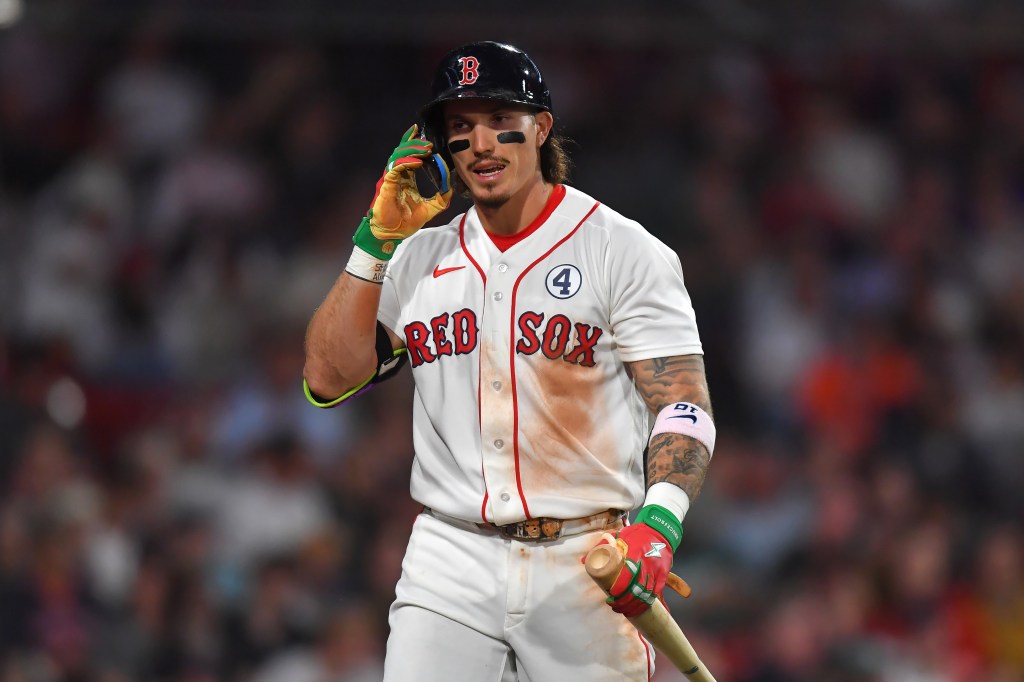
With Tuesday’s 4-2 loss to the Baltimore Orioles, the 2026 Boston Red Sox are 9-20 at Fenway Park.
They’re the only team in Major League Baseball without double-digit wins at home, but it’s so much more than that. So much worse.
It’s been 94 years since the Red Sox began a season with a home record this bad.
The 1932 team began the season 7-22 at home. But they, at least, finished better at home (27-50) than on the road (16-61). This year’s team is 16-14 on the road. All momentum seems to evaporate as soon as they come home.
“I mean, a little bit,” interim manager Chad Tracy answered, when asked postgame how “mystified” he was by the team’s home record. “I mean, it is what it is at this point. I know our goal is just to play baseball, and it’ll turn eventually.
“But yeah, it’s obvious. The way we played so well on the road, and it’s been a struggle here as far as wins and losses is concerned.”
Here’s some context about those 1932 Sox, who finished that dismal season 43-111 and eighth out of eight American League teams (in that pre-divisional era). Their .279 winning percentage remains the lowest in franchise history. Their minus-345 run differential was the worst by any ball club since the dawn of Major League Baseball’s Modern Era in 1901, until last year’s Colorado Rockies finished the 2025 season with a minus-424, per StatMuse.
The 1932 campaign also marked the end of J.A. Robert Quinn’s decade-long ownership, a period in which the Red Sox finished last eight of ten seasons and Fenway fell into disrepair. Fires ravaged the ballpark’s left-field bleachers in May 1926, and a tornado’s ferocious winds tore through additional sections of seats that July, and ownership could not afford to renovate.
In February 1933, 30-year-old multi-millionaire Tom Yawkey purchased the ball club and ballpark from Quinn for $1.25 million. Yawkey plundered cash-strapped teams for superstar players, and spent over a million more to revive Fenway, including a second round of repairs after another fire blazed through the ballpark and onto Lansdowne Street late in the first round of construction in January 1934.
The Red Sox already fired manager Alex Cora and ousted several coaches in late April. If they continues down this road of historically horrific proportions, more drastic changes are likely on the horizon.
But 2026 Red Sox aren’t in such dire straits as the ’32 team. Today’s team has a billionaire owner. There are clear paths to improvement. It’s on leadership to decide whether to turn in that direction and attempt to return Fenway to its halcyon days as the ultimate home-field advantage.