
I’m in the beginning stages of a sports project.
Well, another sports project.
Because I was a little kid that didn’t want to cheer for a New England Patriots team that didn’t win as much as I needed them to, I became a rabid Dallas Cowboys fan (insert joke about the last time the Cowboys won a Super Bowl being before cars were invented).
Upon further review, the Patriots weren’t all that bad when I was growing up, and the Cowboys weren’t that much better.
Dallas only made the playoffs once between 1984 and 1990.
Eventually, Dallas had its glory years with Super Bowls in 1992, 1993 and 1995.
Then I was officially hooked.
My goal?
Once the new stadium opened in 2009, I decided that I’d like to see the Cowboys play every team in the NFL at AT&T Stadium.
It’s moving along nicely.
After seeing two games in the home of America’s team last season, I’ve now seen 23 of 31 opponents play in Texas.
That got me to start thinking about a new goal — seeing the Red Sox play in every opposing stadium.
The baseball landscape changes quickly.
The Yankees and Tigers and Braves and a bunch of other teams don’t play in the stadiums they played in when I was a kid, but the new parks are incredible.
In 2024, trip No. 1 was a loss to the Cincinnati Reds.
Last year, it was the West Coast trip and Boston went 2-1 as the Sox beat the San Francisco Giants (it was Rafael Devers’ first game as a Giant against his old team) and Seattle Mariners before losing to the Anaheim Angels.
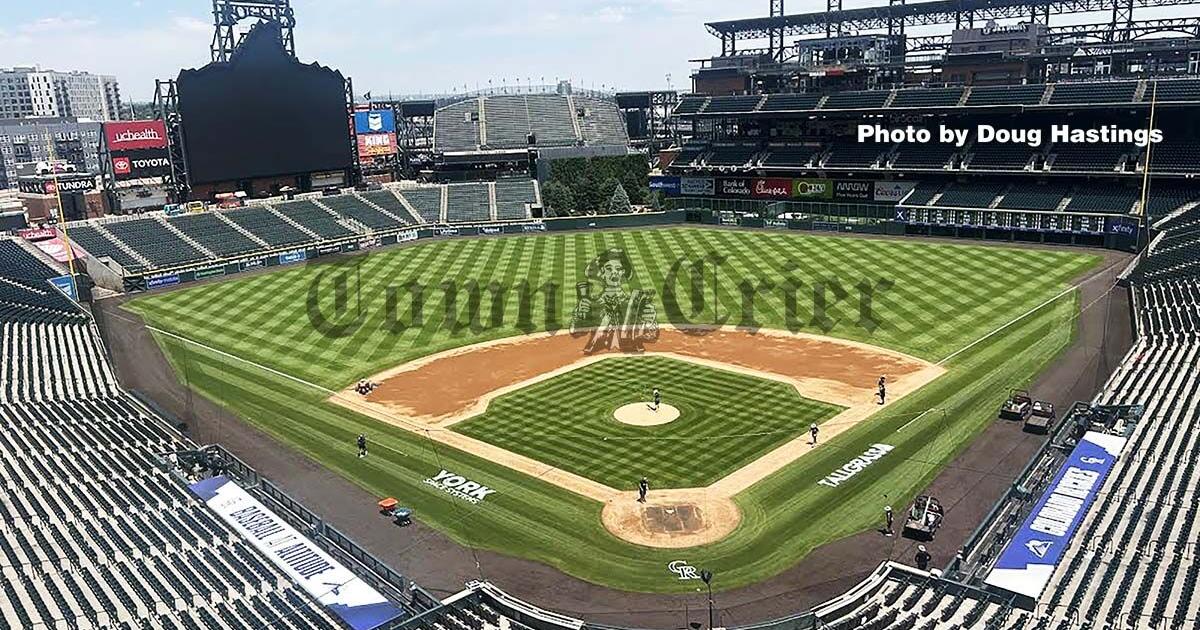
This year, the trip was to Coors Field in Denver to see the Sox play the Colorado Rockies.
If anything, it was a good chance to see a win.
We did the stadium tour before the game and learned lots of cool stuff about the Rockies.
The stadium was built in 1993 and debuted in 1995 and is the third-oldest National League park in baseball.
It’s a great field.
The fans really come out for the games even though the Rockies stink.
The tour guide also explained that since the team was about $30 million short of its goal to build the stadium back in the 1990s, it took $30 million from Coors, $15 million for the stadium and $15 million for the naming rights to the park.
Most parks get money every year from the stadium sponsor.
It seems Colorado’s park will forever be Coors Field after a one-time payment.
Once the game started on June 23, it was Jake Bennett for the Red Sox against Rockies starter Ryan Feltner, who the Sox quickly made look more like Nolan Ryan.
The game was scoreless through five innings, something that doesn’t happen much in Colorado, before Boston scored twice in the top of the sixth.
Willson Contreras and Caleb Durbin had the RBIs for the Sox.
The Rockies could have and should have tied the game in the eighth inning, but two costly baserunning errors after hits resulted in one out at home plate and another on the bases.
The boo-boos were so bad that many Rockies fans left the game after the eighth inning, shaking their head with a “that’s how we roll” kind of smile.
No hard feelings, but they seemed aware of how the game was going to end up.
After back-to-back hits in the bottom of the ninth, we decided it was a good time to vacate the premises as well.
Then, this happened.
The Rockies won, 3-2.
Another hit off closer Aroldis Chapman loaded the bases and then the game ended with a three-run triple to the left-field corner by Jake McCarthy.
For some reason, the sting of the collapse was easier to deal with walking toward the parking lot as fans screamed with delight.
But in all reality, it was a brutal loss.
Chapman had not blown a save all year.
The Rockies ended up recording eight consecutive hits spanning the eighth and ninth innings, making them the first team since at least 1961 to achieve this in their final eight plate appearances.
At least we only had to listen to it.
This Red Sox project is going to be a blast.
There likely won’t be many losses as painful as this one.