
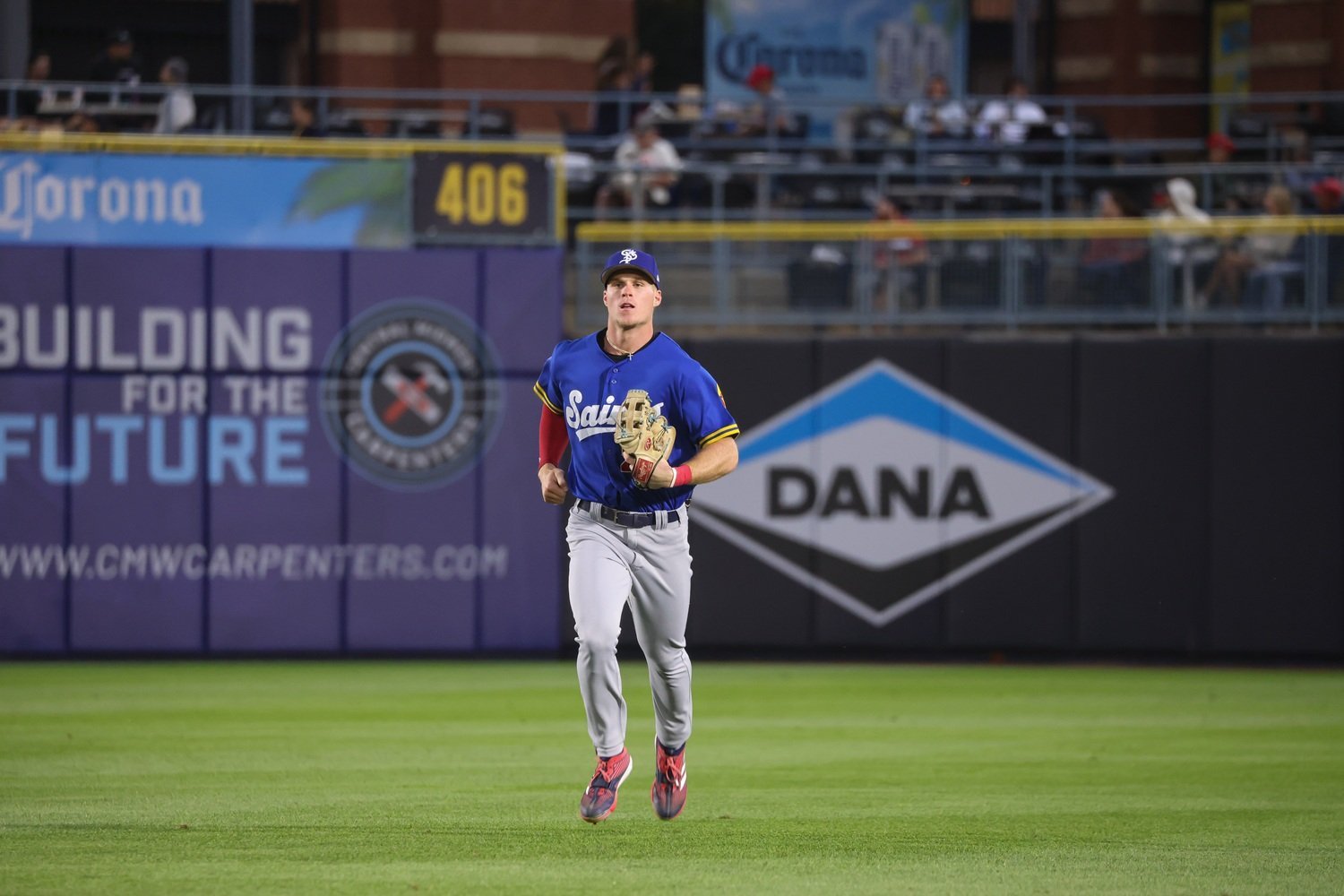
Image courtesy of Brady Boehm, Toledo Mudhens
Player development is one of the biggest challenges facing every organization in baseball. When is a young player ready to take the next step? When does more time in the minor leagues help, and when does a player need to be challenged at the major-league level?
The Minnesota Twins have seemingly struggled to develop consistent impact hitters at the big-league level for a significant amount of time. That makes the organization’s approach with Walker Jenkins particularly important. The former first-round pick is arguably the best prospect to come through the Twins system since Byron Buxton, and Minnesota doesn’t want to make a mistake when deciding when to bring him to the majors.
Jenkins has already shown that he can handle many of the challenges placed in front of him. After losing months of the 2026 season to a shoulder injury, he has returned to Triple-A and performed well. Yet, despite his success, the Twins have not called him up.
On Sunday’s episode of Inside Twins, Twins general manager Jeremy Zoll offered some insight into why.
It Starts With Opportunity
Minnesota fans have watched another one of the organization’s top prospects, Kaelen Culpepper, reach the majors in recent weeks. There are several factors that worked in Culpepper’s favor. He’s older than Jenkins. He plays shortstop, which has been a weak position for the Twins throughout the season. He’s also a right-handed hitter, something that fits better into the current construction of Minnesota’s roster.
Zoll used Culpepper as an example when explaining how the Twins determine whether a prospect is ready for a promotion. The first factor, according to Zoll, is “What is the opportunity that exists on the major league team?”
The Twins don’t simply want to call up their best prospects because they’ve performed well in the minor leagues. They want those players to have a legitimate opportunity to play regularly once they arrive. For a young hitter, sitting on the bench in the majors isn’t necessarily the best developmental environment. That’s especially relevant when discussing Jenkins.
Is There Really a Spot for Jenkins?
Some fans would answer the question above with, “who cares?” Still, the Twins have to think about the long-term repercussions. Jenkins is a left-handed hitting outfielder. When Austin Martin landed on the injured list with a hamstring injury, it seemed like a potential opening for Jenkins. But the roster construction doesn’t necessarily create an obvious everyday role for him.
The Twins already have Alan Roden, another left-handed outfielder, on the roster. Roden hasn’t received much playing time, which would make it difficult to justify bringing Jenkins to the majors if the organization believes he could end up in a similar situation. Against right-handed pitching, Minnesota has generally used Trevor Larnach and Luke Keaschall in the corner outfield spots. That’s essentially the situation Zoll was describing.
There may be an opening on the roster, but there might not be an everyday opportunity. And that difference matters. If Jenkins were a right-handed hitter, it’s easy to imagine the conversation being different. His bat could provide a better fit for the current roster, while his arrival would give the Twins another option in a lineup that has struggled at times.
Instead, Minnesota has a left-handed outfield prospect knocking on the door while already having left-handed outfielders on the major-league roster.
Jenkins Still Has Something to Prove
The second factor Zoll mentioned was whether a prospect is “playing well enough to force the issue.” That’s where Jenkins appears to be moving in the right direction. Zoll said Jenkins continues to make strides, which is encouraging considering the amount of time he missed with his shoulder injury. But the organization may still believe there are more boxes for Jenkins to check before making the move permanent.
There was also an interesting comment from Zoll regarding Jenkins’ age. He referred to Jenkins as “super young” and pointed out that the Twins pushed him aggressively to Triple-A last season. Jenkins has already played at a higher level than many players his age. The Twins don’t necessarily need to rush him simply because he’s performing well after returning from injury. Zoll said Jenkins has things he can continue to do to put himself in the best position possible. He didn’t elaborate on exactly what those things are.
That leaves plenty of room for speculation, but it also reinforces the idea that the Twins don’t view Jenkins’ current Triple-A assignment as a punishment or a sign that they don’t believe he’s ready. They may simply believe he needs more time.
The Offense Could Use a Spark
Of course, there is another side to this argument. The Twins’ offense has been scuffling. When a team is struggling to generate consistent production, adding one of the best prospects in the organization can be tempting. Jenkins has the type of talent that could provide a jolt to the lineup, and fans understandably want to see what he can do against major-league pitching.
That’s where the frustration comes from. It isn’t difficult to look at the current Twins lineup and wonder whether Jenkins could make it better. But the organization has to think beyond the next few weeks.
If the Twins call Jenkins up and he plays three or four times a week, does that actually put him in the best position to develop? If he struggles because he’s bouncing between the bench and the lineup, does that create unnecessary pressure on a player who has already lost significant time this season?
Those are the questions Minnesota has to answer. And, based on Zoll’s comments, the organization doesn’t believe the opportunity is quite there yet.
Baseball Has a Way of Opening Doors
The frustrating part for fans is that baseball has a way of creating opportunities when players are ready. Injuries happen. Performance changes. Rosters evolve. A spot that doesn’t exist today can suddenly become an everyday position tomorrow.
That’s particularly true for a team like the Twins, where the roster could look significantly different over the final weeks of the season. Jenkins doesn’t need Minnesota to manufacture an opportunity. He needs to keep forcing the issue in Triple-A until the opportunity naturally presents itself.
The Twins clearly believe in his talent. Otherwise, he wouldn’t have been pushed so aggressively through the system in the first place. Now they’re trying to make sure his first major-league opportunity is the right one.
For a player viewed as the organization’s best prospect in years, that patience may ultimately prove valuable. The question is whether Twins fans will be willing to wait.
Do you agree with Zoll’s reasoning for keeping Jenkins at Triple-A? Leave a comment and start the discussion.