
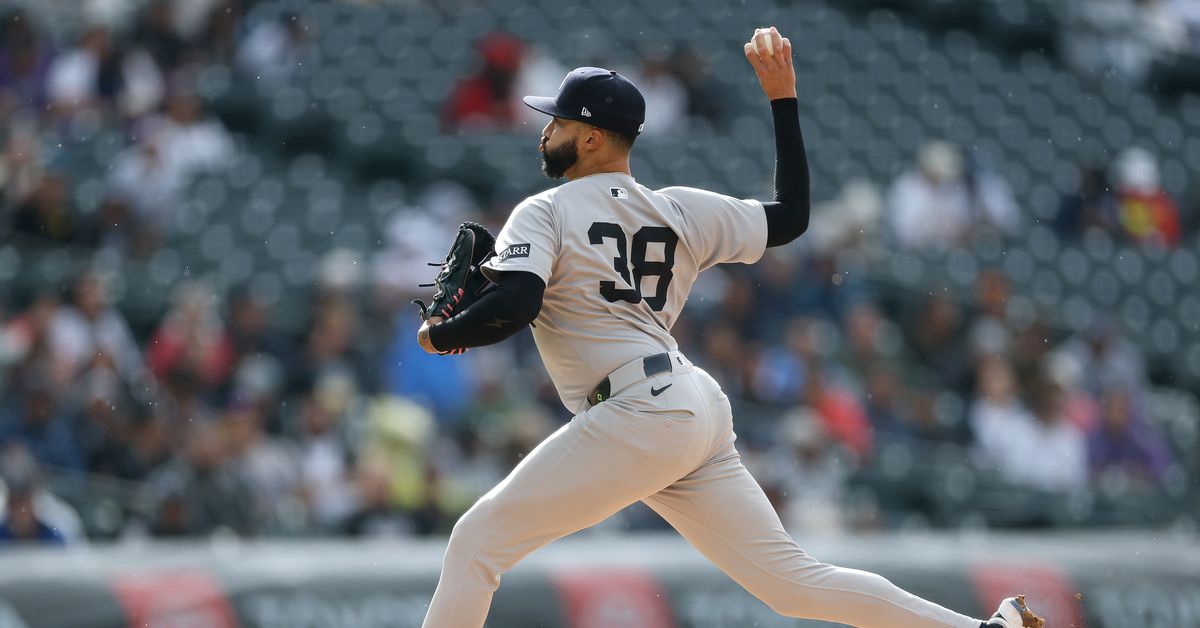
The Yankees received some devastating injury news when it was confirmed that Luke Weaver would miss the next four to six weeks with a hamstring injury suffered during his bullpen warmup routine prior to the ninth inning of the Yankees 7-3 sweep-averting win over the Dodgers. Weaver has been one of the best relievers in baseball through the first two months, pitching to a 1.05 ERA (379 ERA+) and 3.04 FIP with 24 strikeouts and eight saves in 24 appearances totaling 25.2 innings. He broke out as one of the elite relievers in the game after inheriting the closer role from Clay Holmes last summer. He has continued that run of dominance in 2025, taking over as closer yet again, this time as winter trade acquisition Devin Williams struggled to the tune of a 10.03 ERA across his first 14 appearances in pinstripes.
With Weaver out, Williams will be given a second chance to close games. This is sure to cause outrage among a sizable portion of the fanbase, and to some extent rightly deserved given how poorly Williams’ Yankees career started. However, he has been one of the Yankees’ most effective relievers since ceding the ninth inning to Weaver, so it behooves the Yankees to maximize the elements of his game that are working now that they have decided that the closer job is his again. A sequence from the Yankees’ win over the Dodgers on Sunday represents the perfect snapshot of what Williams needs to do to succeed as the closer.
We join Williams with two outs in the bottom of the eighth. The bases are empty following a strikeout of Hyseong Kim and a Shohei Ohtani grounder, bringing Yankee-killer Teoscar Hernández to the plate. Williams starts Hernández off with 94 mph four-seamer, Austin Wells setting up for a pitch on the outer-half.
Williams nails his spot with pinpoint execution of the first-pitch heater, painting the outside black for a called strike one.
Williams has established he can command his fastball to the outer edge for a strike, which opens up countless opportunities to induce chases on the airbender changeup. For the rest of the AB, Hernández has to respect any pitch that starts about belt high and a bit off the plate away.
Williams tries to leverage this immediately with a changeup, Wells setting the same target as the first pitch. Unfortunately, this pitch slips out of Williams’ hand early — a non-competitive offering that almost hits Hernández on the hands.
Despite the misfire of the previous pitch, Willams sticks with the changeup hoping this time he can command it to the spot that Wells set low and away.
He does just that, Wells barely having to move his glove to receive the pitch. You might expect Hernández to have eliminated the airbender after watching how poorly executed the prior one was. Perhaps this aids him in taking this close pitch — if he’s sitting fastball, this looks like a ball all the way out of the hand, the pitch starting almost two feet off the outside edge before bending back over the plate but just a little too low to be called a strike.
Following two straight misses with the changeup — one by a lot and the second just inches from the zone — Williams switches back to the fastball to tilt the count leverage back in his favor. So far, Hernández has shown little interest in offering at pitches away, so there’s an opportunity to grab another called strike with the four-seamer on the outside edge.
This one tails a little more into the zone than the first fastball Williams threw. However, this is the beauty of having thrown two straight changeups away. Hernández has slowed his timing to match the airbender, which is how he is caught unprepared to hit the heater, and Williams blows 93 mph right by him.
Now that he has gotten to two strikes, and with Teo’s bat sped up by the previous four-seamer, Williams can go back to work with the airbender.
Oops! This is an absolute cookie middle-middle. Williams is fortunate that Hernández did not punish this mistake. This is where the elite downward movement of the airbender comes into play. The pitch exhibits almost half a foot more vertical drop than the league average changeup thrown at the same velocity, and you can see how this movement fools Teo, the right fielder only able to pound this pitch into the dirt by home plate foul.
Williams has Hernández between the speeds of his fastball and changeup and skunked by the movement of the airbender. All he has to do is execute one to the same spot as the third pitch of this encounter.
That’s precisely the outcome Williams achieves, getting Teo to whiff over the top of an airbender that starts belt-high but ends up below the zone for the inning-ending strikeout.
Here’s the full sequence:
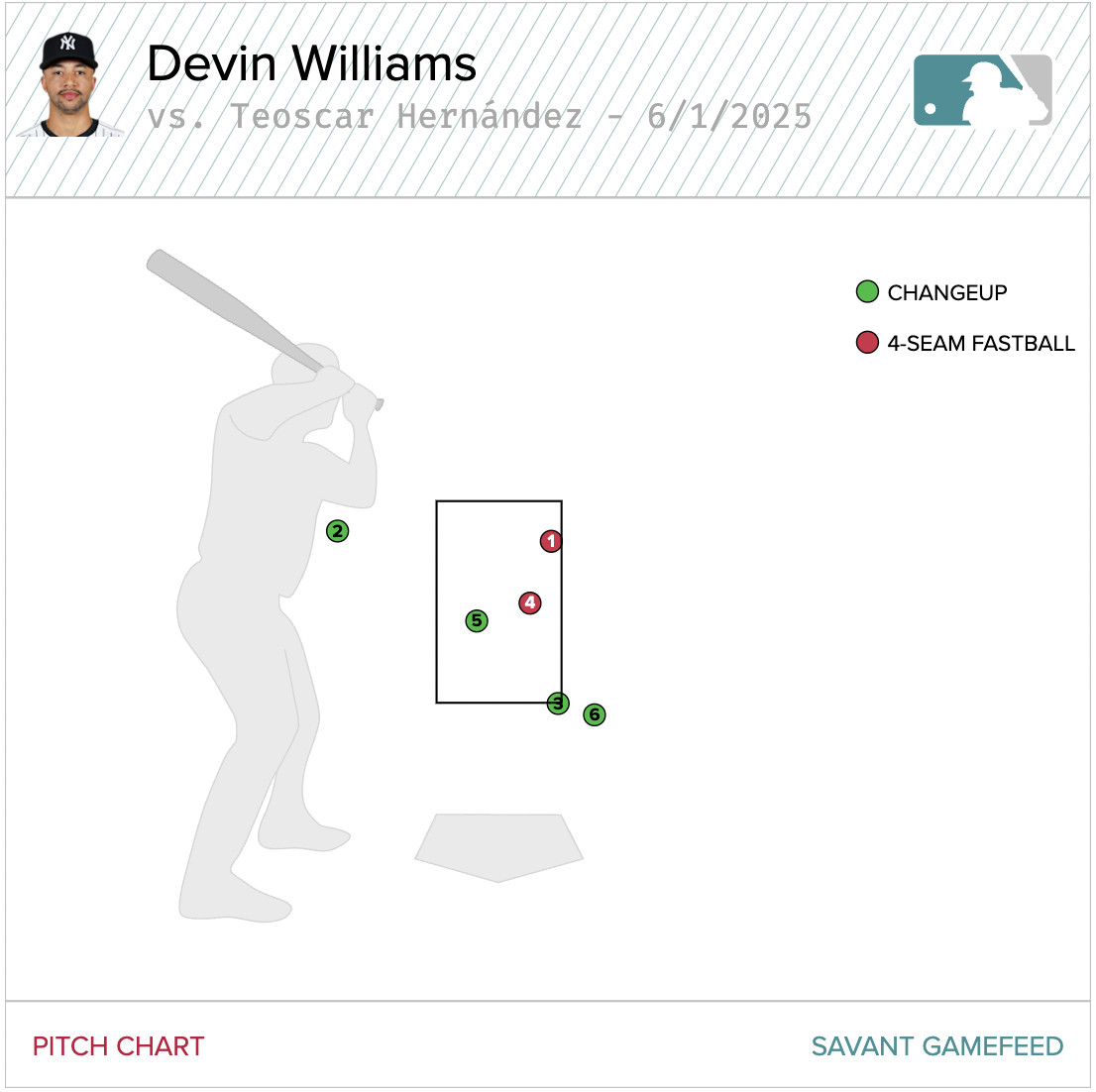
Courtesy of Baseball Savant
Williams’ calling card will always be the airbender, one of the nastiest changeups in MLB. However, the pitch loses much of its effectiveness if it’s not paired with a well-commanded fastball. Consistently throwing the fastball for strikes, particularly to the edges, unlocks the full potential of the airbender to induce whiffs and chases. Take this two-pitch sequence from the third and fourth pitches of the AB.
Teo produces an impressive take on a changeup just below the zone. Williams then throws a fastball down the exact same tunnel as the prior pitch — one that was called a ball. Teo has to take based on the previous call, and only realizes too late that this pitch is holding its plane rather than dropping below the zone. The ball is in Wells’ glove by the time Teo’s bat enters the hitting zone.
Moving Williams out of the closer role so abruptly may have seemed a touch harsh — he made ten appearances before getting booted from the ninth for Weaver — particularly in light of how much leeway they allowed Holmes before his eventual demotion. However, in hindsight it looks like just the move Williams needed to get settled on a new team in a new city. In 15 appearances since the demotion, Williams owns a 3.29 ERA, 2.42 FIP, and the eighth-best strikeout rate (38.5 percent) among qualified relievers during that span. Thirteen of those 15 appearances have been scoreless, Williams allowing less than one baserunner per inning. It was far from stress-free last night in his first save opportunity back in the closer role. But if he can continue to command his fastball as he’s shown in recent outings, he should prove the Yankees’ trust to be well-founded.