
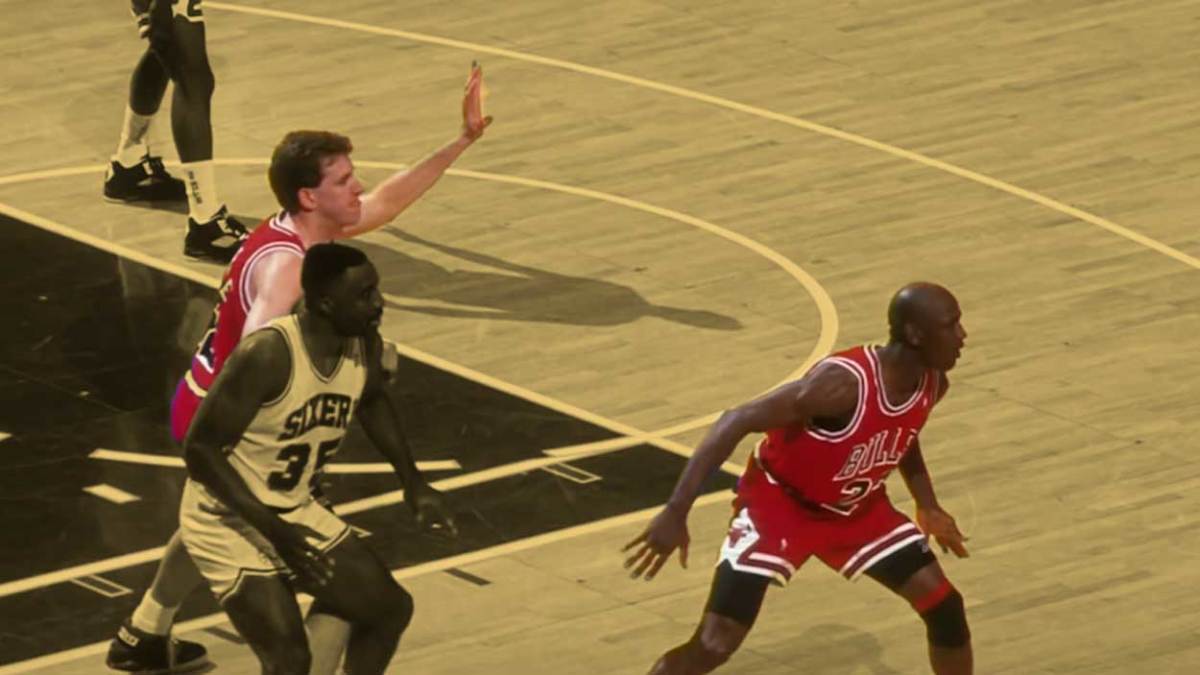
“The only emotions we had seen from Michael were frustration and anger” – Perdue says Jordan’s tears after the ’91 Finals stunned the Bulls originally appeared on Basketball Network.
In 1991, it wasn’t another near-miss year for Michael Jordan. After years of playoff heartbreak and bruising losses, he finally wrapped his hands around the Larry O’Brien Trophy. He clutched it tightly, buried his face into it and cried.
Advertisement
For those watching from afar, it was a moment of raw triumph. But for those inside the Chicago Bulls locker room, it was something else altogether, unexpected vulnerability from the most ruthless competitor they had ever known.
Jordan’s surprising emotions
It was unlike MJ to be emotional that way. For Will Perdue and the rest of the Bulls, the image was a revelation, as the team caught a rare glimpse of their leader stripped bare of his trademark fire and resolve.
“That was really a surprise to us,” Perdue said of the moment. “Because, really, the only emotions we had seen from Michael were frustration and anger because of the inability to beat Detroit. He was not happy when he lost in anything, I mean, anything. That’s how competitive he was.”
Advertisement
Jordan’s rise to the top wasn’t linear; it was crafted in pain. From 1988 through 1990, his Bulls were bullied out of the playoffs by the Detroit Pistons three consecutive times. The “Bad Boys” turned the Eastern Conference into a battlefield, building an identity on elbows, double teams and psychological warfare.
Despite putting up otherworldly numbers, averaging 35.9 points in the 1988 series and 32.1 in 1990, Jordan couldn’t find a way through Detroit. Each year, the exit stung deeper.
In ’89, it was a six-game loss in the Eastern Conference finals. In ’90, the Bulls reached a Game 7, only to be dismantled as Scottie Pippen battled migraines and the Pistons swarmed Jordan with a relentless wall of defenders.
Every summer began with another autopsy and every preseason began with a deeper sense of urgency. The 1990-91 season was the transformation. Jordan trusted the triangle offense under Phil Jackson, let his teammates flourish, and led the Bulls to a franchise-record 61 wins.
Advertisement
In the Finals, he went up against one of his heroes: Magic Johnson, the smiling orchestrator of the Los Angeles Lakers dynasty. But by then, Jordan wasn’t chasing stars anymore. He dismantled the Lakers in five games, averaging 31.2 points, 11.4 assists, 6.6 rebounds and 2.8 steals. The Bulls won four straight after dropping Game 1.
Soaking the moment
When the final buzzer sounded in Game 5, the moment didn’t just belong to the scoreboard. It belonged to the weight of history crashing down in tears. Jordan was the franchise head and he was in front of any playoff disappointment
Advertisement
The emotional release was not just about winning. It was about surviving years of doubt, absorbing the blame and still showing up hungrier than ever.
“To be honest, he always pointed a finger at himself first,” Perdue said. “Because as good as he was, that’s what made our practices competitive. But he also expected everybody to answer the bell.”
That leadership style wasn’t for the faint-hearted. Teammates have described those early Bulls practices as brutal. Jordan didn’t just demand effort; he demanded perfection. He drove teammates, clashed with them, and at times humiliated them, but always with the singular goal of closing the gap between him and greatness.
And when they failed, Jordan wore it as much as anyone.
Advertisement
He had long ago become the face of the franchise, not just in highlight reels but in accountability. Every playoff exit, every headline, every “next year” sentiment fell on his shoulders. And yet, each season, he came back sharper, stronger, and more unrelenting.
The 1991 championship was closure, beating Johnson and ending the Showtime era, conquering Detroit, mastering the system and finally releasing everything that had been boiling for years. That’s what his tears carried.
This story was originally reported by Basketball Network on Jun 16, 2025, where it first appeared.