
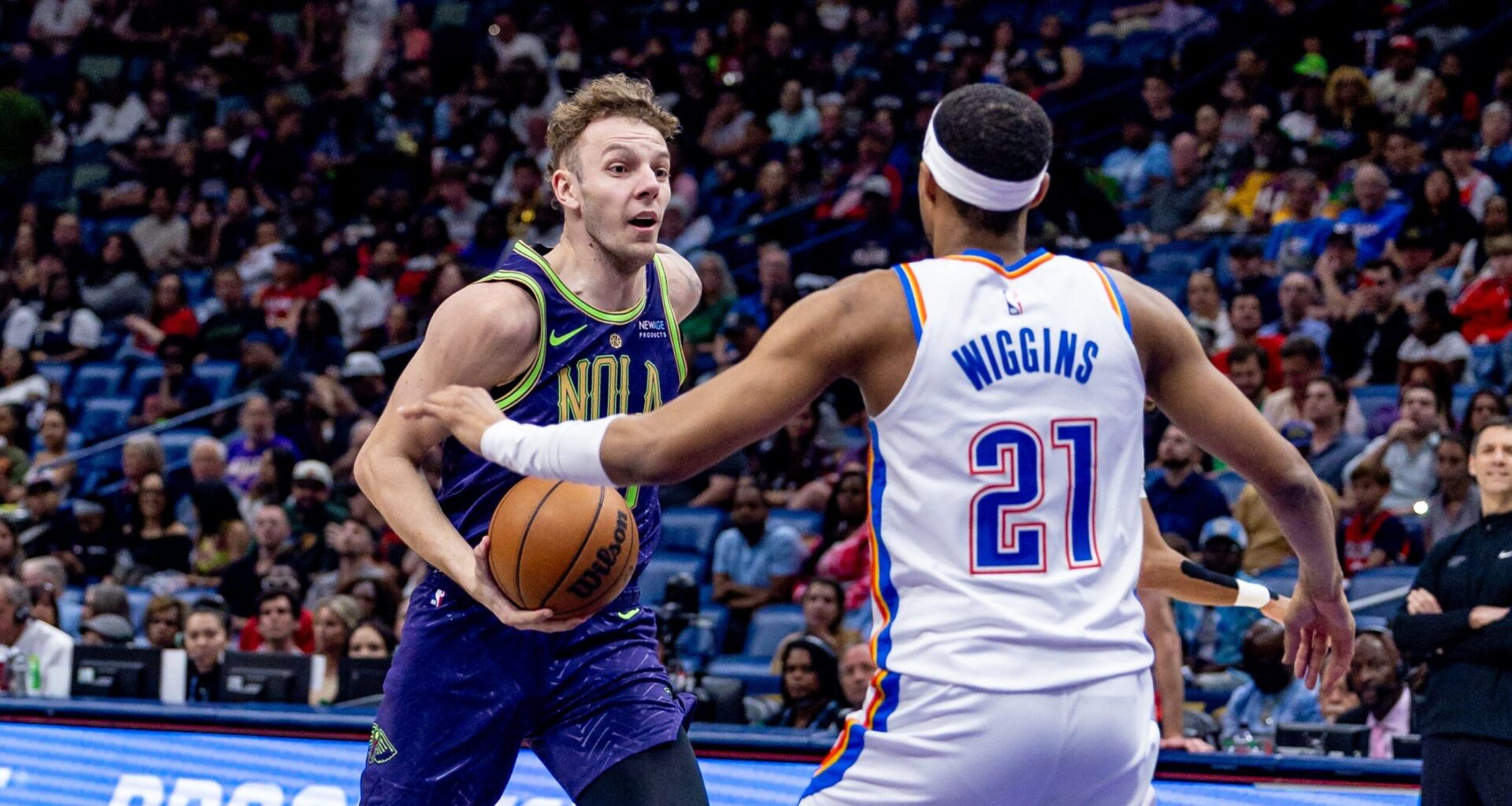
The New Orleans Pelicans find themselves at a critical juncture, poised to reshape both their roster and financial outlook after enduring a disappointing 21-61 season. Within this context, one name has surfaced as a pivotal asset in their restructuring efforts: Kelly Olynyk. His inclusion in the team could significantly enhance the Pelicans’ quest for flexibility amid a fiercely competitive league.
Navigating Financial Constraints
The Pelicans are currently balancing on the fine line of the luxury tax threshold, presenting a challenge that necessitates strategic acumen. With the No. 7 and No. 23 picks secured in the upcoming draft, the team’s salary cap situation demands thoughtful management. Trading Olynyk, who is on an expiring $13.4 million contract, has become a critical part of their plan to reduce financial strain.
Letting Olynyk go could afford the Pelicans essential leeway to operate without necessitating the loss of their more integral assets. His contract aligns aptly with the $14.1 million non-taxpayer mid-level exception, rendering him an appealing option for other teams aiming to enhance their rosters while preserving cap space. This maneuverability is vital as the Pelicans focus on constructing a competitive lineup that revolves around their foundational players.
The Case for Olynyk
The value that Olynyk brings extends well beyond the confines of his expiring deal. His capability to stretch the floor, combined with his offensive contributions, positions him as a desirable acquisition for teams looking to deepen their bench. In comparison, CJ McCollum’s hefty $30.7 million salary introduces complex challenges regarding trade possibilities. Consequently, Olynyk represents a simpler, more effective solution for the Pelicans, enabling potential deals without compromising more valuable assets, thereby safeguarding the team’s future flexibility.
The possible trade of Olynyk aligns with a broader trend in the league, as many franchises are now preparing to clear cap space in anticipation of an enticing 2026 free-agent class. Teams are growing increasingly cognizant of the financial ramifications introduced by the new tax aprons, complicating roster management. For franchises like the Pelicans, capitalizing on this evolving market landscape could yield substantial rewards.
Recent Developments and Future Implications
In an unexpected twist, the Pelicans recently executed a trade sending Brandon Ingram to the Toronto Raptors, bringing back Bruce Brown Jr. and Olynyk, in addition to a first and second-round pick. This strategic shift signals a commitment to retooling the roster and showcases the Pelicans’ objectives moving forward. The addition of Olynyk not only deepens the team’s versatility but also opens up a range of potential lineup configurations.
As the Pelicans begin to weigh their options carefully, the focus will increasingly be on how to best harness their assets, including Olynyk. The decisions made in the forthcoming weeks are set to be instrumental for the franchise’s trajectory, particularly given the uncertainties surrounding star player Zion Williamson’s health and the implications of Dejounte Murray’s recovery from injury.
Conclusion
The New Orleans Pelicans stand on the brink of transformation, with Kelly Olynyk assuming a central role as a trade asset in their pursuit of financial flexibility and roster enhancement. As the team navigates the intricacies of the current NBA environment, the decisions they make could deeply impact their competitive standing in the seasons ahead. While the future remains unpredictable, the Pelicans possess the means to redefine their identity and propel themselves toward a fruitful future through strategic maneuvering.
Related