
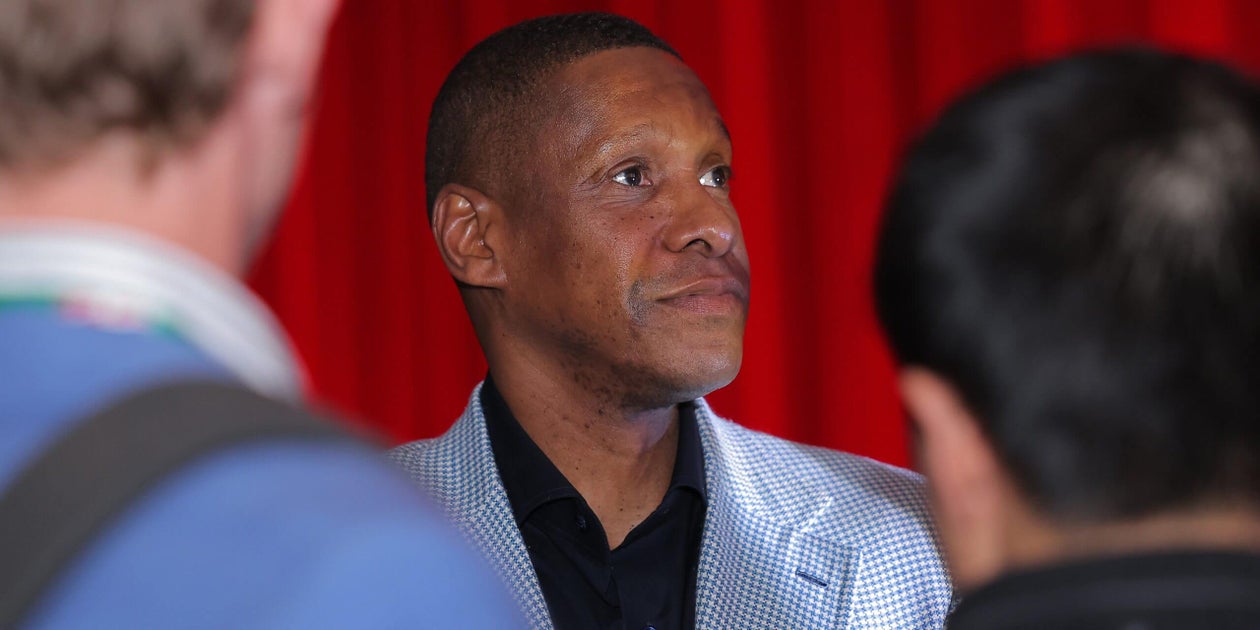
TORONTO — Forget about his official title, which subtly changed on occasion, during his 12-year run in charge of the Toronto Raptors. Masai Ujiri was the president of vibes.
Not to belittle the team-building work he did with the franchise, because much of that was excellent. Most of Ujiri’s signature moments with the Raptors, though, can be captured with his one-liners:
“F— Brooklyn.”
“We don’t give a s— about it,” he once said of the trolling Paul Pierce.
“We will win in Toronto.”
“Believe in this city. Believe in yourselves.”
“We will win again in Toronto.”
Ujiri won his news conferences.
For the Raptors and their fans, that was meaningful. In a league defined by star players and glamourous markets, the Raptors needed someone who exuded confidence about the team and a city that should be seen as world-class. That Ujiri treated the Raptors’ job as a big one, and the franchise as a potential league cornerstone, was new. Ujiri oozed confidence and ambition.
In announcing Ujiri’s firing on Friday — and yes, firing is the correct word — the Raptors seem as adrift and unstable as they have in a long while. Maple Leaf Sports and Entertainment CEO Keith Pelley explained the move by saying that Ujiri’s tenure was long, change is inevitable and the franchise is stable with the rest of its front-office structure, coaching staff and roster largely in place. That would make sense, except all of that would be a reason to keep the person who allowed for those conditions. Instead, Pelley and Edward Rogers, the executive chair of the MLSE board of directors, have introduced a new level of uncertainty to the team.
The bit about inevitability was on point, especially in this case: Ujiri and Rogers, who emerged as the most powerful person in the organization when his company bought out Bell to become MLSE’s majority shareholder last year, do not have a good relationship. Ujiri and Larry Tanenbaum, the long-time powerbroker within MLSE, are very close. Meanwhile, Rogers was the loudest objector to the Raptors giving Ujiri a new five-year deal in 2021. Ujiri said his relationship with Rogers was fine and not an obstacle for him a few times since the change in ownership structure, but it never rang completely true.
It turns out Ujiri got to serve out four of those years. Rogers likely wanted to firm up a top-down power structure, and Ujiri was never going to feel as beholden to Rogers as a new hire would. However, the move will invite cynicism and doubt from Raptors fans, especially given the strange timing of the move and Rogers’ lacking Q rating.
“When you create a brand, when you create a culture, if it is mitigated when that individual is no longer involved, then the culture and the brand has not been created in the right way,” Pelley said when asked if he was worried about the Raptors’ losing some of their lustre upon Ujiri leaving. “And I believe that the way that he has built the brand and the way that he has created the culture is something that we as an organization at MLSE cherish and need now to build upon, and that will be something critical for the next president coming in.”
Pelley said he and Ujiri had been talking about the executive’s future for the last few months. According to Pelley, Ujiri requested he be able to run the draft if a change was going to ultimately be made, even though the franchise extended the contracts of general manager Bobby Webster, assistant general manager Dan Tolzman and would be looking to hire a new president, a role for which Webster will be interviewed. Pelley said the new president will focus solely on basketball, not business.
To be sure, all of that is odd, with Pelley saying only that Ujiri was told of the change earlier in the month. It is not as if MLSE couldn’t have made a compelling results-based argument to go in a new direction. That just isn’t how Pelley worded things — likely for obvious reasons.
One of those reasons: The Raptors’ 2019 championship will live forever, and Ujiri is justifiably beloved for bringing Toronto its first major championship since the Blue Jays won back-to-back World Series titles in 1992 and 1993. (The MLS’ Toronto FC, CFL’s Toronto Argonauts and NLL’s Toronto Rock, among others, all won titles between those years and the Raptors’ 2019 championship.)
The risk of the trade for Kawhi Leonard is perhaps overstated — the Raptors, led by DeMar DeRozan, Kyle Lowry and Dwane Casey, had become intimately acquainted with their ceiling over the previous few years — but even admitting that it was time to try something new and importing a star who did not want to be in Toronto was gutsy. Ujiri needed luck, including some from an especially friendly cylinder, for the Raptors to capitalize on that one-year window, but luck is always part of the equation. That Leonard still went home after that year to play for the LA Clippers stung Ujiri, but that made the title even more miraculous in hindsight, given Leonard wasn’t all-in on the franchise.
That banner is as much Ujiri’s as anybody else’s. Before the league’s recent run of parity, winning a title in a comparatively second-tier market and without a homegrown superstar was considered one of the most difficult things to accomplish in North American professional sports. Ujiri putting that team together will go down as one of the greatest feats in the city’s sports history. Bringing an All-Star Game and an excellent practice facility to Toronto will further enhance his legacy.
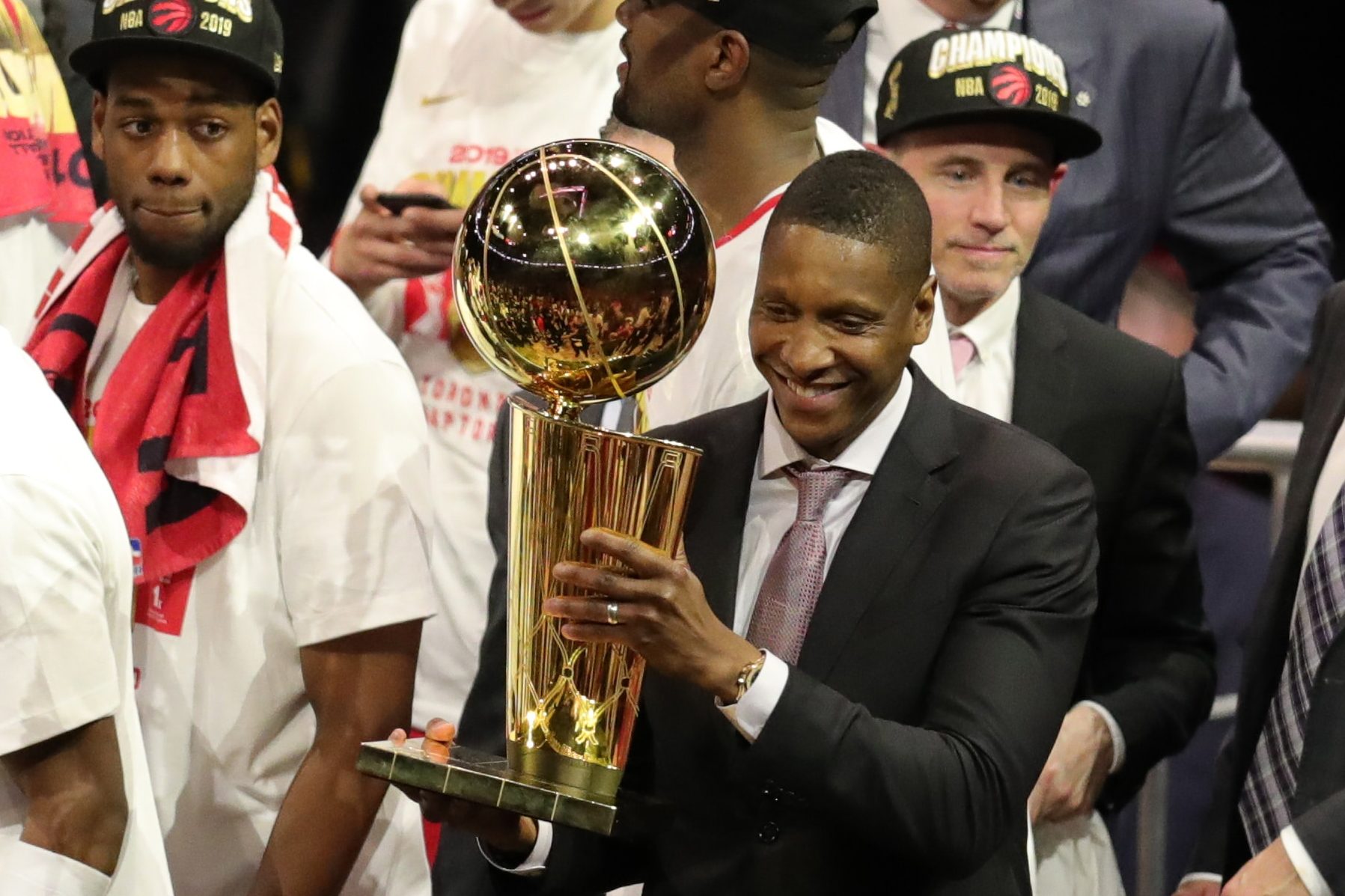
Raptors fans will always remember Masai Ujiri for bringing a championship to Toronto. (Sergio Estrada/USA Today)
He clearly wanted to establish the Raptors as a marquee franchise, and that is where Ujiri failed. In fairness, that is very difficult to do. At low ebbs, even the likes of the Los Angeles Lakers, New York Knicks and Boston Celtics have not been able to sit down with the best available players. Those teams have fewer obstacles to regaining that status at any given time, but no team has a permanent “We’re special” card.
Still, Ujiri leaving at this point has to be tough for him, as the Raptors’ post-championship run has been bumpy. His pursuit of Giannis Antetokounmpo almost immediately followed that championship run, as, following Leonard’s departure, the Raptors refused to take on multi-year contracts, keeping the possibility of bringing the Bucks star to Toronto alive. Antetokounmpo has never reached free agency, signing two extensions with Milwaukee in the interim. Ujiri and Antetokounmpo have a close relationship, and the Raptors could still try to trade for him should the Bucks ever make him available, but they will no longer have Ujiri to sell the franchise.
It is unclear how effectively Ujiri was ever able to do that within the league, even as he won over the team’s fans with his passion. With the memory of the Leonard trade (and his quick departure) always lingering, the Raptors have repeatedly been considered a dark-horse candidate for many unhappy stars — Kevin Durant (multiple times) and Damian Lillard, to name a few. Due to a combination of not having enough assets and not garnering the interest of the stars, Ujiri wasn’t able to take his second memorable home-run hack. At the time and now, the Brandon Ingram trade in February looked like a rushed, pale imitation of such a gambit.
That he also couldn’t keep the last remnants of the Raptors’ championship core together and happy should also hang on Ujiri. He could never quite understand what happened as the teams led by Pascal Siakam, Fred VanVleet, O.G. Anunoby and Nick Nurse unravelled. It was his job to keep the group united, and a lot of important franchise figures left the city with hurt feelings (but fat new contracts).
With that in mind, Ujiri leaves the Raptors in a place he promised they would never be when he first took the job in 2013 — the mushy middle of the league. The “stability” Pelley frequently cited is a euphemism for something much more damning. The Raptors are expensive for a team that has not played a playoff game since 2022 and lack a surefire All-Star, let alone a superstar. Ujiri promised a patient rebuild after the departures of Siakam and Anunoby two seasons ago, but the Raptors got antsy quickly. There are reasons for optimism, but Ujiri leaves the Raptors with no clear North Star.
Still, Ujiri provided assurances of ambition for Raptors fans. Under Ujiri, the Raptors might fail, but they would be aiming for the top. On the other hand, Rogers reportedly was a leading voice in stopping MLSE from acquiring an expansion WNBA team, eventually brought to Toronto with Tanenbaum at the helm. Rogers’ distaste for Ujiri’s 2021 deal also presents some worries, even if you were more skeptical of Ujiri’s track record than most within the league. Coaching and front-office contracts do not count against any cap and luxury tax, and are among the clearest ways a franchise can outspend its competition without facing team-building consequences.
There were basketball reasons for the firing, but keeping the rest of his team in place suggests basketball wasn’t top of mind in the decision. MLSE, in its current iteration, will have to show fans that it is willing to attack winning in the same way that Ujiri preached. If not, outsiders will rightly characterize the new ownership group as more concerned with profits than wins.
That could never be said about Ujiri. He wanted to win with the Raptors, sometimes too badly. At once, his approach could be noble and short-sighted. You never had to guess at what was guiding him, though.
(Photo: Melissa Tamez/NBAE via Getty Images)