
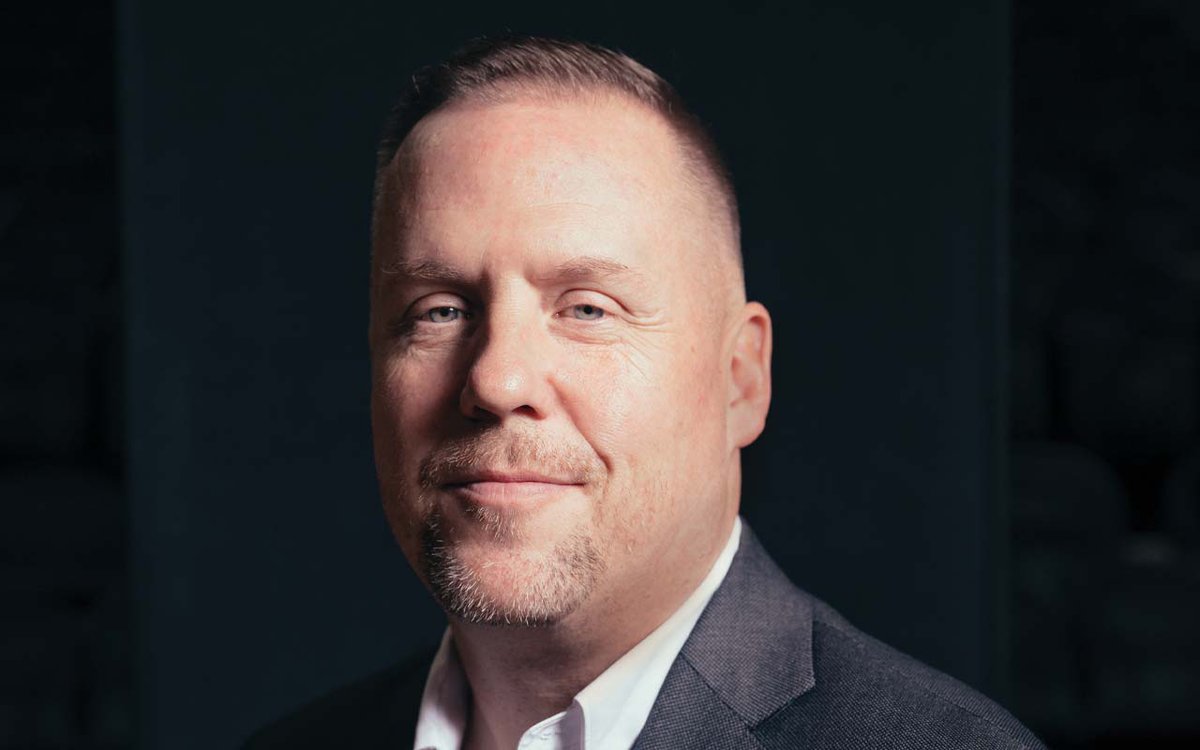
Precious few people on earth have gone out of their way to watch more live basketball games than Tim Connelly.
Fresh out of his teens, Connelly spent three years as an unpaid intern for the NBA’s Washington Wizards, scouring for talent in high school and college gyms from Richmond to Philadelphia, trolling up and down I-95 in a maroon Nissan Stanza he inherited from his great-uncle.
Although his résumé looks like an inexorable climb up the corporate ladder, he stayed on one rung for a solid decade, spending ages 24 to 34, from 2000 to 2010, as a full-time scout for the Wizards. His days and nights were spent validating rumors and grainy VCR footage of hotshot prospects throughout the United States and around the globe by going to watch them play in person.
Inevitably, Connelly’s keen instincts and eye for talent boosted him into managerial positions in the respective front offices of the New Orleans Hornets, Denver Nuggets, and Minnesota Timberwolves. In 2017, he ascended to the top of that hierarchy as president of basketball operations for the Nuggets. Five years later, the Timberwolves cajoled him into becoming POBO of their traditionally woe-begotten franchise.
The season after Connelly left Denver, the Nuggets won the NBA championship with the roster of players he had spent years assembling. In his second season running the Wolves, Minnesota advanced past the first round of the playoffs for only the second time in the franchise’s 36-year history, equaling the exploits of the 2003–04 Timberwolves team by competing in the Western Conference Finals.
Tim is the second oldest of five Connelly brothers. All are currently coaching, teaching, or scouting basketball—four in the NBA. And despite the fact that his oldest brother, Joe, describes them as “probably five of the worst players you could ever find,” Connelly, now 48, still regularly plays pickup games with the Timberwolves staff.
So, when we sit for a 75-minute interview in late summer 2024 in his office at Mayo Clinic Square, right across the street from the Target Center home of the Wolves, my first question is obvious: “What do you love so much about basketball?”
“My favorite thing is that it unites people,” he says. “Not to be too corny or cliché, but there are only a couple of things that bring so many people together—food and sports. This game rewards people who tend to be creative. But it is very easy to play; you need just a ball and a hoop—almost everyone has played it at some point.”
He pauses, thinks, and then refines his answer.
“Specifically, basketball has allowed me to meet really cool people all over the world,” Connelly says. “Without it, I wouldn’t have all these great relationships.”
That panoply of “great relationships” is what makes Tim Connelly extraordinary. And making those relationships a priority has become a pervasive and organic part of who he is—now second nature to the kid once voted the “shyest” member of his senior class in high school. They both fuel and cohere his reliance on character, camaraderie, community, and harmony as foundational elements for the way he lives, assembles a basketball team, and structures an organization.
“Tim is the pied piper. If you’re around him, you know you are going to have a good time,” says Wes Unseld Jr., who, like Connelly, grew up in Baltimore—their sisters even knew each other in high school. “Meanwhile, the web of connections keeps getting bigger and bigger.”
Unseld Jr. really got to know him during Connelly’s formative years as an intern and later as a scout for the Wizards, then run by Unseld Jr.’s dad, Wes Unseld Sr. This was before Connelly was running his own teams and before Unseld Jr. began what is now a 20-year career as a head or assistant coach for four different franchises in the NBA.
“It’s not about lavish dinners or expensive outings,” Unseld Jr. continues. “Tim is authentic, no pretense or airs about him. He just has a way of putting people at ease. He is very spontaneous. I’m very structured—I need my itinerary—but he disarms me. Even my wife, at this point, if he calls, says, ‘Just go!’ She knows I’m in good hands. Some of those experiences have been among the best days of my life.”
And Unseld Jr. isn’t alone.
“Tim connects with people better than anyone I’ve ever met,” says Adam Simon, who began working for the Miami Heat 30 years ago and is currently the team’s assistant general manager. “You know how, when you meet someone for a second time, you work to remember how you know them in the first place? Tim remembers everything that was talked about, what you like personally, what you do for a living, the whole initial conversation.
“I am from Miami, and I have a lot of friends here—I grew up with many of them,” Simon continues. “I introduced him to people in my close circle, and then I’m not even in Miami and he is down here hanging out with them, going to their houses and being invited to their weddings. I think it is an incredible compliment to him. He builds trust wherever he goes.”
Not coincidentally, Connelly’s upbringing was blessed by stability and diversity, enabling him to feel secure and comfortable around both blue-collar and white-collar folks, with a racially mixed cohort of friends whom he connected with because of their love of basketball and other sports.
“As our family grew, so did our dad’s career,” says older brother Joe.
Thus, Tim can remember his parents and six children (only Meggie, the youngest, wasn’t born yet) living in a three-bedroom house with little more than 700 square feet of space. But by the time Tim was 11, his father, Mike, had become partner at a financial firm, and the family moved into a spacious house laden with stonework in Roland Park just north of the city, once owned by the famous, fanciful poet Ogden Nash.
Mary Ann Connelly was a stay-at-home mom and the consensus linchpin of the family. She passed away in 2021, just two days before her 50th wedding anniversary with Mike.
“My mom was the nicest person I’ve ever been around,” Tim Connelly says solemnly. “A mom of seven in pre-tech times and she never complained. No bad days. She was passionate about what we were passionate about. She came from a family of artistic people, and when she was older, she became an artist herself and opened an art gallery. I think all those things were sitting within her”—he taps his chest—“while she was raising us, and she just never had time to do it. Both of my parents were civic-minded and kind of injected us with the values of hard work, humility, a sense of humor, and a desire to learn and experience the world outside our bubble.”
His embrace of each one of these attributes is palpable to anyone who knows him and a fundamental reason for the distinctly successful way he has approached his career.
Connelly will always be a scout at heart. That decade is when the values seeded by his parents were nurtured into blooms, when the shy kid found his ways and means of expression. Recounting that period in his life is when he is both most animated and most at ease.
“A lot of my best friends are from that time period—not just the other scouts but the equipment guys, the sales guys, the guys around the building,” Connelly says. “It was just really fun to be innocently scouting basketball and developing those relations.
“Scouting is so inexact,” he continues. “You get more wrong than you get right. But I do think I’m fortunate that the diversity of my background allows me to sometimes cut through the B.S. and try to get a sense not just what type of player I’m seeing but what type of kid he is. When you’re scouting, if you’re not talking, you’re not learning. You’ve got to know the room, you’ve got to know the talent, and if you do it long enough at these different rungs, it allows you to problem-solve.”
Connelly sits forward in his chair.
“Everyone can tell you who a great player is, but how do great players interact? How do great players exist in your environment? Will the coach like that player? I’ve seen so many practices; I’ve seen the development of so many careers from players to coaches to front office to trainers. To see their whole careers, that’s where I think I have learned the most.
“I also have the most respect for all these different jobs because I have had a lot of different jobs, so I think that has helped me be a good teammate and helped me be empathetic to those people’s professional ascents,” Connelly goes on. “Sometimes when it does not work out professionally with people, I think it is hard to be empathetic if you don’t know what is going on within the building at every level. And that decade allowed me to see everything.”
It was the first decade of a new century, a time when the newfangled statistical measures—“analytics”—were an initially crude but increasingly effective way of judging performance on the court, an intrusion that many wizened members of the scouting fraternity greeted with cynical resistance.
“When we were first coming up, most of the people on the road were longtime scouts and ex-coaches,” remembers Matt Lloyd, now the general manager of the Timberwolves and the first person Connelly hired for the front office after coming to Minnesota. “It was a time on the cusp of analytics and video breakdowns, and both Tim and I had worked the video rooms, the marketing department, anything to keep our foot in the door. We had a mix of old school and new school.”
Connelly laughs about being the “tech guy” as an intern with the Wizards because he had taken the initiative to go to a rudimentary video-editing computer class in New Hampshire and could walk older members of the staff through the basics. Even later, when he was in the front office at New Orleans, he says, “instead of an analytics staff, we’d go to Sloan”—the annual conference for analytical nerds begun by MIT in Cambridge, Massachusetts—“and take six or seven smart guys out for happy hour and show them [videos of] our games.”
Yet, his heart remains old school.
“The inaccessibility of going overseas was great,” Connelly continues. “This was pre-internet; pre-[cell] phones. You just had to get to a game in Novi Sad, Serbia, by a certain time, and you couldn’t call or text or email.” For videos, he says, they all went directly to a guy in Bologna, Italy, and would pay cash for the VHS.
“Spend time on the road and you learn the value of problem-solving,” he says. “You’re in Latvia and your [company] credit card is not working. It is 1999—no internet—and your personal credit card can’t absorb the cost. How are you going to get home? You talk to people, figure things out.
“Some of our travels would be so wacky, and we thought it was normal. We’d go to Zagreb to see a game, then take a train to Venice for another game, then fly to another city for another game,” he says excitedly, on a roll now. “In Brno, Czech Republic, I remember vividly, we couldn’t find the hotel. We had to pick up a woman who got in the car with us and showed us where it was. But in some ways it was simpler. You’d go overseas just to find basketball players and develop relationships. I mean, smartphones—they’re smart, but they have definitely knocked a lot of the fun out of it.”
Travels with Connelly are legendary in the scouting fraternity. Adam Simon remembers wandering into the wrong part of Puerto Rico and bashing up the rental car escaping the neighborhood—that and almost falling off a cliff taking pictures in Spain. Wes Unseld Jr. recalls a two-day break from a tournament in France, where Connelly impulsively decided to drive them south and see what would happen. They wound up in Donostia-San Sebastián and lucked into a hotel right on the beach, eating paella and drinking wine.
Remember why Tim Connelly loves basketball? “To meet really cool people all over the world.” To make unbreakable bonds.
“Taking a train or driving for hours late at night in Europe just to get information on a player for your bosses, having to improvise,” says Masai Ujiri, who recommended that Connelly replace him as executive vice president and general manager of the Nuggets when Ujiri left to become president of basketball operations for the Toronto Raptors. “It started the first day I met him, but that’s when we really became brothers.”
The Tim Connelly Dossier
Washington Wizards
From 1996 to 2010, Connelly worked his way from intern to assistant video coordinator to scout to director of player personnel.
New Orleans Hornets
In 2010, Connelly went to work as the assistant general manager under Dell Demps.
Denver Nuggets
Hired as the executive VP of basketball operations and GM in 2013, Connelly assembled a team that won it all in 2023, the year after he left for Minny.
Minnesota Timberwolves
Hired as the president of basketball operations in 2022, Connelly quickly revamped the roster and got the Wolves to the conference finals a season later.
During Connelly’s 14 years in the front office, half of them as POBO for the Nuggets and then the Wolves, his focus on creating synergistic relationships and team community through high-character personnel may be even more pronounced than it was when he was scouting.
“I don’t want a team, or to be part of a team, of people that aren’t polite and hard-working and self-deprecating,” he says flatly. “You come to work every day. You can’t control wins and losses, especially in the playoffs, where it is matchups and injuries and a shot goes in or out. You can control the type of people you bring into the building, and you can control the positivity and the energy that you bring into the building.”
Creating that kind of environment—and, uh, also winning basketball games—is easier said than done, but in word and deed Connelly has set an admirable example.
“There is this perception that our job is just sitting here trying to make trades. But the hardest part of the job is unseen,” he emphasizes. “It’s a guy going through a tough time and that is impacting their play. You obviously can’t share that, but you need to have those conversations. Or a guy you really like is not in your cards and you’ve got to be honest and say, ‘Hey, we really like you as a player, but it is not here for you. How can we help you?’”
“Tim gets to know the players on a personal level by text, phone calls, taking them out to dinner—all behind the scenes,” says Wolves lead assistant coach Micah Nori, who also was with Connelly in Denver.
More remarkably, many of those relationships are sustained. “I don’t like or do transactional relationships,” Connelly proclaims—a rare boast. He adds that he stays in touch with many players he has traded or cut and that helping them find another situation is “the coolest part.”
When Nori left Denver to go coach in Detroit, Connelly continued to check in with him about his family and frame of mind. Likewise, Connelly calls Josh Kroenke, his boss in Denver whom he left behind to come to the Wolves, “one of my best friends, who I still talk to constantly.”
During his initial press conferences in Minnesota, Connelly demurred from straying beyond positive platitudes in his assessment of players—he wouldn’t really know them until he had earned their trust. Now that that has happened, he can proceed with confidence.
“I know who [among the players he is considering acquiring in a trade or the draft] will be loved or hated by the guys in the locker room, who isn’t like us now but that Finchy [head coach Chris Finch] will help make it work, who will need a lift and who needs a prod,” he says.
But once earned, the trust has to be sustained.
“We preach accepting our role and being a good teammate,” he says. “So, if I try to micromanage Finchy and don’t accept my role, they won’t take me seriously. And if I bring somebody in who makes our jobs more difficult, I’m not being a good teammate.”
And he can’t ask for positivity without setting that tone himself. One of his hallmarks as a scout was the ability to project a player’s improvement, to favor future growth over present warts. It is something he has carried over to his leadership in the draft, most recently this summer when he traded a pick seven years into the future to move up and take teenager Rob Dillingham, undersized and unproven as a defender but with a high dynamic ceiling as a scorer and playmaker.
Nobody had ever worked their way into the lottery by sacrificing an asset to be cashed out in the 2031 draft, a bold and innovative gambit.
“I’ll tell you what: He is the best I’ve ever seen in the draft room,” Finch declares. “I’ve been around smart people that can put together a lot of creative scenarios. Tim’s strength is that he understands the draft at such a high level that he knows what all his counterparts are looking for, and the fact that if he can actually help them he will. Tim can get a deal done on the clock [at the last minute] because the entire league likes and trusts him and knows he will execute what he offers. To see that at work on draft night, that is pretty special and fun to watch.”
Speaking of which, Finch also noted that before he takes the court with his team to start the game, Connelly almost invariably comes over and says, “Have fun.”
“Sometimes I’m thinking, There is nothing fun about what we’re about to do,”
Finch concedes. “The pressure, the expectations, the dealing with many personalities, and all of that. But he wants it to be fun, in a professional way. So, I enjoy that about him.”
And again, it is a sustainable attitude. The two people Connelly brought in to be part of his front office troika—Matt Lloyd and Dell Demps (the latter of whom gave him his promotion out of scouting in New Orleans)—both say they have never seen him down. Like the mother he revered, he has no bad days.
Some of this is calculated, of course, and sometimes Connelly takes it too far. In an effort to reduce the pressure on himself and his team, he overemphasizes the impact of luck, such as the lottery-ball mechanism that determines the draft order of the non-playoff teams each season.
“Any industry where a lottery ball can largely determine the success of your organization, how can you take yourself that seriously?” he asks rhetorically. “It’s like a lottery ball [drawing] in your industry, and then somebody comes up and says, ‘OK, here is your Pulitzer.’”
Consequently, “In this industry, I am not solely driven by competition; I am driven by relationships,” he says. “Now, if we don’t win enough games, I’m not here. But as much as we are all trying to beat each other’s heads in 82 games a year, there should be some fraternal collective sense of the game. The wins and losses—I think the idea of legacy is greatly overrated. And I think the idea of being a really good person is underrated.”
This is where Masai Ujiri, probably the closest thing to a mentor Connelly has in the game, calls B.S.
“When it comes to keeping our values and staying the same person, I think everyone would say Tim is number one at that,” Ujiri says. “He is very caring and that is real. But I hate to break this news to you: When it comes to being competitive, Tim will chop your head off. He is a killer, no joke. We are all in a competition, and he is one of the best at it.”
Indeed, on the flip side, inflating the impact of serendipity on a team’s fortunes logically induces a POBO like Connelly to embrace risk—exactly what the Timberwolves needed to do to break out of their horrid rut of ineptitude and change the culture.
In Denver, Connelly presided over a slow but sure rebuilding process that took nearly a decade to produce a champion. But six weeks after he was hired in Minnesota, he stunned the NBA world by trading three rotation players, four first-round draft picks, and some other minor pieces for center and defensive stalwart Rudy Gobert. The Wolves already had a center on the roster, Karl-Anthony Towns, and in a league that had veered into a quicker, space-and-pace style, the trade was widely derided. The cynics looked smart when the pairing of bigs didn’t work the first year, in part because of a lengthy injury to KAT. But Connelly got the last laugh when Gobert spearheaded a top-ranked defense and the Wolves went to the Western Conference Finals last year. And all it took was the willingness to sacrifice what could become a handful of lottery balls.
But not all the gambits are going to pay off. Just before training camp opened on the 2024–25 season, Connelly again swung a major trade, dealing multiple All-Star Karl-Anthony Towns to the New York Knicks for power forward Julius Randle and guard Donte DiVincenzo. (The Wolves will also receive a future draft pick from New York via the Detroit Pistons.)
A significant motivation for the trade was gaining more salary flexibility to tweak the roster down the road—KAT’s “supermax” contract was inked before the league’s new Collective Bargaining Agreement put more restrictive penalties on high-spending teams.
But although Randle is also a multiple All-Star, he is not the rim protector Towns could be as the backup center when Gobert goes to the bench, disrupting the Wolves’ defensive identity. And while DiVincenzo was acquired to be a backup point guard, a bridge between grizzled veteran Mike Conley and Dillingham, he flailed in that role to start the season.
As a result, the Wolves were still struggling to retain a winning won-lost record late into December.
Connelly will weather this storm, however big or small it has now become, with his customary bonhomie. Every single person interviewed for this story agreed that in terms of his fundamental values and approach to life, he hasn’t changed since the days when he was tooling up the coast in his great-uncle’s automobile.
Connelly takes great pride in holding true to himself as he amasses great wealth and prestige. Having bolstered the Wolves into the “Final Four” last season, he is in the catbird seat. As the team enjoyed phenomenal success, a fight over controlling ownership broke out between longtime owner Glen Taylor and the partnership team of Marc Lore and Alex Rodriguez, who were supposed to take a majority stake in the franchise last spring. In the court of public opinion, both sides say they are willing to spend whatever is necessary to sustain the team’s upward rise, essentially giving Connelly carte blanche to operate. For his part, Connelly has shrewdly extended the option on his contract merely one year, giving him both leverage and flexibility as the legal skirmish plays to a conclusion.
But there is another side where Connelly is a little more ambivalent about his tenacious habits and behaviors. After being raised in a large, rock-solid family, he has embarked on building one of his own—he and his wife of 11 years, Negah, have three children, ages 9, 8, and 2. By all accounts he is a devoted dad and husband, FaceTiming on the road and doing his share of errands at home.
But he remains a social savant, a relationship addict, who works hard, rarely sleeps, fulfills his family obligations—and wants to shoehorn as many interactions as possible into that mix.
“Negah is an amazing woman, a strong, generous person who lets Tim be Tim,” says Demps, who together with his wife has done countless dinners and dates with the couple as a foursome.
Tim’s father, Mike, has the quintessential story about his son’s sociability. Before Tim and Negah were married, he asked if Tim needed help with the rehearsal dinner. “Nah,” Tim replied, “we’ll just do pizza dinner or something.” Then two weeks before the wedding, Tim hit him up and asked for help organizing the rehearsal dinner.
Mike secured a nice place in the D.C. area and told Tim to invite whomever he wanted. That night, more than 100 people showed up, and Mike didn’t recognize most of them.
After Tim sang Negah’s praises in our interview, I mentioned that people had said she “lets you be yourself.”
“Yeah, sometimes myself is obnoxious,” he replies with a laugh, then pauses to parse his meaning. “We have fun. She has a great sense of humor and a beautiful heart. Sometimes I’m a dreamer. My wife knows I have this goofy side—like, if it was up to me, I’d have people over to our house every night.”
Later in our time together, he says, “It can drive my friends and my wife nuts because I’ll—like, I went to Tokyo and the Philippines last year, and I told one of my buddies who I went to school with, ‘Just come!’ And he came that night. Compared to most people, I’m a little wacky with that stuff.”
Musing about the pressures of his work and, indirectly, his life, he volunteers that “without the ability to be nimble and have a sense of humor, we’d be in trouble. We’re all ridiculously overpaid in this profession, and at times there is a sense that we’re holier than thou. But we’re not curing cancer.
“It is a little liberating to know that when my epitaph is written, there’s a chance they’ll write, ‘He was a really good guy.’ If they ever have to write, ‘Bad GM,’ OK. But if they write, ‘Bad Guy,’ that would kind of suck.”