
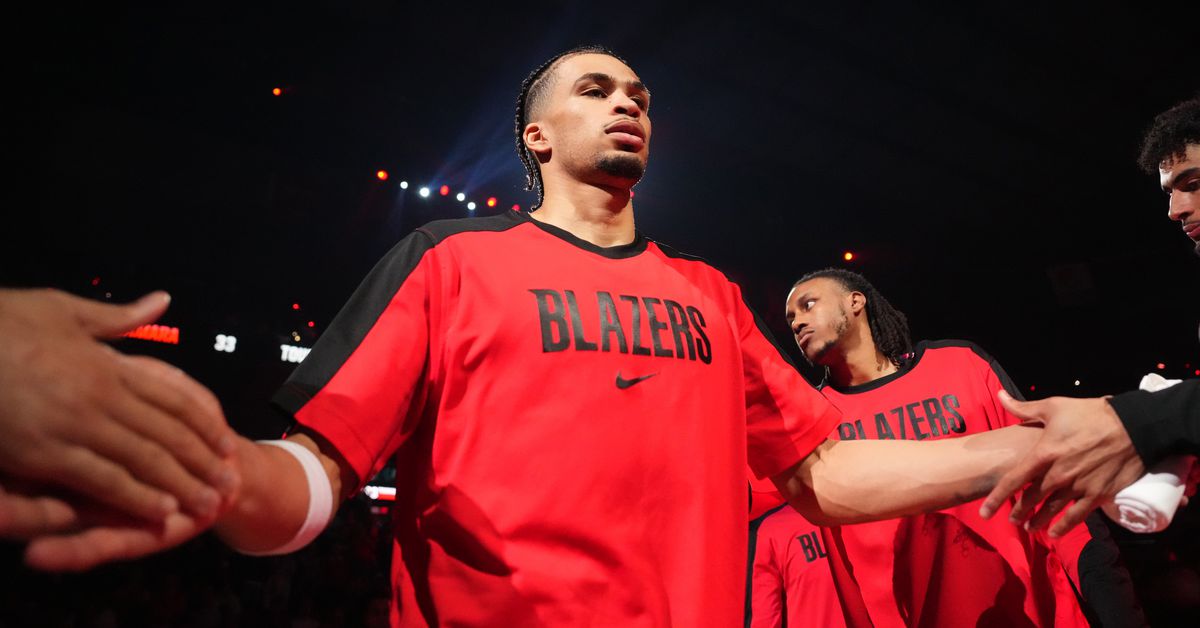
As the 2025 NBA Playoffs chug onward and the Portland Trail Blazers await their fate in the NBA Draft Lottery, we’re taking a look at the performance of Portland’s current roster during the 2024-25 season. So far we’ve talked about Scoot Henderson, Shaedon Sharpe, Jerami Grant, Deandre Ayton, Anfernee Simons, and Donovan Clingan. Today we’re examining Portland’s strongest defender, second-year forward Toumani Camara.
The Good
Camara brought a long-absent wrinkle to the Trail Blazers’ approach this season: honest-to-goodness defense. The 6’8 forward received votes for NBA Defensive Player of the Year and Most Improved Player while guarding the toughest assignments opponents had to offer on a nightly basis. Full-court pressing became a regular feature of Portland’s defense as Camara seemed to take the ball crossing halfcourt as a personal offense.
Camara averaged 1.5 steals per game, representing a slight increase in his per-minute and per-possession rates from last season while playing 50% more minutes overall. Dilution is a risk when relying on early results of young players. Often an increase in playing time will act like water, thinning out their contributions. Camara not only kept integral but increased his production.
This was true of steals. It was also true of points. Camara’s aggregate scoring rose from 7.5 per game to 11.3. That represented an approximate 10% increase in per-minute and per-possession scoring categories.
Most impressive of all, Camara’s three-point percentage rose from a barely-serviceable 33.7% last year to a sturdy 37.5%, once again with a substantial increase in attempts per game (3.5 to 5.1). His effective field goal percentage rose from .516 to .552. Those are massive leaps. They transformed Camara from a “good, for now” starter to a bankable part of the lineup, presumably for years to come.
Camara stands among a handful of Blazers with a positive net plus/minus on the season. That’s hard to do when the team is losing most of its games. Players get dragged down by the vortex no matter how well they swim. Despite playing more minutes than anyone on the team (250 more than second-place finisher Anfernee Simons), Camara registered a +3.2 point net effect for the year.
The Bad
For all the improvement, Camara is still not a scorer. Only Donovan Clingan—who has zero offense beyond three inches of the rim—ranks lower in points per possession among regular players. Camara has started to get the corner three down. He also has a drive-by move down the baseline. But if the ball is in his hands in any other situation, the Blazers are in trouble.
The Analysis
Camara did everything one could ask in his sophomore season. He translated rookie promise into real-world production, stayed in his lane, and gave his team a defensive backbone that they utterly lacked without him. He shored up enough of his offensive weaknesses to remain playable. He may not be a star, but he’s never, ever the wrong answer when Head Coach Chauncey Billups calls.
The beautiful part about this for Portland is that Camara is one of the few players on the roster who doesn’t need the ball to be effective. His usage rate this year was only 14.4%. He took only 9.2 shots per game. He’s providing all the defense (and a little offense) without butting heads with Anfernee Simons, Scoot Henderson, Deni Avdija, or any of Portland’s more ball-dominant contributors.
What’s Next?
Steady as she goes, Mr. Camara! If this continues much longer, Camara is going to be in line for a nice raise. League-wide defensive awards may be in the offing as well. There’s a reason that opposing coaches cited Camara more than any other individual Blazers player this season in interviews and post-game pressers. He’s a legit NBA contributor that any franchise would be happy to have and field.