

Our newsletters uncover the insights you need to understand the issues facing Coastal Georgia—delivered to your inbox five times a week.
In early 2023, I walked on the Forsyth Park basketball courts for my regular workout, when a group of boys approached me. “What’s up, Mark Cuban?” they said, each dapping me with a handshake.
The teens were court regulars, but I didn’t think they knew me or decided I was worthy of a nickname. Plus, “Mark Cuban” – the 66-year-old businessman slash owner of the Dallas Mavericks – didn’t seem like a flattering comparison. I was no serial entrepreneur. At best, it was a commentary on my looks, and at worst, my basketball ability.
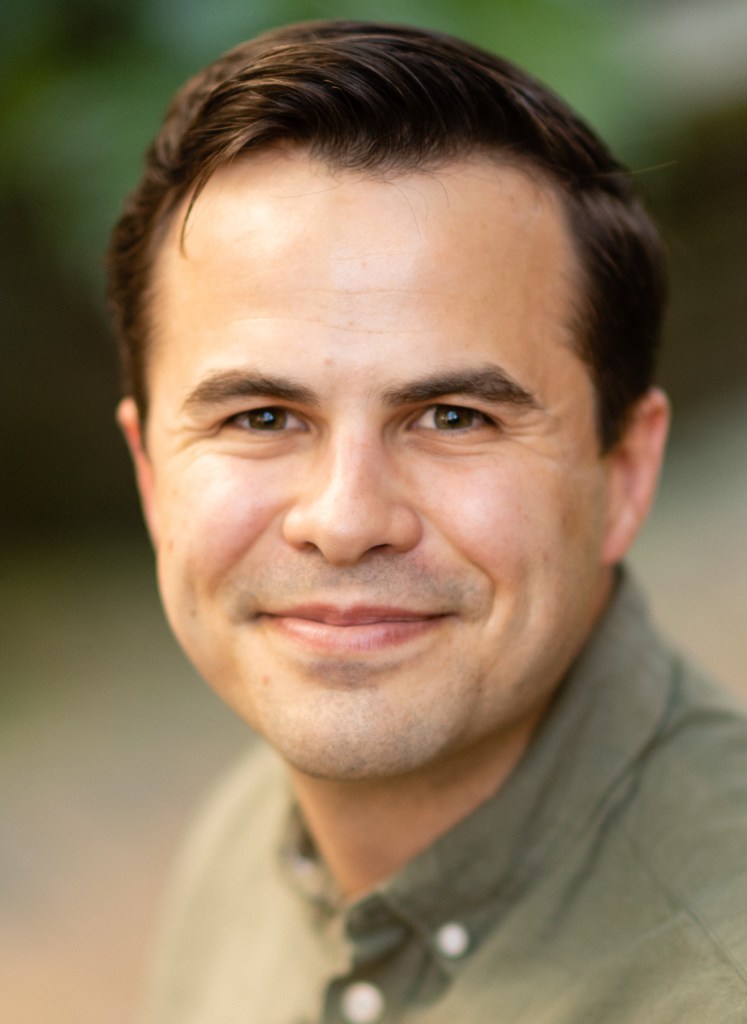 Jake Shore, aka “Mark Cuban” or “Unc.”
But after more than two years of hooping alongside the young men for whom the courts are a substitute backyard, I’ve embraced the name. It’s a sign that some of the neighborhood locals adopted me — a newcomer to Savannah and their lives. They decided I belonged.
The teens who first christened me “Mark” usually arrived at the green and blue courts in the park’s southwest corner by scooter, bike or on foot. Some came dressed in collared shirts and khaki pants, remnants of a school uniform. Their footwear ranged from new Nike shoes named after NBA players, to worn, hand-me-downs from older siblings.
“T.J,” was no older than 12 years old when I met him, a short boy with a big personality. “Beanie,” a quiet, lanky 15 year old, wore beanies while he stayed on the court for hours most days. “Nunu,” about 14 years old, never failed to dap me when I got to the courts.
I’ve watched them grow like weeds in the grass. I’ve overheard increased talk of crushes and potential prom dates, and even girlfriends.
I learned how they used the courts to socialize and blow off steam. While we lived in different neighborhoods and what sometimes felt like separate realities, basketball was our universal language.
To outsiders, the young boys and middle-aged men, mostly Savannah natives who frequent the courts, are sometimes derided as trash talkers or potential safety threats. To me, T.J., Beanie, and Nunu — whom I’ll refer to by their court nicknames to protect their privacy — and their court friends represent the best of Forsyth Park, a 30-acre oasis in the center of the city, where Savannahians are welcome regardless of age, race or socioeconomic status.
Later this summer, I’m leaving the Hostess City, after writing more than 150 articles about public safety in Coastal Georgia. Through my work, I’ve learned how community and public spaces like the park combine to create effective diversions to crime.
As a citizen, I value the park for much more. It was a space for our shared humanity. As a white male in his late 20s, I was a minority in a predominantly Black space; I wasn’t othered, I was welcomed.
In search of community
In the summer of 2022, I was new to Savannah and had few friends. I felt insecure that I had nobody to play basketball with, but I went to Forsyth Park anyway in hopes of relaxing from my intense new job at The Current GA.
By the fall, I worked up the courage to join a group of guys who were playing.
They played a game I thought I knew well, a free-for-all called “21.”
The objective of 21 is to reach 21 points first by scoring baskets. Each time a player scores, they get to shoot a free throw and keep shooting as long as they keep scoring. If they miss, players must take the ball out behind the three point line before trying to score again. The game is designed for odd-numbered groups — three or five typically, according to Basketball for Dummies 2nd Edition.
Savannah’s version is called “All Man.” The rules are simpler and more chaotic: Players can shoot anywhere on the court the moment they get the ball and must reach 32 points to win. No free throws after scoring, which stretches the games and tests endurance. Old, young and younger mix together to play, and anybody can join at any time.
That day the players on the court swelled from six to 16 as the sun set. We all laughed when a young kid made an unlikely jump shot and piled defense on players who were close to winning.
It was my first taste of Forsyth’s welcoming basketball community.
Regulars at Forsyth included older hoopers, guys with gray hairs and families, whom the teenagers called “O.G.” (Original Gangster) or “Unc,” (short for uncle). Some were City of Savannah workers, who shed reflective vests and played in white t-shirts; others were truck drivers who played to shake off their long-seated shifts.
One court celebrity was Solomon, a.k.a. “The Big Solomando,” who often played at the same time I did. He combined his large frame and unblockable hook shot to dominate teams. Off the court, he sells t-shirts with his face on them.
Solomando’s size frequently earned him spots in games on both courts, including the coveted “main court.” It’s closest to Forsyth’s central thoroughfare and where onlookers often stop to watch the hoopers. The regulars there, athletic men mostly in their 20s and 30s, grew up in Savannah and have known each other since high school.
Most of the trash talk and arguments typically emanated from that group.
As a stocky player with a decent (but not great) inside game, I was rarely picked to play on the main court. Schoolyard rules dominated there — the biggest or most popular guys played games.
Someone needed to vouch for you to get court time. If not, good luck waiting your turn to play.
Instead, I became a regular on the less star-studded court, where teenagers ruled.
Earning a name
By January 2023, I had made friends of my own and brought them with me to play full-court, competitive games. Even still, we stuck to the safety of the second court.
There, T.J, Beanie and Nunu, and others in their posse, gleefully roasted my team from the sidelines.
They jeered when we “air-balled” a shot, when you miss your mark so spectacularly that the ball fails to touch the hoop. They cheered like fans in the student section of a March Madness game when we did something average.
My friends found it annoying, but I chuckled at the spectacle.
After the game ended, “Mark Cuban” was born (the nickname, not the man).
“There we go, Mark!” Nunu said, as he and others gave me a handshake.
Schoolyard picks
Over the next six months, my weekly court visits became habitual, and the teens and I had a breakthrough.
“I’ll pick you up, Mark,” Beanie or Nunu started saying to me, when selecting their teammates for an upcoming game.
Let me tell you: It is a satisfying feeling to get picked for a team schoolyard style.
T.J., more of an entrepreneur than a hooper, spent his time biking around the courts and commentating, reacting animatedly like the rich guys who pay for courtside NBA seats.
Then, one July afternoon I got a knock at my front door from a surprise visitor. I lived two blocks from the park.
“I didn’t know you stayed here!” T.J. said, equally surprised to find me at the door. He wore a local football jersey and was selling candy to raise money for his Daffin Park team.
After that encounter, T.J. stopped by every few weeks to see if I was coming to play basketball that day.
“Your friend is here!” my girlfriend called up to me when she saw T.J. outside, unsure how to define him.
Our interactions became less formal from that point. During games at Forsyth, Beanie kept his headphones in my bag for safekeeping, after a previous pair got stolen at the courts.
If I got to select teammates for an upcoming game, I picked Nunu to return the favor for picking me up — much to the chagrin of more athletic adults waiting to play.
Beanie and I often shared our walk home from the park. Heading west, we walked on Park Avenue while I went south on Barnard Street. Beanie kept walking to Frazier Homes, the public housing project on Martin Luther King, Jr. Boulevard.
Beanie once told me that he started coming to the courts to stay out of trouble. But he had to be careful of how late he got home from Forsyth, for fear of getting robbed on his way back. Persistent crime at public housing complexes, especially at Frazier Homes, has led to lawsuits and public outcry, prompting the Savannah Police Department to increase camera surveillance last year.
The park as common ground
From Reconstruction to the 1960s, Forsyth as well as most downtown Savannah parks were effectively off limits to a no-go zone for Black Savannahians because of the selective police enforcement of vague local ordinances designed to keep segregation a reality.
Then, the U.S. Supreme Court ruled in 1963 that police and prosecutors had violated the constitutional rights of six Black Savannahians who were playing basketball in Daffin Park. Police had arrested them for breach of the peace for playing in the park reserved for whites. The legal victory was part of Black Savannah’s successful nonviolent campaigns to open up all parts of the city and city government.
Still, the city’s racial equity task force observed in a 2021 report: “The story of the African American in Savannah continues to be one of spatial and economic segregation.”
Black residents “inhabit primarily the same neighborhoods that they did in 1929,” the report stated. Researchers found similarities after comparing a map of redlined neighborhoods to current demographic breakdowns.
It remains a tacit truth that today’s Forsyth Park basketball courts are predominantly used by Black residents. But, in my experience, the regulars are open to all.
Leaving memories, new friends
As a white male journalist in his late 20s, there were few concentric circles where I met Black teenagers. I did not grow up in Savannah nor did I work in schools.
As a reporter who covered the police and courts in Savannah, I learned how Black children and teenagers are statistically overrepresented in Chatham County’s juvenile justice system, Savannah’s racial equity report attributes this to factors like high poverty and implicit racial bias.
During my temporary stay in their city, T.J., Beanie, and Nunu helped me understand their Savannah, lifting me out of my professional role as reporter to simply being a neighbor.
To them, I was just “Mark.”
I recently accepted a new job to work in Florida, which means I’ll be leaving the Hostess City soon. I’m filled with excitement for a new challenge and deep sadness about leaving a city I love.
When I drive away for the last time, I know I’ll be thinking about Spanish moss swinging in the warm breeze, the easy smile of meeting a neighbor or a friend and, of course, the words that greeted me whenever I entered the Forsyth basketball court.
“What’s up, Mark Cuban!”
Support Our Work
Nonprofit, independent journalism needs YOUR support to survive and thrive. Help us achieve our mission of creating a more informed world by making a one-time or recurring donation today.
Related
Type of Story: Feature A feature is a story that is less tied to daily news but brings insight into a community issue or topic.