
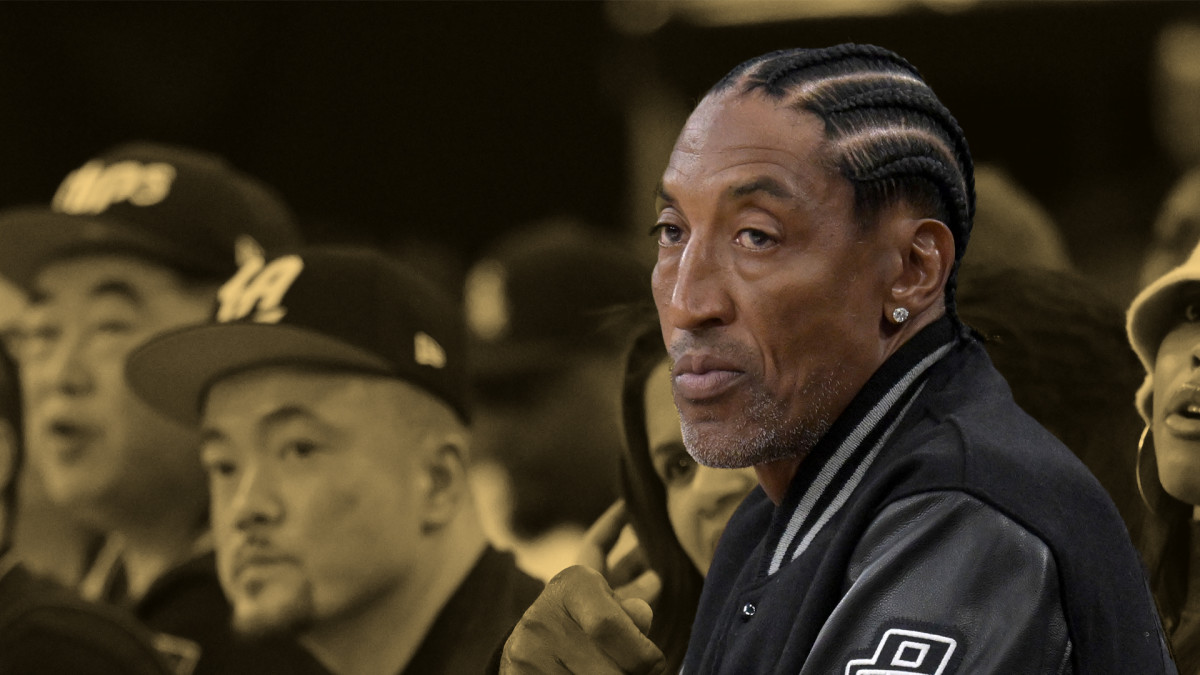
“I wanted to not be that basketball player when I’m sitting in a restaurant” – Scottie Pippen admits he never liked the publicity and fame of being an NBA superstar originally appeared on Basketball Network.
There was always something steely and sealed about Scottie Pippen.
Advertisement
Something that made him seem like he was walking one step removed from the spotlight, even when it was directly on him.
In an era that glorified the loudest and celebrated those who craved the spotlight, Pippen was the one superstar who didn’t seem to care much for any of it.
He was just there to do his job and preferably disappear after. That rare combination of greatness and aversion to fame made him both enigmatic and, at times, misunderstood. But looking back now, it’s clearer than ever that Pippen was never playing for the applause.
Pippen’s lifestyle
Pippen’s ascension in the NBA wasn’t the loud, headline-chasing climb so often seen in the ’90s. It was methodical, deliberate and tied to winning. He was a superstar but was uncomfortable with the trappings of celebrity that came with all that success.
Advertisement
“I wanted to have my own privacy,” Pippen told The Guardian. “I wanted to not be that basketball player when I’m sitting in a restaurant.”
His discomfort with fame wasn’t performative. He wasn’t against the attention. Off the court, Pippen didn’t want to be Pippen the NBA legend. He wanted to be left alone. He often avoided the flashy clubs, the endorsements that asked too much and the press events that dragged on after the buzzer had sounded. He was a worker, not a showman.
Even at the height of the Chicago Bulls dynasty, with Michael Jordan taking up most of the public space, Pippen rarely jockeyed for the scraps of spotlight left behind. He was comfortable playing his role, no matter how essential it was. That kind of self-containment made him vital to Chicago’s dominance, but it also meant he remained slightly out of reach to the fans and media alike.
During championship parades, Pippen celebrated, but it wasn’t his natural habitat. His joy was in the work, the satisfaction of shutting down an opposing team’s best scorer and the unglamorous consistency that held everything together.
Advertisement
The tough spotlight
Pippen didn’t always like being the main spotlight, and he had a taste of it when Jordan stunned the world with his first retirement in 1993. The seven-time All-Star finally stepped forward, not necessarily by choice, but by necessity.
And in that vacuum, he delivered on the court.
The 1993-94 season was arguably his finest individual campaign — he averaged 22 points, 8.7 rebounds, 5.6 assists, 2.9 steals per game and led the Bulls to 55 wins. He finished third in MVP voting and proved, without a doubt, that he could carry a team.
Advertisement
But the off-court price was heavier than expected. For the first time, all eyes were on Pippen. Every action was scrutinized. Every headline had his name on it. And when things went sideways, the criticism was personal and it wasn’t always a fun period for the forward.
“I was cool with it, because I never heard the noise, if I can say that,” he said. “I played for my team and to make it fun for those guys out on the court. I didn’t really give a crap about what people thought about how I played. When I walked off the court and the cheers went away, I was fine with it. I didn’t care to have people chanting for me.”
Still, the cracks showed.
One of the most infamous moments of his career came during Game 3 of the 1994 Eastern Conference semifinals. With 1.8 seconds left on the clock and the game tied against the New York Knicks, coach Phil Jackson drew up the final shot for Toni Kukoc, not Pippen. In protest, Pippen refused to go back into the game. The Bulls still won, but the moment cast a long shadow.
Advertisement
It was a rare lapse in judgment from a player known for his discipline, and it triggered a wave of criticism that lingered throughout the offseason. Pippen’s legacy isn’t dented by moments like that, but they offer insight into just how ill-suited he was for the lone-superstar model that so many others in his position embraced.
As basketball evolved into a platform-driven business, where players became brands, and fame became as valuable as performance, Pippen remained something of a relic.
He may never have liked being one of the most famous names in basketball, but he earned it the hard way, without spectacle and without seeking anyone’s approval.
This story was originally reported by Basketball Network on Jul 6, 2025, where it first appeared.