
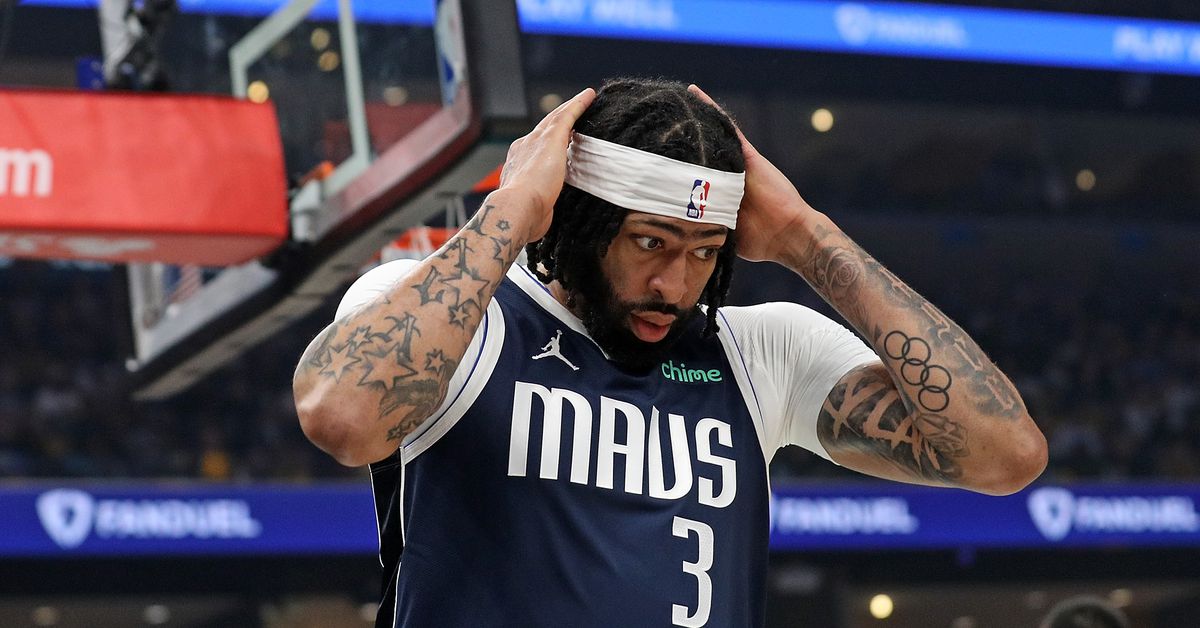
The Dallas Mavericks saw their season come to a close in a forgettable 120-106 loss on April 18th. Twelve days later, the Los Angeles Lakers joined Dallas in making Offseason vacation plans. Now that the season has ended for all parties involved in one of the most surprising trades in NBA history, we find ourselves at a unique inflexion point. For the first time since the February 2nd trade, we sit in a vacuum where things are no longer developing in real time. Until at least the Draft, and more likely until the Offseason and Free Agency kick in, focus shifts away from Dallas and LA to the teams vying for a championship in June. Following the Lakers’ Playoff ouster last Wednesday night, the book can finally be closed on the trade (until next season, that is) and we can take a view of the fallout as it pertains to various parties – some of whom have not gotten much attention to this point – to determine if any of them has yet “won” (or can still “win”) as a result of the Doncic-for-Anthony Davis swap. In Part I, we’ll take a view of things close to home. In Part II, we’ll have a view of things that are somewhat more tangential to the Mavs.
Nico Harrison
There isn’t much to say about Harrison that has not already been said, but we can’t have a trade assessment without including the orchestrator himself. He received an unprecedented wave of backlash for the trade, and it did not wane in the months following. In an otherwise normal circumstance, he would at least have a chance at coming out on top somewhere down the line. If Doncic flames out amidst conditioning and injury issues, or the Mavs win a championship(s) in the near future, Harrison gets his “I told you so” moment. In this actual circumstance, even if things transpire in such a manner, the cloak-and-dagger way of going about the trade may very well have damaged his NBA reputation beyond repair. If that alone didn’t do it, add on the fact he made the near-unprecedented move of trash-talking Doncic following the trade, then reluctantly scheduled a private, short-notice press conference in mid-April that went over like a proverbial lead balloon. He has done nothing to help his own cause. As we’ll see in Part II, Harrison cost more than one influential person a lot of money with this trade. It’s not unreasonable to think that players around the league may not take kindly to the notion the same could happen to them in the middle of the night if they cross paths with the maligned GM.
ESPN’s Tim MacMahon recently featured on “The Right Time with Bomani Jones” and shared a damning indictment. MacMahon said “I was talking to somebody who’s in an ownership group of another Western Conference team recently, and they basically said, ‘I hate to say it, but this is going to be his legacy. This trade’s his legacy. Like, he’s never going to work in the NBA again.’”
Harrison has been cast in a unique villain role, with any path to redemption difficult to find. His own actions, coupled with an absurd string of injuries that prevented any post-trade positives, allowed for perpetual disdain to take root and it may not be possible to change the prevailing view at this point or in the future. When it’s all said and done, Harrison may lose regardless of what the Mavericks win. It’s almost impossible to envision him coming up roses at this point, but time will tell.
The Mavericks
Had it not been for a ludicrous string of injuries, the Mavericks most likely would have looked pretty good this year. The seventeen players on their year-end roster were generally well balanced on a variety of fronts, including – age (ten players under the league average age of 28), position distribution (seven backcourt; ten frontcourt) and experience (eleven with six or fewer years; five with ten or more years). They feature a frightening front line with P.J. Washington, Dereck Lively, Daniel Gafford and Anthony Davis. They have two bona fide stars in Kyrie Irving and Davis, and although some argue that neither is in the upper echelon of the elite, they are nevertheless two of the best players in the league and likely Hall of Famers. The team also seems well tied together. In their exit interviews, both Washington and Lively touched on the notion that the trade (and ensuing backlash) fortified the team and left them with a desire to prove their legitimacy as a contender. This attitude should not be understated.
The Mavericks also have a somewhat abstract asset in terms of salary cap management. Doncic was eligible to sign a supermax contract of $345M for five years with Dallas. Even with the new media rights deal that will bump the salary cap, that is a massive number. The current CBA is incredibly punitive for teams that exceed the first and second aprons. Not only are there tax ramifications, but major limitations to the types of trades that can be made and what exceptions are available. To be clear, this is not an endorsement of the trade, but simply an observation that the team likely has more flexibility without the weight of a supermax contract on the books.
Despite the positives, there are obvious problems in Big D. Irving suffered an ACL injury that will optimistically keep him out of action until January. Davis came to Dallas injured and only lasted two-and-a-half quarters before getting reinjured. Aside from Irving, the Mavs currently roster Jaden Hardy and Brandon Williams as the only two ballhandlers under contract. Speaking of contracts, Williams’ is bewilderingly structured such that he can become an unrestricted free agent after next season. Obviously, the Mavs will look to address the backcourt void in the Offseason, but it’s reasonable to expect Nico Harrison to be all-in on this roster, perhaps re-signing Spencer Dinwiddie and/or Dante Exum as opposed to a major overhaul. He will want to see his brainchild prove him right. With months to go before we have the chance to see the team at full strength, there are many unknowns and there will be limited (if any) time for management to assess what they have on-court prior to next year’s trade deadline. This core may very well be what we see until at least the end of next season.
With that all said, the Mavericks’ championship window was almost unquestionably longer with Doncic than without. They have every opportunity to contend now, but likely have only a few years to do so, with some of that time wasting away with an injured Irving. Unless they net themselves a trophy soon, the trade could very well prove to be the unmitigated disaster most have already declared it to be. Whether they “win” or “lose” the trade basically hinges exclusively on winning a ring with this core.
In part two (coming tomorrow) we’ll have a look at the other parties involved in the trade, namely the Los Angeles Lakers, Luka Doncic and a key figure who has gone overlooked in the discourse thus far – Bill Duffy.