
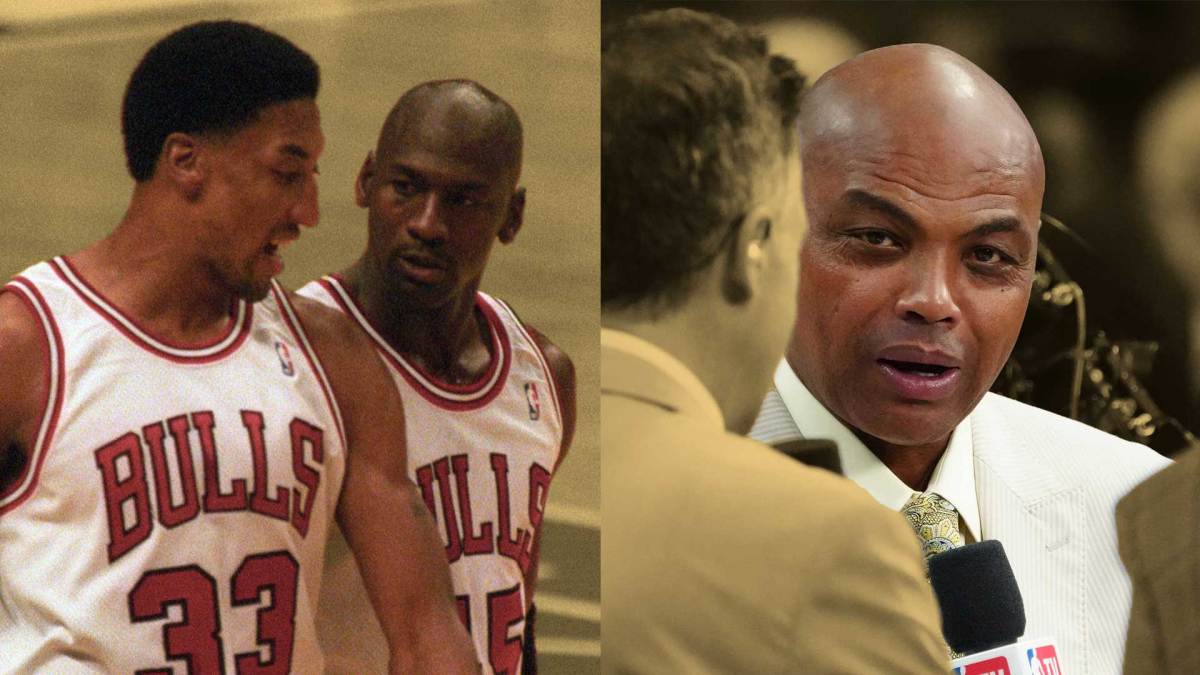
“The notion that that little man broke up the Bulls is asinine and absurd” – Charles Barkley on who was really to blame for end of Bulls dynasty originally appeared on Basketball Network.
There’s a tendency in sports history to wrap endings in neat bows, to assign blame or credit quickly and then move on. But the Chicago Bulls dynasty, with all its rings, rivalries and rare chemistry, never got a clean sendoff.
Advertisement
A team that won six titles in eight years collapsed without a proper farewell tour — and a lot of blame has been flung around on who was responsible and who was not.
Barkley came to Krause’s defense
For decades, the late Jerry Krause has stood at the center of the storm. He has been the so-called villain who, according to the last dance narrative, dismantled the most iconic basketball team of the 1990s. His strained relationship with Phil Jackson and tense dynamic with players like Michael Jordan and Scottie Pippen fed that narrative until it became gospel.
“[Krause] didn’t take that apart; anybody that thinks that is a fool,” Hall of Famer Charles Barkley said of the Bulls dynasty. “That thing was all orchestrated by [Chicago chairman] Jerry Reinsdorf. The notion that that little man broke up the Bulls is asinine and absurd.”
Advertisement
Krause had become an easy target, especially after his death in 2017, unable to defend the team he helped build. He was the man who brought in Jackson, traded for Pippen, drafted Horace Grant and swung the deal for Dennis Rodman. But he also became infamous for his comment: “Organizations win championships.”
For Jordan and his teammates, that line severed whatever goodwill might have existed. Public perception ran with it.
Still, Barkley’s take is among the things that reorients the conversation. He’s not praising Krause but rather pointing to the man above him — owner Jerry Reinsdorf, who held the financial levers. In Barkley’s view, the Bulls didn’t implode due to ego alone but were deliberately taken apart by the person writing the checks.
The fall of a dynasty
Reinsdorf was known in both the NBA and MLB for operating with financial caution, and that, in Barkley’s eyes, may have imploded the dynasty.
Advertisement
“If you go back and look at it and use common sense, just use plain common sense — Jerry Reinsdorf broke up the Bulls because he didn’t want to pay anybody,” Barkley said.
The logic tracks.
Grant was allowed to walk in 1994 as a free agent, joining the Orlando Magic in his prime. That loss alone nearly cost the Bulls their standing before Jordan’s return. Despite his All-Star status and defensive presence, Grant was seen as replaceable and not worth the money.
Then there was Pippen, who spent the majority of his Chicago tenure under a severely undervalued seven-year, $18 million contract. By 1997, he was vocal about his frustration, publicly criticizing management while dealing with back issues and trade rumors. Yet the front office never moved to restructure his deal until it was too late.
Advertisement
Jordan earned $33.1 million in the 1997-98 season. His single-season salary was unmatched until 2018 when Stephen Curry surpassed it. Before that, Jordan’s pay was modest for a player of his stature, largely due to Reinsdorf’s financial hesitancy and Jordan’s competitive loyalty. Pippen, meanwhile, remained the sixth-highest paid player on his own team during the 1997-98 season.
The final straw came after their sixth title. Jackson was informed before the season even began that it would be his last, regardless of the outcome. The message was clear that even winning wouldn’t save the roster. When Jordan retired for the second time in 1999, citing the absence of Jackson and Pippen, the rebuild had already been preordained.
This story was originally reported by Basketball Network on Jul 11, 2025, where it first appeared.