
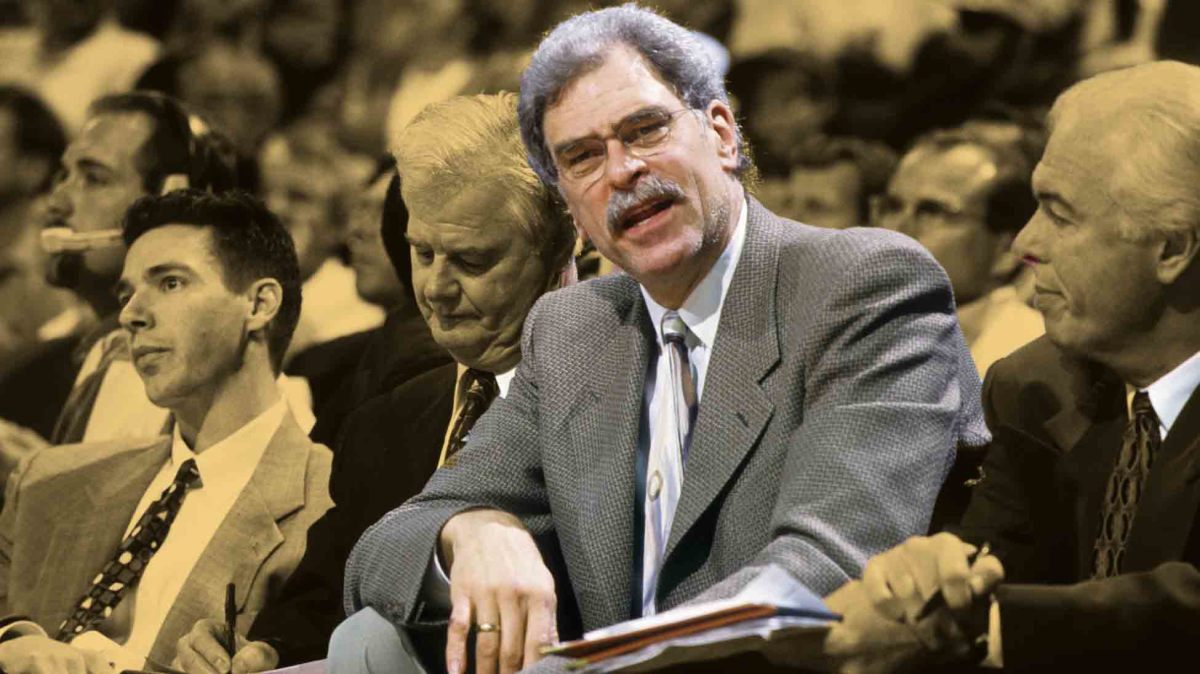
“One year is about what I have to give” – Phil Jackson on why he rejected long-term deals with the Bulls at the height of their dynasty originally appeared on Basketball Network.
Phil Jackson was the best coach in the NBA during his run with the Chicago Bulls. Naturally, he wanted to be properly compensated for his efforts.
Advertisement
In 1996, Jackson figured it would be best to avoid long-term deals and opt for shorter ones. While some felt this was foolish, he made a valid point about why he preferred to do things that way.
“It’s exactly what I wanted,” the Bulls coach said at a news conference via the Washington Post. “I’ve always said there’s a certain amount of time a coach has. Long term is something that right now I don’t want to discuss because one year is about what I have to give.”
Why Phil frowned at long-term deals
Considering he had already led the Bulls to three championships, critics felt it would have made sense for Jackson to agree to a secure and long-term deal. However, other factors also impacted his decision.
Advertisement
The 1996 Coach of the Year didn’t see eye-to-eye with Bulls owner Jerry Reinsdorf. He wanted to be paid close to what University of Massachusetts coach John Calipari had signed for — he was set to get $3 million a year from the New Jersey Nets for his first NBA head coaching job.
Incidentally, Jackson’s name was linked to the Nets’ head coaching job that same year. He hardly showed interest, but he used Calipari’s contract as a bargaining chip.
Jackson’s agent, Todd Musburger, revealed that the best the Bulls could give their coach was $1.65 million.
Jackson knew the Bulls’ run would end
Although Chicago continued to dominate until 1998, everyone knew their run would eventually come to an end. The Bulls also knew that the dynasty had an expiration date and that embarking on the rebuilding route was inevitable.
Advertisement
Still, everyone felt the Bulls could’ve extended their run for at least one more year. Everyone butJerry Krause, who pushed for a roster overhaul.
The Bulls’ general manager prioritized getting rid of Jackson. He made it clear that the 1997-98 season would be his last with the team.
“I don’t care if it’s 82 and 0 this year,” Krause told Jackson ahead of the 1997-98 campaign. “You’re f—king gone.”
Most felt Krause jumped the gun too early. One notable figure who sounded off and blamed the Bulls’ GM for acting abruptly was Earvin “Magic” Johnson.
“I think if they were able to keep the team together, give Scottie Pippen his money, keep Michael happy because he was very happy with Scottie and with Phil Jackson as the coach, and he knew he had great role players around him, they would have probably won 10,11,12 championships. They had that type of run in them,” the Los Angeles Lakers legend pointed out.
Advertisement
Regardless, Jackson, Jordan and company capped their run with the Bulls on a high note. They bagged the 1998 title, the last one in the organization’s history.
The Bulls could have won more championships had they opted not to break up their core in 1998. But success comes with a price. Jackson, Jordan and the rest would have demanded higher compensation, and Reinsdorf and Krause decided to avoid falling into that hole.
This story was originally reported by Basketball Network on Jul 12, 2025, where it first appeared.