
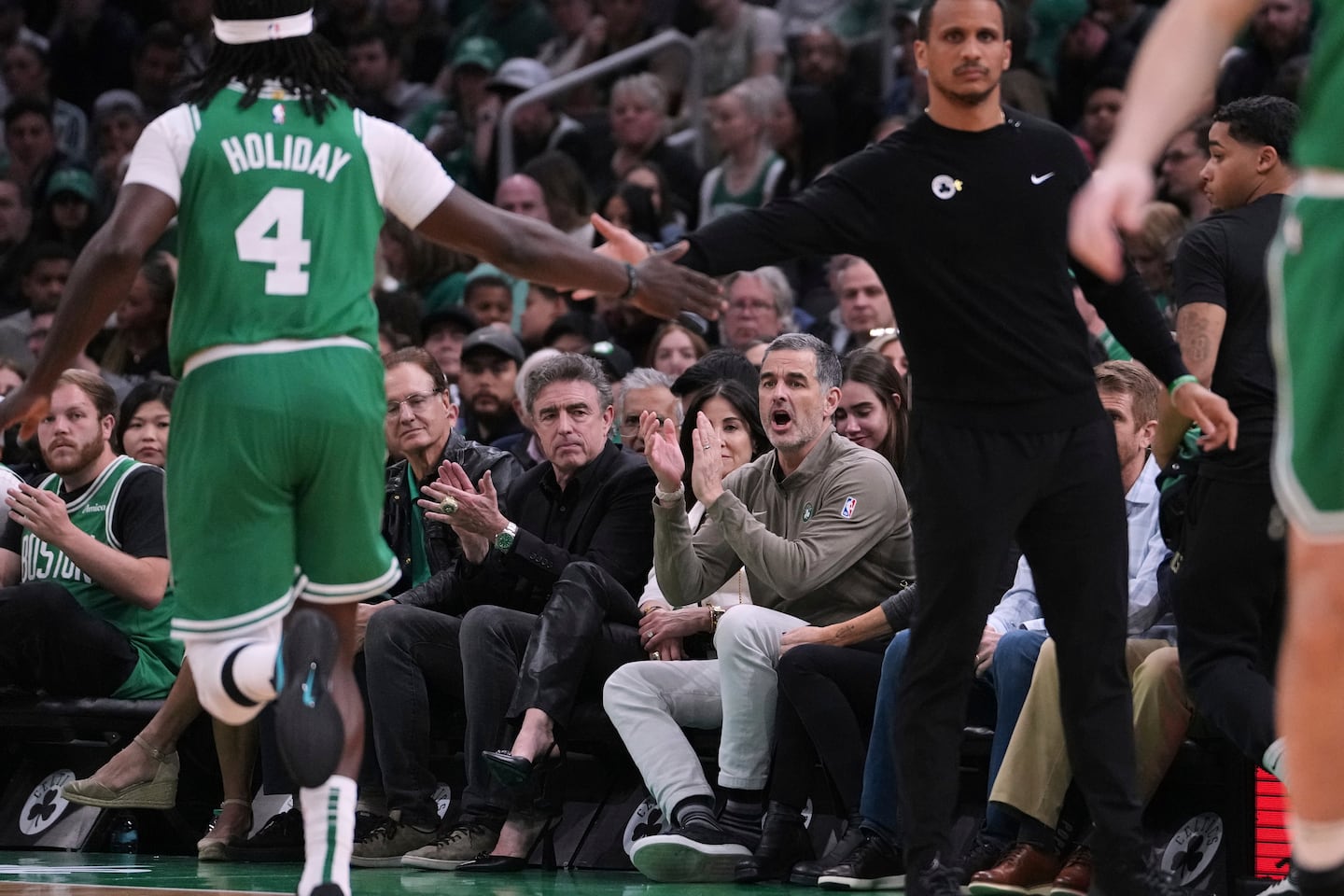
But the social capital that comes with ownership — well, that’s priceless.
“Owning a sports team, or even a piece of it, is a crowning achievement,” said Ben Shields, a senior lecturer at the MIT Sloan School of Management who teaches and researches the sports industry. ”It’s the ultimate vanity asset.”
Once the exclusive domain of ultra-wealthy individuals like Robert Kraft (Patriots) and John Henry (Red Sox) — faces you recognize when the TV cameras pan to the owners’ boxes — pro-sports ownership is evolving from a family business into a sophisticated global enterprise. And when teams can fetch $6.1 billion, that opens the doors to institutional investors with access to far more money than any one rich guy.
Since 2020, when the National Basketball Association first allowed private equity money, about a third of its 30 teams have brought institutional investors into their ownership groups. Private equity firms may be faceless, but their deep pockets give the teams the wherewithal to do expensive stuff like improve or even build a new arena.
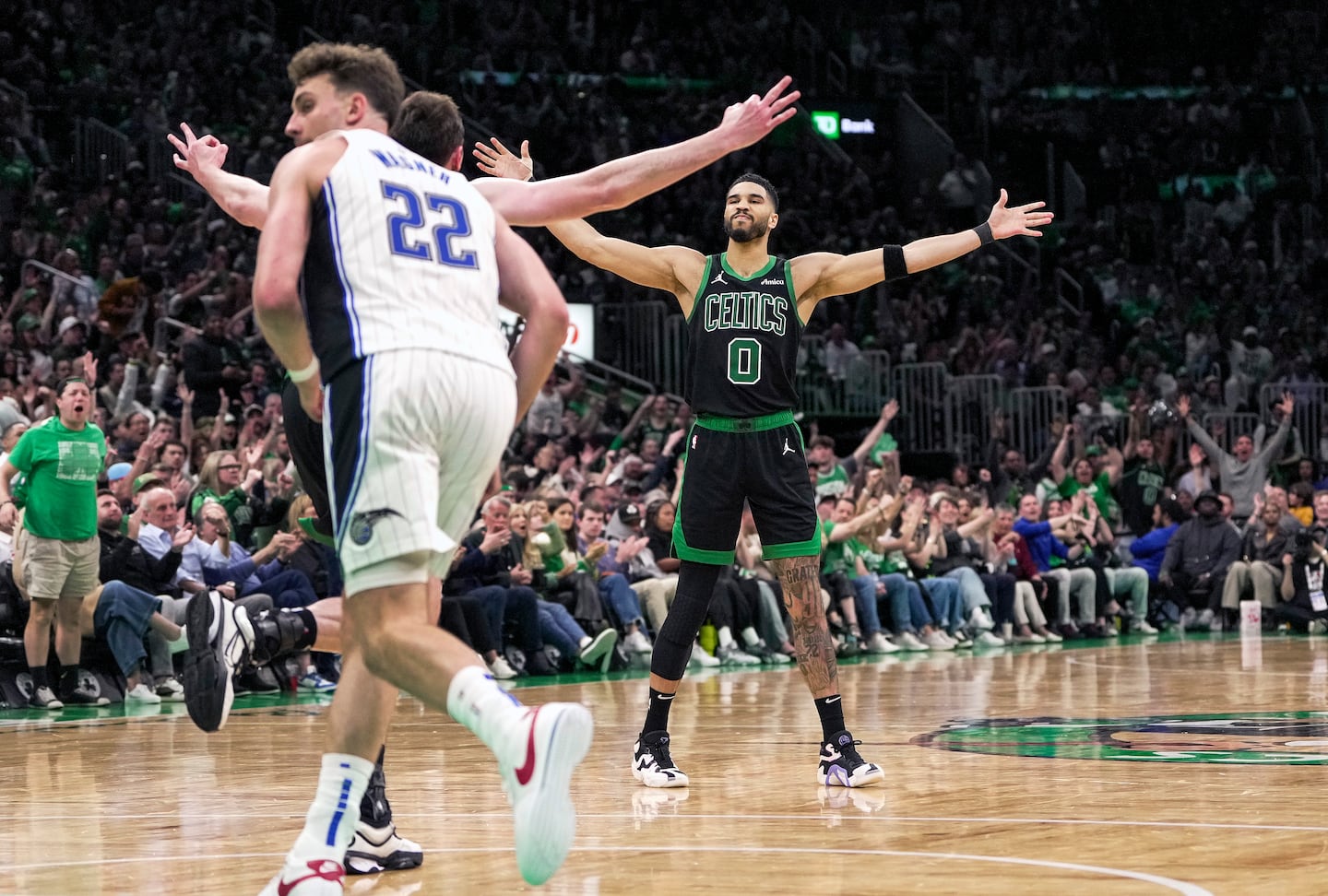 At $6.1 billion, the value of the Celtics has increased 17-fold since the team was last sold more than two decades ago. Barry Chin/Globe Staff
Still, for fans and players, the specter of PE ownership can spark worry. There’s a reason why they’re known as the barbarians at the gate with a reputation for cutting costs, stripping companies for parts, and cashing out for a tidy profit. Just look at what happened to Catholic hospital chain Caritas Christi (later known as Steward Health Care) after it was bought by Cerberus Capital Management.
So far, private equity firms view sports team assets differently.
Sixth Street considers itself a silent partner and plans on holding its Celtics stake for many years to come, according to a person briefed on the matter. It’s among a cadre of private equity players, along with Arctos Partners and Blue Owl HomeCourt, that are investing in basketball teams these days. Sixth Street has a 20 percent stake in the San Antonio Spurs, while Arctos is invested in five teams including the Golden State Warriors and Memphis Grizzlies, and Blue Owl holds interests in the Atlanta Hawks, Sacramento Kings, and Charlotte Hornets.
(Arctos also holds a minority stake in Fenway Sports Group, the parent company for the Red Sox whose principal owner, John Henry, who also owns the Globe.)
The NBA has rules in place to protect against the worst impulses. It bans leveraged buyout strategies that would saddle its franchises with debt, doesn’t allow them to have governance rights, and limits the stake owned by a single institutional investor at the lesser of 20 percent or the controlling owner’s interest in the team.
In other words, the PE guys won’t be calling the shots on which players to trade or coaches to hire.
The Grousbeck family, the Celtics’ lead owner, put the team up for sale in July, just two weeks after the C’s clinched a NBA-leading 18th championship. After a months-long sale process, the family announced in March that Chisholm‘s group had the winning bid — beating out multiple bidders including an offer put up by longtime co-owner Steve Pagliuca.
The Grousbeck family, which organized the purchase of the Celtics for $360 million in 2002, is now set to sell the team for a price that is 17 times higher and a record for a North American sports franchise.
If approved by the NBA Board of Governors, the sale will close this summer.
But there has been recent chatter that his deal might be falling apart, in part because of Chisholm’s private equity backing. It goes something like this: If Chisholm is hard up for cash, he may need to lean on Sixth Street so much that it exceeds the NBA rules.
But let me call a foul here.
Multiple sources who have been briefed on the matter describe the deal as “oversubscribed.” That’s the precise word current Celtics’ lead owner Wyc Grousbeck used in a recent interview with WBZ’s Dan Roche.
What it means is that Chisholm has more money than ownership slots available. The NBA limits ownership structure to one lead partner, plus up to 24 limited partners.
He has been making calls to see if current Celtics shareholders want to return, and his group is finalizing its list of investors, according to people briefed on the matter. Expect a mix of old and new investors. Rather than being cash poor, Chisholm is probably figuring out who’s in and who’s out.
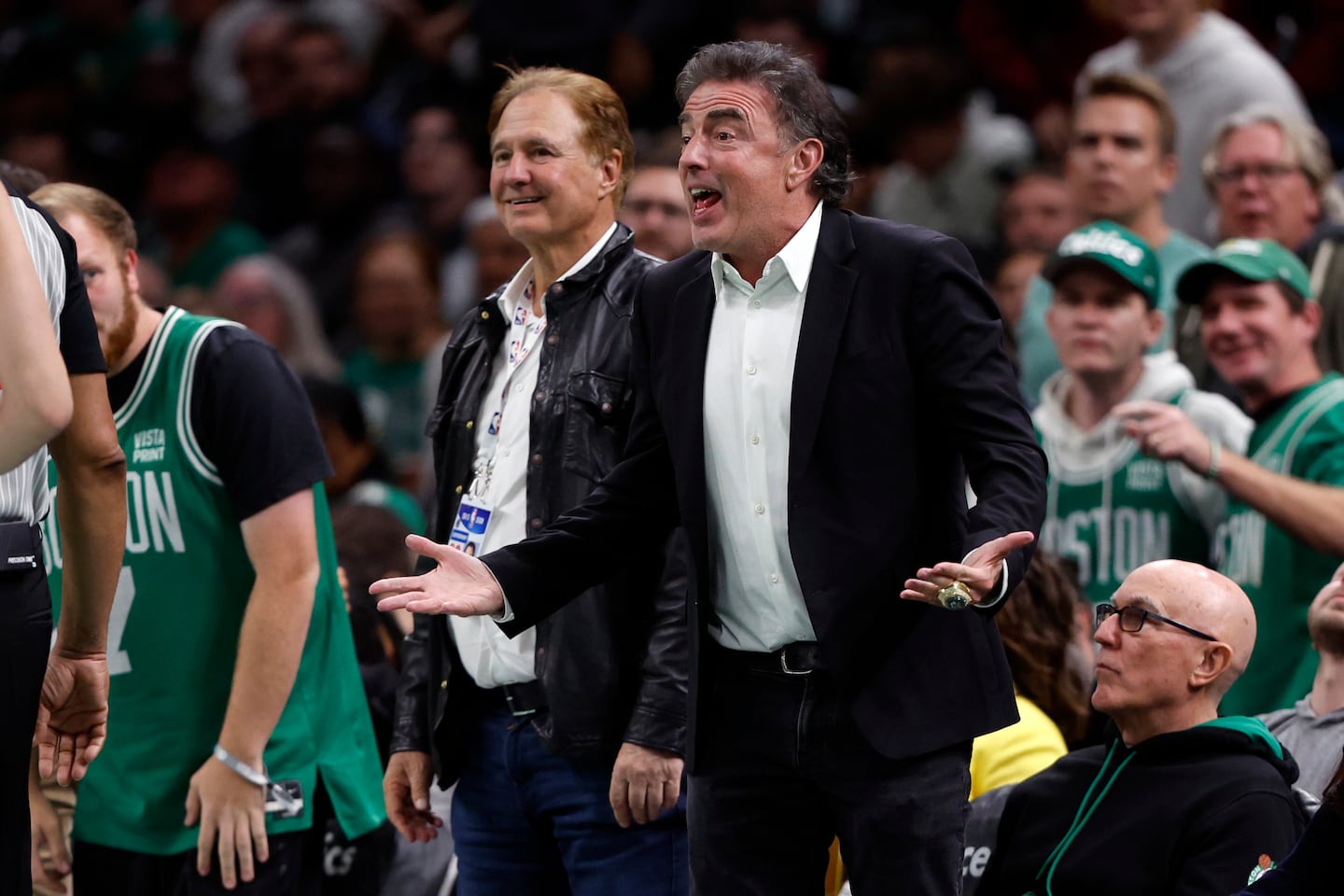 Boston Celtics majority owners Wyc Grousbeck, right, and Steve Pagliuca on the sideline of a game earlier this season.Danielle Parhizkaran/Globe Staff
One who’s already in is Rob Hale, CEO of Granite Telecommunications in Quincy, a current Celtics co-owner who will be back as a limited partner but with a bigger stake than he has in Grousbeck’s group. New to the Celtics roster is Related Cos. president Bruce Beal Jr., who grew up in Boston as part of the prominent Beal real estate development family, and is familiar with pro-sports ownership as a partner and vice chairman of football’s Miami Dolphins.
Grousbeck — who is expected to continue his role overseeing team operations through 2027-28 season — will remain as an investor, but this time as a limited partner, says a person familiar with the matter.
So how much will Chisholm put in? Per league rules, as lead partner he must have a stake of at least 15 percent. Chisholm expects to be above that threshold and be the single largest investor, according to a person briefed on the matter.
As for Sixth Street’s share, while the firm committed at least $1 billion — roughly one-sixth of the deal — its stake will likely shrink because there’s so much interest, several people said. It seems like investors have championship fever with the Celtics advancing to the second round of the playoffs. After all, who doesn’t want be part of a team that could well win its second-straight NBA title this summer?
It’s too early to tell if private equity firms will be good stewards of storied local franchises. For most traditional sports owners, winning comes first, while private equity might have other goals. Still, it’s a good sign that Sixth Street has committed to be long-term investors in Real Madrid and Barcelona, two of Europe’s most celebrated soccer clubs.
Let’s hope private equity firms have found a winning formula that’s good for them — and fans and players too.
Shirley Leung is a Business columnist. She can be reached at shirley.leung@globe.com.