
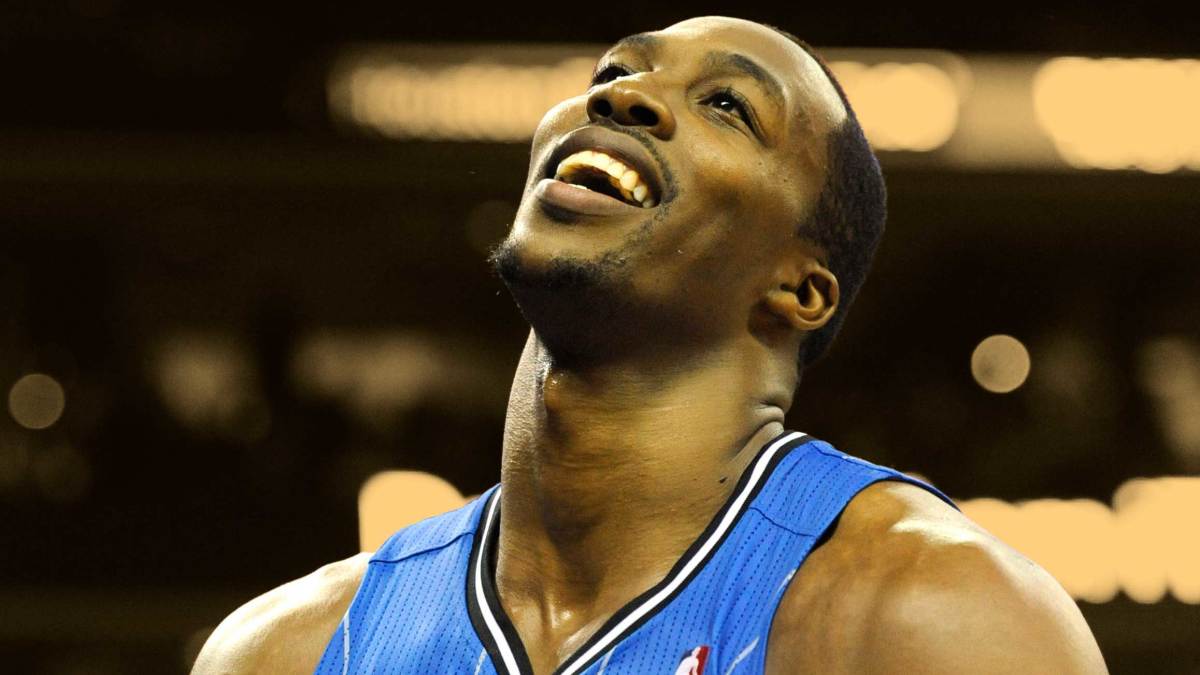
“I asked for players who could help… none of it happened” – Dwight Howard on why he wanted out of Orlando in 2011 originally appeared on Basketball Network.
Dwight Howard filled the long-time superstar void at center left by Shaquille O’Neal’s 1996 departure from the Orlando Magic better than most could have. By 2007, he was a lock for the All-Star Game, and the future looked bright.
Advertisement
Fast forward to the early 2010s, Howard’s frustration had reached a breaking point. The soon-to-be Hall of Famer publicly demanded a trade, criticized the front office, and revealed cracks in a relationship once seen as unbreakable.
Breaking point
Nowadays, with player empowerment at an all-time high, trade demands from superstars have become routine. A career can be fleeting and winning windows even more so, which is why athletes won’t hesitate to move if their situation stalls — or at least when they feel it’s stalling.
Advertisement
Back in 2011, however, this was far less common, making Howard’s public trade request all the more striking.
After seven seasons with the Magic, the former top draft pick made it clear he wanted out, revealing in a December 2011 interview that growing frustration — especially a fractured relationship with then-General Manager Otis Smith — drove his decision.
“I’m pretty sure if you go down the line of teams, every GM has a pretty good relationship with not just the best player but all the players,” Howard told ESPN reporter Brian Windhorst. “If you don’t have a good relationship with the people you work with, how are you going to get better?”
Advertisement
Smith, a six-year NBA veteran, had made several trades in recent seasons to improve the team, but none addressed the needs Howard had identified.
“The stuff that I have asked for, the stuff I felt our team needed to get better, none of it has happened,” he said, emphasizing that after such a “long time” with the Florida-based organization, he wanted to be more than just a player competing on the hardwood.
“I should want to say ‘Hey, this is what we need, this is what we need to do.’ If I didn’t care, I wouldn’t have said anything. Obviously, I care enough about this team that I’ve asked them, and I want to be involved. If you don’t like something, you’d just walk away. If you want to be involved you’d do anything you can,” he added.
Advertisement
By that point, Howard was clearly fed up, claiming several efforts to get “involved” had all been ignored.
What made that dismissal harder to grasp, the dominant 6’10” big man added, was that he hadn’t even asked for “special guys,” just players he believed fit the team and wouldn’t break the budget.
“It wasn’t guys that would take us over the cap or anything like that,” he noted. “It was just guys that I felt would help us on the inside and the outside.”
Advertisement
For Dwight, the relationship now seemed beyond repair; only a trade to another team — reportedly his favorite destinations were the New Jersey Nets, Los Angeles Lakers or Dallas Mavericks — would make sense by that point.
Behind the rift
Whenever accusations arise — both in life and in sports — it’s important to consider both sides.
Magic fans had that chance when Smith shared his side in an interview with the Orlando Sentinel, stressing that Howard had, in fact, been involved in key decisions.
Advertisement
“When it’s your best player, you really do consult your best player on everything? You do,” he explained. “So you consult your best player on free agency. You consult your best players on trades. And that’s not uncommon. And I have done that.”
The now 61-year-old shared that the front office didn’t entertain every one of their superstars’ ideas, but certainly more than enough.
“We looked at some; some we have, some we don’t,” Smith, a former 6’5″ swingman, remarked.” So I’m not necessarily saying that he isn’t accurate. I think that there was a list. Some of them are duplicate talent, which is something you can’t do all the time. Some, quite frankly, are on your roster.”
Advertisement
Amid those clear differences, ESPN reported the two eventually stopped speaking. It was a troubling sign, with Dwight’s contract expiring after the 2011–12 season — a situation he wasn’t too thrilled about.
“There was a good relationship then we haven’t talked, we should still talk,” Howard said. “I’ve been here for seven years. No matter what happens, we still should be able to talk. I don’t know why, I don’t know what happened. … We’ve had long talks throughout the summer, very long talks. That’s all I can tell you.”
From standoff to solution
Certainly, it didn’t look like it, but talks eventually resumed.
Advertisement
Howard, a former Southwest Atlanta Christian Academy standout, later met with Magic officials and agreed to withdraw his trade request — on one condition: the roster needed upgrades to contend for a title.
A few months later, on March 15, 2012, NBA trade deadline day, He made his next move: the freshly crowned All-Star waived his early termination option, committing to stay through the 2012–13 campaign.
However, that didn’t last.
The following offseason, he requested a trade again, reportedly targeting the newly relocated Brooklyn Nets. He planned to test free agency if not moved there.
Advertisement
The stalemate finally ended on August 10, 2012, when Orlando traded Howard, a multiple-time Defensive Player of the Year, to the Lakers.
After all the back and forth during his final days with the Magic, this move clearly brought relief to both the organization and the player.
This story was originally reported by Basketball Network on Jul 19, 2025, where it first appeared.