
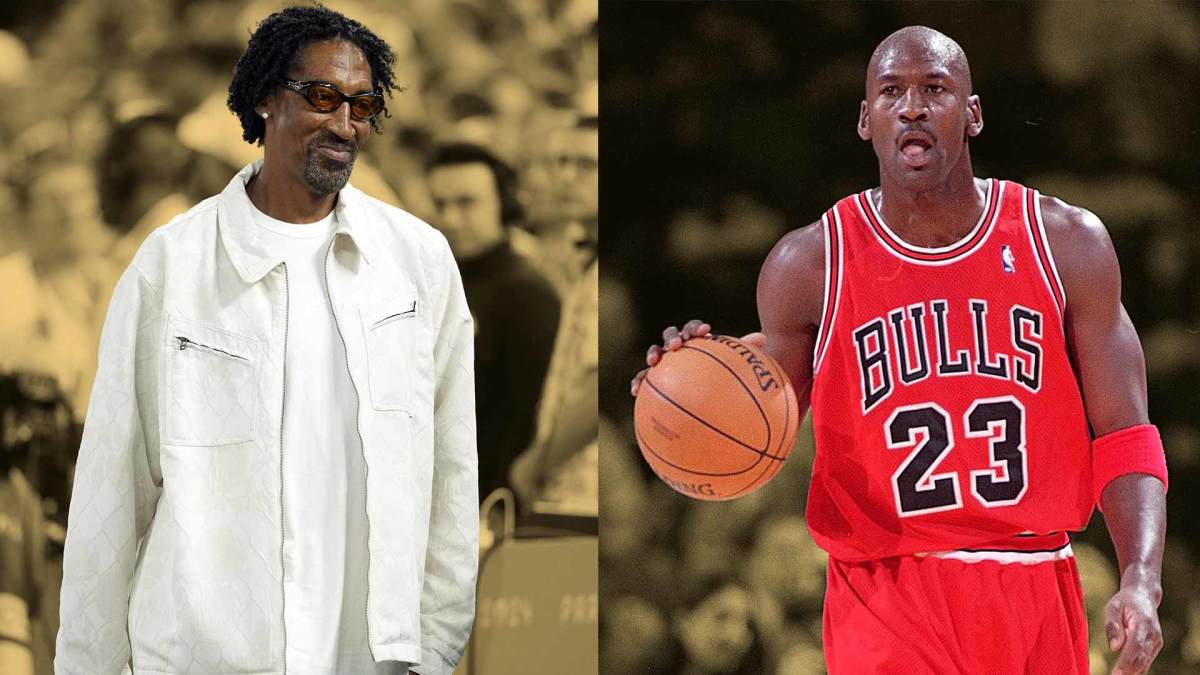
“Still, to this day, we don’t know what those issues were” – Scottie Pippen said he and former Bulls teammates are still confused about why Michael Jordan retired in 1993 originally appeared on Basketball Network.
Michael Jordan’s sudden retirement in 1993 belongs in that rare class of moments that came out of nowhere.
Advertisement
It was Oct. 6, just three months after clinching his third straight NBA title and with the league at his feet, the 30-year-old megastar stunned the world by walking away from basketball.
What followed was a year and a half of speculation, baseball and eventual return. But for those who shared locker rooms, flights and championship parades with Jordan, the mystery of why he left in the first place still lingers.
Jordan’s retirement
Scottie Pippen was thrust into the leadership role when Jordan retired. Not he or any other Bulls teammate was emotionally ready for life without their leader and the uncertainty of why he left never really went away.
Advertisement
“He had other things going on in his life that he had to deal with,” Pippen said. “Still, to this day, we don’t know what those issues were, why he left the game.”
In 1993, the Bulls were riding the kind of momentum dynasties are made of. Jordan was at the peak of his powers, having just averaged 41 points per game in the Finals against Charles Barkley’s Phoenix Suns. The three-peat had been achieved. The league was his.
And then, just like that, he was gone.
Advertisement
When Jordan announced his retirement, pointing to a loss of desire to play and the emotional toll following the murder of his father, it was hard to separate the personal from the professional.
His father had been missing for three weeks before his body was discovered in a South Carolina swamp in August 1993. It was a tragedy that shook Jordan to his core. By October, his retirement seemed, on the surface, to be a response to grief.
But for the rest of the Bulls, it was far from a clear story. They knew he was dealing with a huge personal loss.
Advertisement
But this was Jordan.
Everyone expected him to mourn over the summer and be back competing when the new season started. So, it was strange.
The shock extended beyond the locker room. Jordan had led the league in scoring for seven straight seasons. He was the reigning MVP, reigning Finals MVP and the face of the NBA globally. The Bulls, under coach Jackson, were primed for a fourth title and yet the centerpiece had stepped away.
Quick return
Theories quickly filled the vacuum.
Advertisement
Some speculated about burnout.
Others pointed to the scrutiny Jordan faced over his gambling habits, which had drawn national headlines after a series of investigations and exposés.
Then came whispers unproven and never substantiated that the NBA had quietly suspended him, a claim both the league and Jordan have denied. Regardless, the timing never felt clean. And inside the Bulls circle, even those closest to Jordan were left in the dark.
The truth is, the void Jordan left behind nearly consumed the Bulls. The 1993–94 team, led by Pippen, still managed a 55-win season and pushed the New York Knicks to seven games in the second round, but it was clear something essential had gone missing.
Advertisement
That absence was filled, famously, on March 18, 1995, with two words: “I’m back.”
By then, Jordan had spent 17 months trying to reinvent himself as a professional baseball player with the Birmingham Barons, a minor league affiliate of the Chicago White Sox. It was an earnest endeavor, but one that many believed lacked his usual fire. When he returned to the hardwood, donning the unfamiliar No. 45, there was a sense of a circle being closed.
But even then, teammates still wondered what had triggered the departure to begin with.
Advertisement
“I don’t know if it was his father that made him leave the game, I don’t know,” Pippen said. “But whatever the reason was, it worked out great for us when he came back.”
Indeed, Jordan’s return laid the groundwork for another Bulls three-peat from 1996 to 1998.
The second act was just as dominant, more seasoned and even more lucrative for the league. The team shattered records in 1995–96, going 72–10 in the regular season — still the best single-season win-loss record until the 2016 Golden State Warriors broke it with 73 wins.
Advertisement
But the origin story of that comeback remains incomplete. It’s not that the players didn’t respect Jordan’s need for space. It’s that they never got to understand it, nor got the clarity they might’ve expected after sharing so much on the court.
This story was originally reported by Basketball Network on Jul 21, 2025, where it first appeared.