
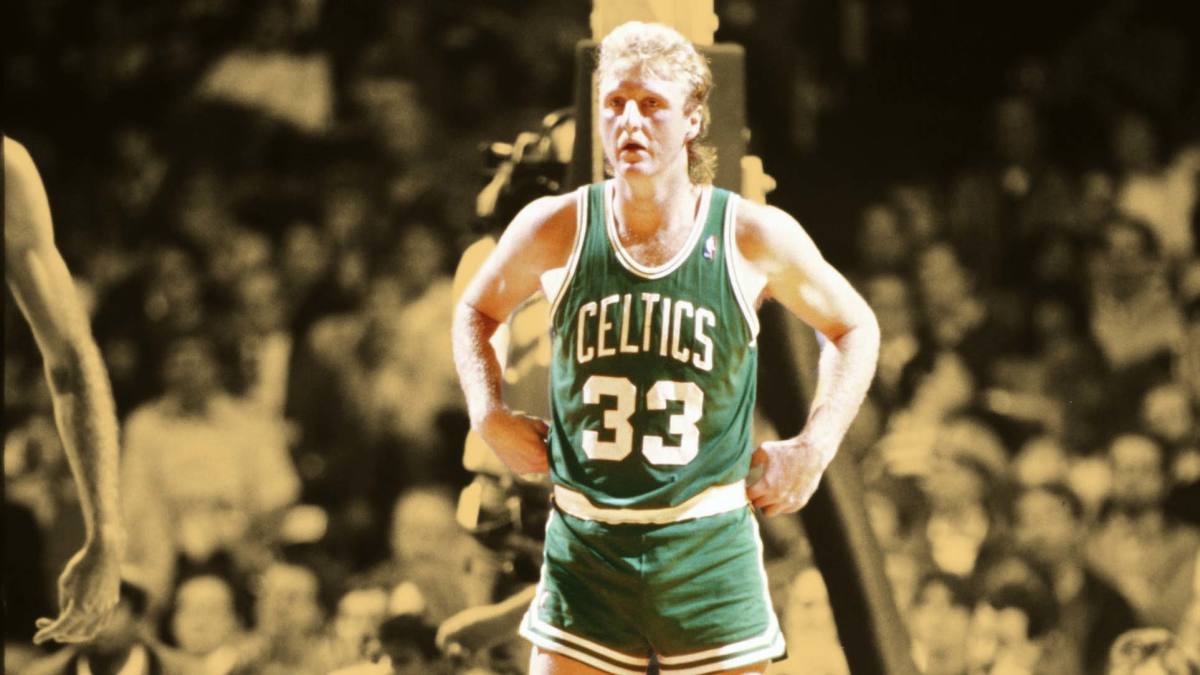
“I could pick up a quick $10,000 by shooting a basketball on a Saturday afternoon” – Larry Bird on what prompted his famous “who’s coming in second?” trash talk at the 1986 3-point contest originally appeared on Basketball Network.
Larry Bird had many memorable trash-talking moments, but the 1986 3-point contest in Dallas was one of those moments that painted a full portrait of who he was.
Advertisement
He was supremely confident, ruthlessly competitive and always in control of the room before he even picked up a basketball.
Bird walked into the locker room, surveyed the field of shooters that included elite marksmen of the day like Craig Hodges, Dale Ellis and Trent Tucker and simply said, “Who’s coming in second?”
Just like that, the contest was over.
Before it even began.
Owning the 3-point contest
The NBA’s introduction of the 3-point contest in 1986 wasn’t built for Bird, but it might as well have been.
Advertisement
Even though the long-range shot had only recently been embraced by the league, Bird was already one of its earliest masters. And yet, for him, the event didn’t require weeks of prep or any dramatic shift in his routine.
“The 3-point line was never a problem,” Bird said. “It’s just that back then, I never practiced it until we had the 3-point contest. I figured I could pick up a quick $10,000 by shooting a basketball on a Saturday afternoon. Why not spend a half-hour shooting 3s?”
Advertisement
That’s the essence of Bird. While most players might have mapped out their shots or obsessed over form, he showed up in work boots and jeans, already mentally one step ahead. It was less about spectacle and more about efficiency. A quiet assassin with the ultimate green light.
His casual approach wasn’t arrogance but trust in repetition and his feel for the game. Bird didn’t need to practice for hours to shoot 3s. In fact, he didn’t even consider it necessary in a pre-analytics era where few coaches prioritized the deep ball. Still, he knew the shot was valuable long before the rest of the league caught up.
Already built for the future
Bird’s relationship with the 3-point shot wasn’t built on volume but impact.
Advertisement
He played in an era where most forwards operated in the mid-post or lived off bank shots. As such, the 3-point shot was unconventional and was rarely practiced. However, Bird learned to float beyond the arc and catch defenses off guard. His release was high, his footwork subtle and his confidence unshakable.
The shot gave him an extra edge in a game he already mastered. So when the 3-point contest was introduced, Bird stepped onto the stage and drained shot after shot like it was muscle memory. He was confident that he was going to outperform every other contestant that night.
“But the 3-point thing was more of a… it wasn’t really [trash talk],” Bird said. “I just walked in and seen all them guys and said, ‘Who is coming in second?’ But I didn’t do it for any reason at all.”
Advertisement
The line was just a man stating what he believed to be inevitable. And he was right. Bird won that first contest with a final-round score of 22, walking off before his last ball had even swished through the net, hand held high in triumph.
He would go on to win the contest three times in a row, a feat that remains unmatched. But it wasn’t just the victories that stuck. It was the image of Bird showing up like a gunslinger, making everyone else nervous before the first shot was taken.
The modern NBA is built around the 3-point shot. It’s the lifeblood of offensive systems, the currency of pace-and-space basketball. Players like Steph Curry and Klay Thompson have elevated it to an art form. But in the early days, before analytics and shot charts, Bird already saw its potential.
Advertisement
In many ways, that now-famous locker room line served as a bridge between eras. The game hadn’t yet evolved, but Bird had. He was ahead of the curve, comfortable behind the arc before the arc ever mattered.
This story was originally reported by Basketball Network on Jul 23, 2025, where it first appeared.