

NBA Summer League rookies
NBA Summer League is in full swing, and these are the rookies that have impressed the most.
Former OKC Thunder player Lindy Waters III hosted the third annual Elevated Native basketball tournament in Edmond.Waters, a member of the Kiowa tribe, aims to uplift the Native American community through basketball and scholarships.Lindy Waters III recently agreed to a one-year contract with the San Antonio Spurs.
The basketball odyssey of Lindy Waters III has had some interesting chapters since he graduated from Norman North.
The latest chapter started Wednesday with reports of him agreeing to a one-year contract with the San Antonio Spurs. Waters will team up with the likes of Victor Wembanyama and reigning NBA Rookie of the Year Stephon Castle.
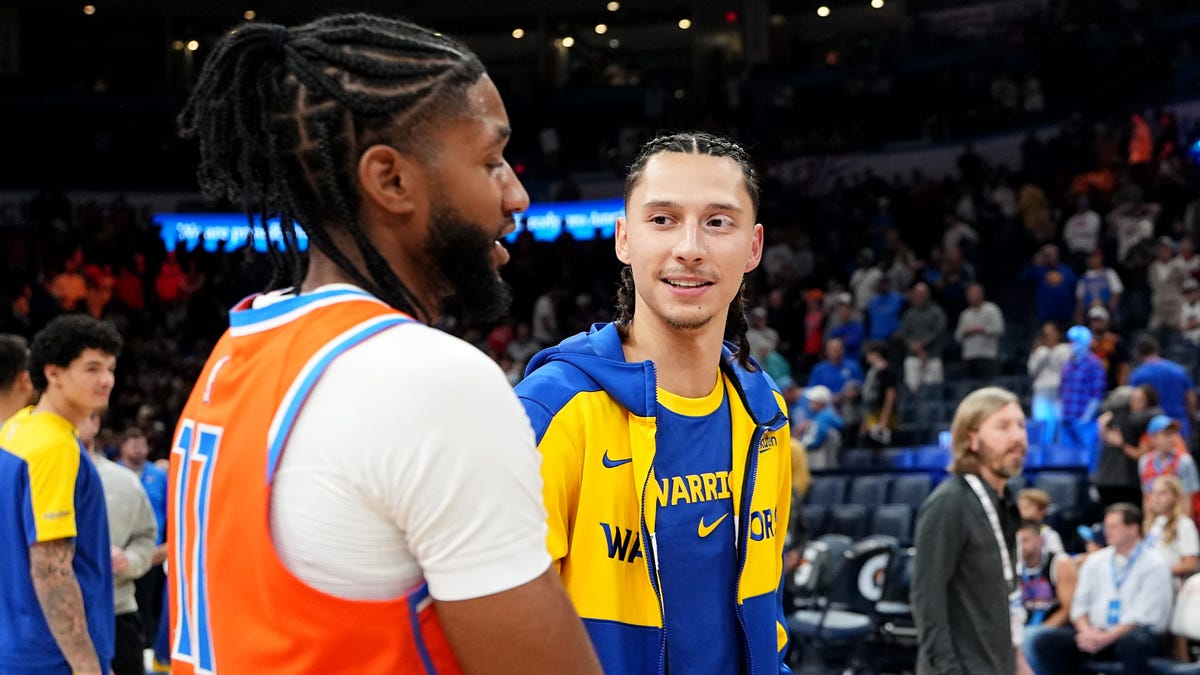
It’s not a bad situation for someone who has carved out an NBA career with the Oklahoma City Thunder, Golden State Warriors and Detroit Pistons after working his way up from the G League.
But Oklahoma remains close to Waters’ heart. The former OSU guard was back in Edmond earlier this month for the third annual Elevated Native basketball tournament.
Looking to uplift the Native American community, the event showcased high school boys’ and girls’ teams competing in brackets and tournament pool play, including an All-Star game with various additional prizes and surprises at stake.
Waters, a member of the Kiowa tribe, spoke to The Oklahoman about his career and impact within the Native American community across the country.
Pre-order our new book on the Thunder’s road to NBA title
Q: What does it mean to you to bring Native American kids into the basketball court in an event like the Elevated tournament?
A: “I think it’s important to me, obviously, because I play basketball; I grew up playing. It’s a big sport in our culture. But the reasoning behind me bringing them together is more about giving back to the community, providing scholarships for Native kids going off to college, providing basketball shoes and other equipment, just giving them a feeling of hope and belief that they can achieve whatever that they want to, and I think they look up to me in that aspect. So just being a public figure for them and being in the same space giving them words of encouragement, as well as getting to play basketball and getting to compete, is important.”
Q: How important has your culture and upbringing been for your career development?
A: “I think it’s huge. A lot of people look at me differently because I don’t necessarily fit in or pass the ‘eyes test.’ So having them behind me, knowing that I have a support system through my tribes and other Native Americans, is huge, and it’s a big foundation for me to stand on.”
Q: You went to high school at Norman North, then college at Oklahoma State. How has the state of Oklahoma influenced you?
A: “It’s one of my biggest accomplishments and one of my biggest motivations. You know, I grew up going to powwows and stomp dances and holding traditional events at my house growing up, and so it really all started there before basketball really took off. Some of my earliest memories are being around my people and being around my family and celebrating our culture and heritage. Being able to conjoin the two at this moment of my life, it really brings a lot of joy out of me, and it really makes me want to do more for others.”
Q: How did your time at Oklahoma State prepare you to be the player you are today?
A: “I spent four years there, and besides the rocky coaching changes, they really stood behind me in my culture. They helped celebrate me during Native American Heritage Month, having the turquoise jerseys and allowing me to give back at the end of the year my senior year. So one thing in my culture is being able to give back to the people that helped me along my journey, and they were very open and very accommodating to whatever my culture needed. And those four years were big in development, not only basketball-wise, but turning a young man growing into what he is today. They really helped me in a lot of ways.”
Q: After four years, your eyes are set on the NBA Draft. From going undrafted to going to signing with the Thunder in 2022, how has that journey been like?
A: “It was tough that the 2020 year when it got shut down with COVID, there was no pre-draft workouts, or no draft in general, from what I knew, until later on in the year. They had the bubble. It was a long process. That was another big year of development for me personally, just being out on my own, trying to figure it out, really taught me patience, and it taught me discipline, knowing that, you know, it might not work out; I might not make it to the NBA. But I’m going to work every day as if I’m going to get there, and I’m just going to stay patient, and then also just relying on the belief of God, knowing that whatever happens was supposed to happen that way, and just looking at it and being present, not looking too far ahead and not trying to make an excuse of what happened, because then you get lost in the days, and it feels like you’re not in the right plac, but really you are. It was a long journey. I ended up playing in the TBL (The Basketball League) and having a great year in that semi-pro league. Thankful for God for allowing me to get the opportunity to come try out for Oklahoma City. I just left it all out there and played like I had nothing to lose and got an opportunity.”
Q: How did it feel like to finally sign that professional contract?
A: “I didn’t have a feeling of like, my hard work’s paid off, because I’ve always had a mindset of, it’s not enough, and there’s more. I think that could be a good and bad thing not being able to enjoy that present moment as much, just because I know there’s a lot more work to be done. I can take this to another level. I can continue to keep getting better and better. It felt good getting that opportunity, but I know there was a lot more work to me.”
Q: In 2024 you were a finalist in the NBA 2023–24 Social Justice Champion Award for the work in your foundation, supporting Native American youth through sports, health and wellness. How was it like having your work recognized?
A: “It felt amazing, more so because not only the work that I’m doing, but I know my family, my mother and sisters and dad and cousins, they all volunteer, and they put a lot of time and work into the foundation as well. So with their help, of course, I get the recognition, but I have an amazing team behind me and knowing that I could share that with them. It was amazing just to be a finalist.”
Q: What’s it like having your family involved in your project, giving back to the community?
A: “I think that’s what it’s about, just opening doors for anybody and everybody that needs help or needs guidance or just wants to be a part of the community in general. I think it is very important to stay together and really show them what it means to be a community.”
Q: Like you mentioned, through the foundation you get to award scholarships and equipment to Native kids. Is there a story that really marked this journey?
A: “There’s countless events and people that I’ve been able to help along the way. I don’t necessarily think that there was one that stood out specifically, but I do know that my first year doing one of the basketball tournaments, giving out those scholarships to those kids, really showed me those kids were very grateful. They were very humble, and I could tell that receiving that (recognition) really make them want to push to achieve more. It’s not necessarily about the money. It’s just about getting that recognition and having that same feeling that I had, of like my hard work is paying off. I could tell that I gave them that feeling and that filled me with joy.”
Q: Who was that support for you growing up?
A: “I would have to give that to my parents. They sacrificed a lot for me. They, you know, we’re putting time, hours in the gym, hours on the road, traveling to different tournaments, and you know, they really spent a lot of their life making sure I was given a lot of opportunities to be able to be where I’m at. So I’m very grateful for them, and I love them very dearly.”
Q: When did you decide to make it your life’s work to give back to the community?
A: “I started in college around my sophomore year. Me and my dad started doing simple basketball clinics around the state of Oklahoma for my tribes and other surrounding tribes as well. And this was before we were even asking for money, we were just kind of showing up. It was a little unorganized. We didn’t have the same team I do now, but it was just me and my dad and maybe one or two other people to help. There would be hundreds of kids out there, and we just go through basketball drills and teach them the same fundamentals that I grew up learning. And then after those three years, four years, and I got a two-way contract in the NBA, then I knew, ‘OK, I’m going to need a bigger team. I’m going to have to have it more organized. I need a board of directors.’ Everything started to grow in that aspect. But I really started whenever I got the Indian of the Year award. I think it was only 18. I think that’s when I really recognized, OK, I need to, I need to be a part of the community and start thinking more about them and less about myself.”