
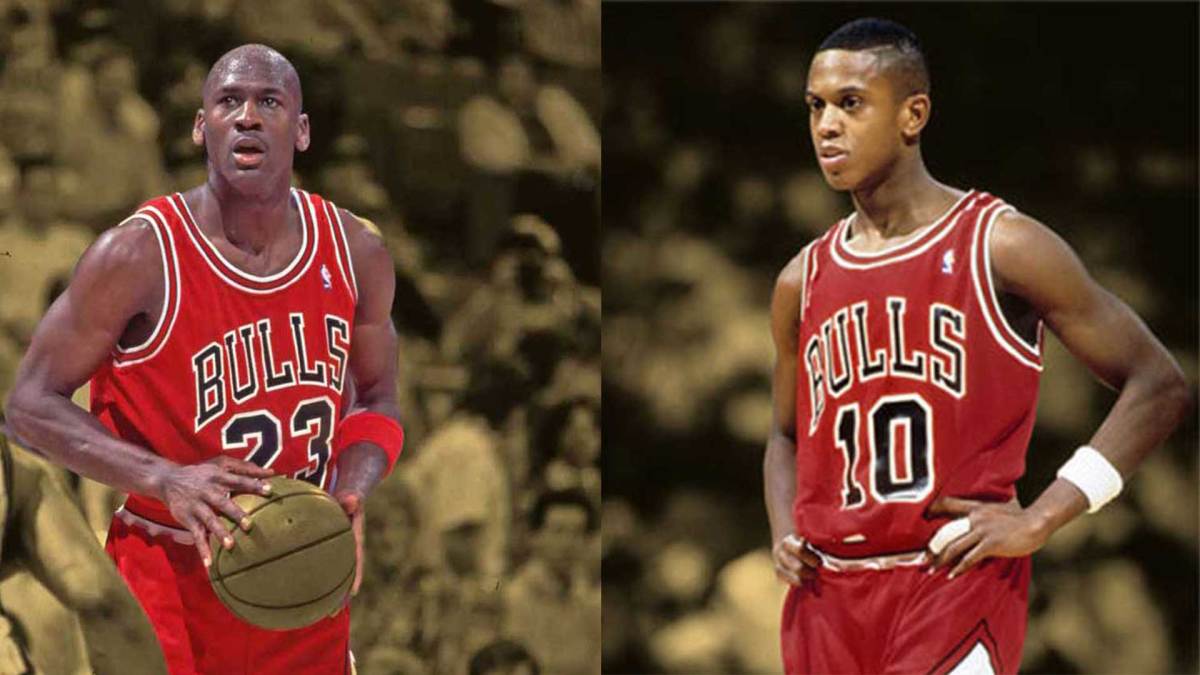
“I can understand how he can be perceived that way” – B.J. Armstrong on why MJ was viewed as a bully by some of his Bulls teammates originally appeared on Basketball Network.
At the height of their dominance in the 1990s, the Chicago Bulls were a storm that never lost its edge. They were a dynasty engineered around the borderline dangerous will of Michael Jordan, a man who demanded excellence and left no room for indifference.
Advertisement
The championship banners that now hang in the rafters of the United Center were born out of sacrifice and a drive that pushed players to and often past their limits.
But greatness, even when it yields rings and parades, does not always feel glorious in the moment. Inside that locker room, the atmosphere often blurred the line between motivation and intimidation.
Not a bully
For some players who shared that space, Jordan’s approach could be jarring. B.J. Armstrong, the former Bulls guard who spent his formative years watching Jordan up close, understood that intensity better than most.
Advertisement
Armstrong explained what many still try to decode years after “The Last Dance” documentary pulled back the curtain on the dynasty’s inner workings.
“He wasn’t a bully, but I can get and I can understand how he can be perceived that way, especially from the outside looking in,” Armstrong said of Jordan. “It was very clear when you played with him and you were in that locker room that you were going to have your full commitment.”
The Bulls were a championship team. As such, every drill, scrimmage and stretch of conditioning carried the weight of expectations.
Advertisement
Armstrong, who joined the team in 1989 and played a key role in their first three-peat, came into a locker room already governed by Jordan’s principles. There was no easing in. From day one, players were expected to match the energy, the detail and the focus Jordan brought.
It wasn’t uncommon for a young player to be overwhelmed. Will Perdue, who also shared those early title runs, once described how Jordan’s method wasn’t about building friendships but about players who could contribute to the goal. To MJ, the game was war, and practice was where one’s allegiance had to be proven. This culture wasn’t for everyone, but it became the ultimate proving ground for those who lasted.
There isn’t an attempt to sanitize Jordan’s image, but rather to contextualize it. His competitive nature, captured most vividly in team practices, often involved blunt language, public callouts and psychological challenges that cut deep.
Advertisement
For some, it felt like leadership. For others, it could feel like being targeted. But for Armstrong, if one stepped into that room, one had to be all in.
Jordan’s leadership
It wasn’t just about doing the work. Mike watched everything from body language to effort, and he demanded consistency across all of it. Teammates didn’t just have to perform on the court but had to reflect the intensity that winning required. In Jordan’s world, talent was only one piece. Accountability, every single day, mattered more.
Advertisement
“Not only coming to practice and doing the things and saying you are doing the things,” Armstrong said. “Your words and your actions and your behaviors have to be inside those lines.”
During the 1995–96 season, when the Bulls went 72–10, Jordan was returning from his first retirement. The team, retooled with Dennis Rodman and revitalized by fresh chemistry, needed a leader who could align every moving part.
Jordan delivered, but not with speeches or subtle encouragement. He leaned on confrontation, repetition and expectations. His standards never changed and his method never softened.
Advertisement
Steve Kerr’s infamous scuffle with Jordan during a practice session was emblematic of the long-standing culture. Those moments weren’t about humiliation but rather initiation.
Kerr earned MJ’s respect by standing his ground. That exchange became one of many chapters in the saga of how toughness was cultivated through fire in Jordan’s world.
To call Jordan a bully misses the deeper picture. He was unforgiving and demanding, but he wasn’t targeting people to hurt them. MJ challenged them to rise and become more than they thought they could be.
Advertisement
This story was originally reported by Basketball Network on Jul 26, 2025, where it first appeared.