
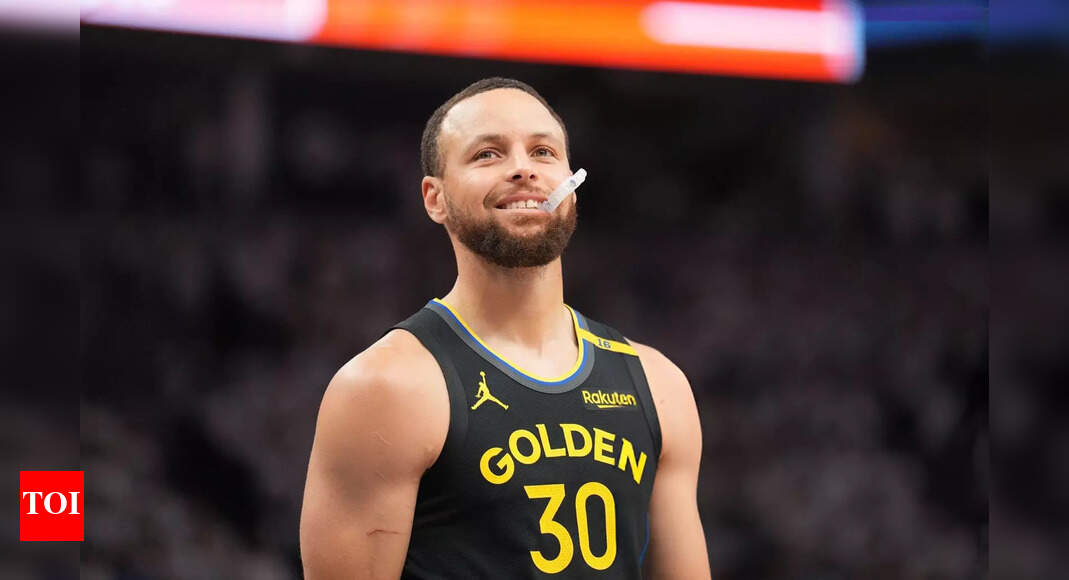
 Stephen Curry’s concern regarding underpayment of NBA stars (Image Source – Getty Images) Golden State Warriors legend Stephen Curry has long been seen as the face of modern basketball greatness – boasting four NBA titles, two MVPs, and a reputation as the greatest shooter in history. With career earnings surpassing $410 million, one might assume Curry has nothing to complain about financially. Yet the superstar recently made a bold claim: NBA players are underpaid. His reasoning, however, has less to do with salaries – and everything to do with ownership and equity.
Stephen Curry’s Key Argument: The CBA Locks Players Out of True Wealth
Speaking in a recent interview, Stephen Curry made it clear that his issue isn’t with the enormous paychecks NBA stars already receive. Instead, he pointed to the league’s collective bargaining agreement (CBA) as the primary roadblock to greater financial fairness. Under current rules, active players are prohibited from holding equity stakes in the teams they play for or the NBA itself.“I think, because of the way the CBA is structured right now, we can’t participate in equity,” Curry explained. “And that’s a big deal because it is a partnership with ownership. It’s a partnership with the league, and we’re on the short term of that revenue.”In his view, this exclusion keeps players from benefiting from the long-term growth and profitability of the league they help drive.
NBA Salaries Are Huge – But They Don’t Tell the Whole Story
Stephen Curry On Drake Loyalty, Retirement Date & Trash-Talking Kobe | 360 With Speedy
Stephen Curry acknowledges that to most people, an NBA salary – especially his own – sounds outrageous. He is set to earn over $55 million during the 2024–2025 season, and that figure will approach $60 million the following year. Meanwhile, the average NBA salary sits around $12 million annually, among the highest in professional sports.But Curry insists the real money lies elsewhere. Since he entered the league in 2009, his own team’s valuation has exploded. The Golden State Warriors were worth just over $300 million at the time – today, Forbes values them at over $9 billion. That growth, Curry argues, has been driven by the players’ talent, visibility, and global reach – not just by front-office decisions or ownership strategy.
The Missed Financial Upside: No Equity, No Long-Term Wealth
Stephen Curry’s central frustration is that while team owners see exponential returns on franchise value, players only collect taxable annual salaries – no matter how much the league profits from their success. While retired legends like Michael Jordan have found ownership opportunities post-career, the league still bars active players from doing the same.“We want to be able to participate in that rise,” Curry said. “Hopefully, sooner than later, those rules change a little bit so that players can participate more in the upside of team equity, the league, valuations, and all that type of stuff. Just because I think we deserve it.”With billion-dollar media rights deals and expanding global revenue, Curry believes equity access would create a fairer, more balanced system – especially for the superstars whose brands fuel the league’s rapid growth.
Is It Really About Greed? Curry Says No – it’s About Fairness
Unsurprisingly, Curry’s comments have stirred mixed reactions. Some critics argue that millionaires complaining about being underpaid come off as tone-deaf. But Curry clarified that he isn’t bemoaning his wealth or seeking pity. Rather, he sees this as a fairness issue, especially given how much value players create for franchises.He emphasizes that the goal isn’t more salary – it’s a stake in the future. Team owners, he says, can continue reaping the rewards of franchise growth for decades, while players – whose playing windows are short – don’t get a long-term share of the pie.
Looking Ahead: Could Equity Be Part of the Next NBA Labor Deal?
With another round of labor negotiations on the horizon, Curry’s comments may influence how players and the union approach the next CBA. There is growing momentum around the idea of allowing active players to hold equity, provided safeguards exist to avoid potential conflicts of interest.In an era where athletes are also investors, entrepreneurs, and media moguls, the NBA may need to modernize its rules to keep up with the evolving business of sports.
If Stephen Curry’s Underpaid, What Does That Say About the System?
Stephen Curry’s argument turns conventional thinking on its head. If someone making $60 million a year says he’s underpaid, what does that mean for everyone else in the league – or for future players? The point isn’t about pity – it’s about structure. Why should those who carry the NBA on their backs not be allowed to participate in the long-term financial success they help build?If stars like LeBron James or Stephen Curry could invest in their franchises while still playing, it could mark a revolutionary shift in how professional athletes interact with their leagues. Curry’s vision isn’t just about money – it’s about creating true partnerships between players and the sport they elevate.Also read: Jonathan Kuminga Eyes Exit From Golden State Warriors as Suns and Kings Make Aggressive $90M Payday PushWhether the NBA moves in that direction remains to be seen. But one thing is certain: when a generational talent like Stephen Curry speaks out, it has the power to spark meaningful change.