
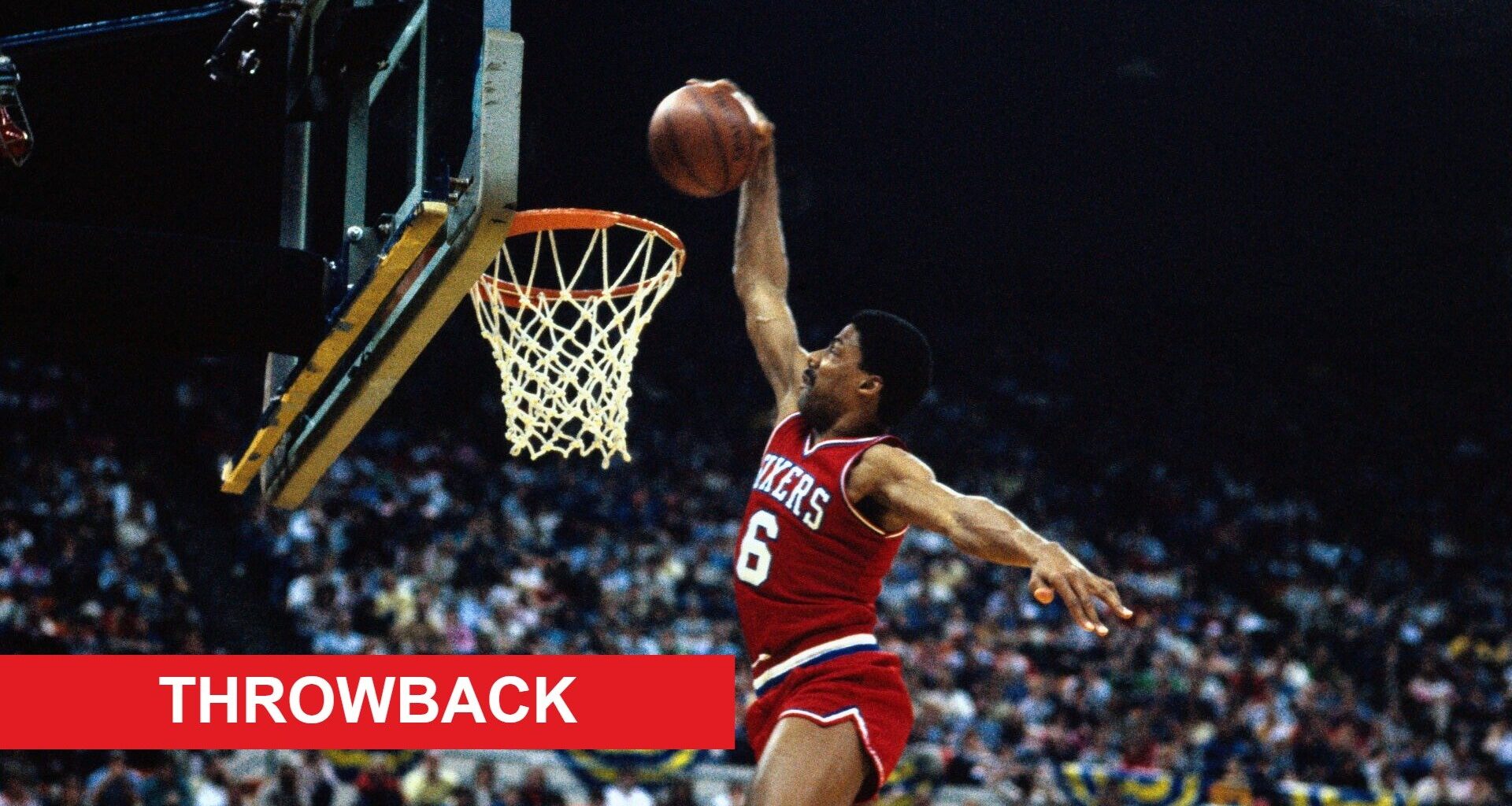
The course of NBA history changed forever on 1 August 1973, when ABA superstar Julius Erving was traded from the Virginia Squires to the New York Nets.
“Dr J” went on to become one of the most electrifying talents in NBA history. The NBA Hall-of-Famer won the 1983 NBA championship with the Philadelphia 76ers, won the NBA MVP in 1981, and has his jersey number retired with both the Nets and Sixers.
That may not have happened if not for this trade. Here, we break down the trade and its impact on the history of the league.
 Photo by Jamie Schwaberow/NCAA Photos via Getty ImagesABA superstar Julius Erving traded to the New York Nets in 1973
Just two seasons into his ABA career, Erving had already established himself in basketball stardom.
He averaged 27 points and 15 rebounds as a rookie, leading the Squires to the Eastern Division Finals, and made the All-ABA Second Team alongside the great George Gervin. Erving’s second season saw him lead the league in scoring and make the All-ABA First Team.
Virginia, however, was on the brink of financial crisis. They could no longer afford Erving’s rising salary and were forced to effectively sell the superstar. The Nets swooped in and paid around $750,000 for Dr J.
The Squires folded in 1976. Meanwhile, the Nets went on to win two ABA titles with Erving in 1974 and 1976. He continued his meteoric rise and won three straight MVPs after the trade.
NBA-ABA merger sees Julius Erving join the Philadelphia 76ers
The merger between the ABA and NBA in 1976 meant that Erving’s New York Nets would play in the NBA. Four teams joined the NBA: the Nets, Denver Nuggets, Indiana Pacers, and the San Antonio Spurs. It was a landmark event in the sport’s history.
Erving was expected to suit up for the Nets in the 1976 season. However, the New York Knicks demanded that the Nets pay them $4.8 million for “invading” the Knicks’ NBA territory. That forced the Nets to go back on a promise to raise Dr J’s salary, and Erving demanded a trade.
The Knicks were offered Erving in return for waiving the $4.8 million fee, but they declined. The Sixers then stepped in and offered $3 million for Erving, and the Nets agreed. They effectively traded their superstar for a place in the NBA.
Julius Erving becomes an NBA legend with the Philadelphia 76ers
Erving went on to become an NBA legend. He was an All-Star in 1977 and 10 more times consecutively after that. Wearing the number six in honour of his hero Bill Russell, he led them to 50 wins in his first season.
Dr J was the NBA’s MVP in 1981 and won the title with the Sixers in 1983, beating NBA legend Magic Johnson’s Los Angeles Lakers in the Finals. He was the sole blip in the Lakers and Boston Celtics’ dominance over that period.
He retired as an icon in 1987 at the age of 37, and was inducted into the Hall of Fame in 1996. Combining his ABA and NBA statistics, he ranks ninth in the all-time scorers list behind Kevin Durant.
Dr J’s legendary status as a Philadelphia 76er may not have come to fruition if not for that trade in 1973.
Julius Erving may not have been a Philadelphia 76ers legend if not for the 1973 Brooklyn Nets trade
Erving’s 1973 trade was a sliding doors moment in the history of basketball.
Firstly, his move to the Nets helped the ABA elevate itself to compete with the NBA. Their biggest star was playing for one of their biggest teams, and he was able to compete for championships and MVPs in Brooklyn.
If Erving had stayed with the Squires, his path could have led him in a number of different directions. Virginia was not included in the merger, meaning their players were not absorbed directly into the NBA.
Instead, they joined other teams through the ABA Dispersal Draft, or they became free agents. Erving’s eventual team would most likely have been added to the NBA due to his stardom, but if that wasn’t the Nets, it is unlikely he’d have been a Sixer.
 Photo by Scott Taetsch/Getty Images
He’d most likely have played for his ABA team in the NBA. Would he have ever duelled it out with Johnson in the Finals? Would he have won an MVP, or become a legend in one of America’s greatest cities?
And would the Sixers, who legends such as Allen Iverson have suited up for in the past, have maintained their place as one of the most iconic franchises in the NBA? Because of the Virginia Squires, we’ll never know.