
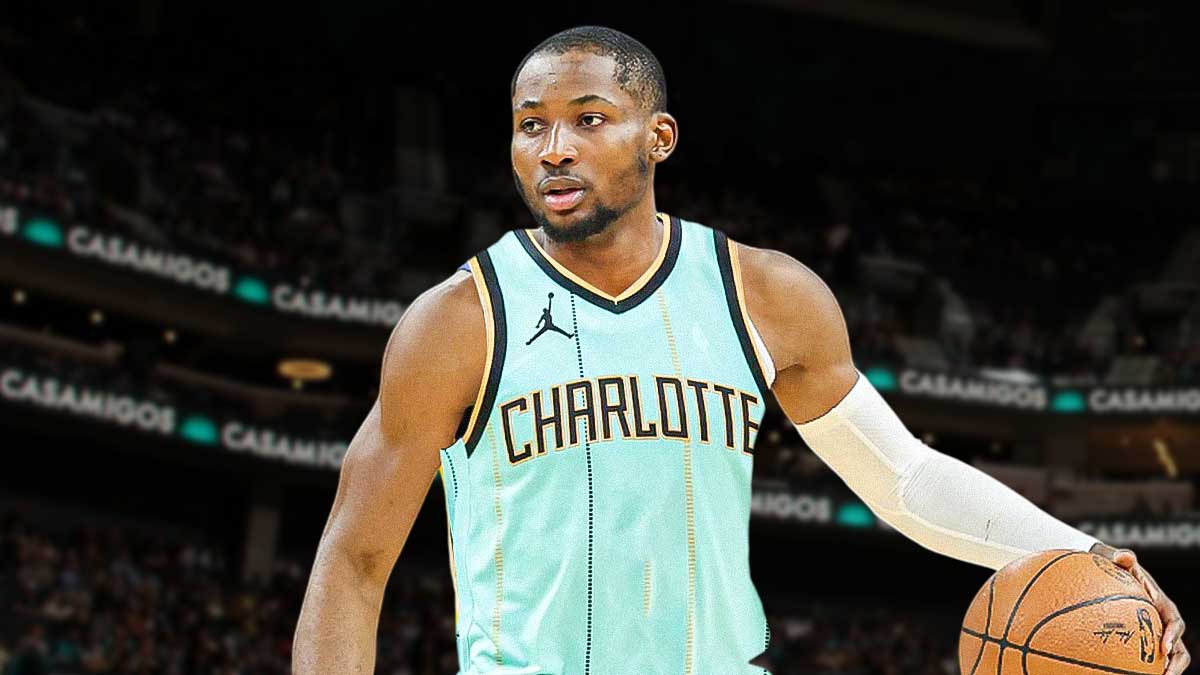
The post 1 move Charlotte Hornets should’ve made in 2025 NBA offseason appeared first on ClutchPoints.
After years of meandering in the NBA’s no-man’s land, never quite good enough to contend, never bad enough to rebuild fully, the Charlotte Hornets finally made assertive moves in the 2025 offseason. They addressed the glaring instability in their backcourt. They patched up the center rotation. They even added some veteran leadership.
Advertisement
However, they missed one move, arguably the most important one. Despite every signal pointing toward it, Charlotte failed to sign a versatile two-way wing, the kind of player that’s become the heartbeat of every modern NBA contender. The absence of such a player might not just stall their Play-In hopes, it could also undo much of the progress they’ve made this summer.
Move Hornets should’ve made: A 2-way wing
Today’s NBA is dominated by 6-foot-7 to 6-foot-9 wings who can switch across three or four positions, contest star scorers, knock down corner threes, and occasionally create their own shot. Think Mikal Bridges, OG Anunoby, Aaron Nesmith, or Josh Green. Even non-stars like Naji Marshall or Cam Reddish hold value because of their versatility.
Charlotte, as currently constructed, has zero of these players outside of Brandon Miller, who is still developing and cannot carry the two-way burden alone.
Advertisement
This makes Charlotte’s perimeter defense alarmingly porous, especially in the East, where they’ll face elite forwards every other night.
Yes.
The Hornets should’ve chased Jonathan Kuminga, a 6’8” athletic marvel who is on the verge of leaving the Warriors due to fit and financial constraints. He’s not a polished shooter yet, but he defends across positions, runs the floor like a wing, and attacks closeouts with physicality.
He fits the Hornets’ timeline at just 22 years old. He would’ve instantly become their second-best wing defender, capable of guarding players like Jayson Tatum, Paolo Banchero, or Trae Young, matchups the Hornets are woefully unprepared for.
On a team that needs more strength, verticality, and defensive resistance at the 3 and 4 spots, Kuminga could’ve been the answer.
Advertisement
What the Hornets did right
Let’s give credit where it’s due. The Hornets were active:
This flurry of movement was a dramatic shift from the indecision of past seasons. But in their rush to strengthen the perimeter with guard depth, the Hornets ignored positional balance, and more importantly, they overlooked one of the game’s most valuable archetypes: the switchable wing defender who can shoot and survive in isolation.
The roster logjam at guard
Instead, Charlotte is now dealing with redundancy in the backcourt:
That’s five guards (not counting rookies or holdovers) for a rotation that realistically uses three guard slots. If LaMelo returns to form, that leaves Dinwiddie or Mann squeezed, and Sexton’s touches reduced. Even if they go small, you’re putting Connaughton or Sexton in positions where they will struggle defensively against bigger wings.
Advertisement
This isn’t a case of “too much talent” – it’s positional imbalance.
The fallout of this imbalance
Instead, they may once again be stuck outside the postseason, blaming injuries and “fit,” when in truth, the foundation was flawed from the start.
Eastern Conference Comparisons
Look around the conference, and the trend is clear:
These aren’t all superstars. But they show that modern teams are prioritizing wing depth, while Charlotte continues to operate like it’s 2013, prioritizing guards and bigs without attention to the swingman layer that connects them.
Who else could’ve helped?
If not Kuminga, the Hornets could’ve reasonably pursued:
Advertisement
None of these names would break the bank. But all of them could’ve tilted the Hornets’ identity toward something closer to a balanced, modern NBA roster.
The window is narrow
This isn’t about just one missed signing. It’s about an outdated team-building philosophy. The Hornets had a chance to add a glue piece that could bridge LaMelo Ball’s offense and the frontcourt’s physicality. They didn’t.
In doing so, they’ve built a high-variance, low-floor roster, fun in spurts, frustrating in playoff races. If Charlotte wants to break the cycle of mediocrity, it needs to stop treating wings as luxury items. They’re necessities now. And until they treat them that way, the Hornets will remain one piece short, no matter how many guards they stack up.
Advertisement
Related: Hornets’ Brandon Miller shares ‘main thing’ amid glaring issue involving LaMelo Ball
Related: Brandon Miller’s injury update will hype Hornets fans up for 2025-26 NBA season