
The 2015 NBA Draft featured many NBA-ready prospects throughout the entire draft lottery. However, the only truly massive hits came from the Minnesota Timberwolves selecting future All-NBA center Karl-Anthony Towns with the No. 1 overall pick and the Phoenix Suns taking future All-NBA guard (and Towns’ Kentucky teammate) Devin Booker with the No. 13 overall pick. For the other teams, their selections quickly made for some of the worst whiffs of the 2015 NBA Draft.
Five Worst Whiffs in the 2015 NBA Draft
Jahlil Okafor (3rd overall)
After the Timberwolves took Towns, the 76ers followed by selecting Duke center Jahlil Okafor with the No. 3 overall pick. Similarly to Towns, Okafor seemed like a can’t-miss prospect. In his freshman season with the Blue Devils, he earned consensus first team All-American honors while winning 2015 ACC Player of the Year and Rookie of the Year. Okafor became Duke’s driving force to a 2015 national championship victory, averaging 17.3 points, 8.5 rebounds, and 1.4 blocks per game.
After going one-and-done and entering the NBA, Okafor’s impact for Philadelphia would shrink as time went on. However, during his rookie season, his production would elevate, averaging 17.5 points and seven rebounds per game on the 10-72 76ers team. Despite his promising rookie season, Okafor’s sophomore production fell off significantly with the addition of a healthy Joel Embiid.
Not only would Okafor fail to adapt to the birth of a new era in the NBA, but Embiid’s presence would indicate the team’s future plans for him in Philadelphia. The 76ers desired Embiid and Okafor to create an ideal fit in the frontcourt. However, their skill sets could never mesh, resulting in one of the worst whiffs of 2015. Philadelphia wouldn’t hesitate dismantling the duo, trading Okafor by the start of his third season.
Mario Hezonja (5th overall)
Just two picks later, the Orlando Magic decided to take a swing and select Croatian wing Mario Hezonja with the No. 5 overall pick. In his time overseas, Hezonja developed as an international prospect, drawing attention from many NBA scouts with his confidence, elite athleticism, and effective three-point stroke. He never became an international star as he played limited minutes for Barcelona. However, his physical tools set him apart from other foreign-born prospects.
After selecting Aaron Gordon with the No. 4 overall pick in 2014, the Magic swung on physical gifts once again. Hezonja’s physical tools weren’t enough to depend on though as he never developed his skill set onto an NBA court. He displayed untapped potential throughout his rookie season, but an underwhelming sophomore season, where he averaged 4.9 points on horrific shooting splits, would summarize Orlando’s failure to unlock Hezonja’s greatest strengths. After three seasons with the Magic, Hezonja would be out of the league just two years later.
Emmanuel Mudiay (7th overall)
With the No. 7 overall pick, the Denver Nuggets selected guard Emmanuel Mudiay from the Democratic Republic of the Congo. As Mudiay’s potential rose, he made an intriguing decision, spending his overseas career in China to prepare and elevate his NBA draft stock. This decision quickly paid off for the highly-regarded point guard prospect. During his time in the CBA, Mudiay’s draft hype would only improve as he averaged 17.7 points, six rebounds, 5.9 assists, and 1.6 steals per game.
Once he stepped foot on an NBA floor, his CBA experience proved to be a failure toward his NBA preparation. In his rookie season, his scoring and playmaking potential was on full display as the Nuggets gifted him every opportunity to succeed. However, Denver immediately understood Mudiay’s efficiency would serve as his biggest obstacle toward becoming their point guard of the future.
With disappointing efficiency to begin the 2017-18 season, Denver traded Mudiay to the Knicks, prioritizing the development of second-year guard Jamal Murray. Mudiay’s best season would come in his first full season in New York as he averaged 14.8 points, 3.3 rebounds, and 3.9 assists on improved overall efficiency. However, this limited success didn’t indicate a long-term fit as his career would finish after six seasons.
Stanley Johnson (8th overall)
The Pistons were on the clock with the very next pick where they selected Arizona forward Stanley Johnson. In his single season with the Wildcats, Johnson would earn a spot on the 2015 All-Pac-12 team while also winning 2015 Pac-12 Rookie of the Year. Johnson averaged 13.8 points, 6.5 rebounds, and 1.5 steals on efficient shooting from long distance. The Pistons needed another prospect to help spark a rebuild, and Johnson possessed the athletic tools to be a key building block next to former top-10 picks in Andre Drummond and Kentavious Caldwell-Pope.
However, Johnson couldn’t fully develop in Detroit as their attempted rebuild took multiple wrong turns. Johnson would only cap his average at 8.7 points per game in his third season with the Pistons. Additionally, he never reached over 40% from the field during his Pistons tenure. In a time the Pistons needed to accelerate their rebuild, Johnson’s lack of talent stalled it completely as he developed into one of the worst whiffs of the 2015 NBA Draft.
Frank Kaminsky (9th overall)
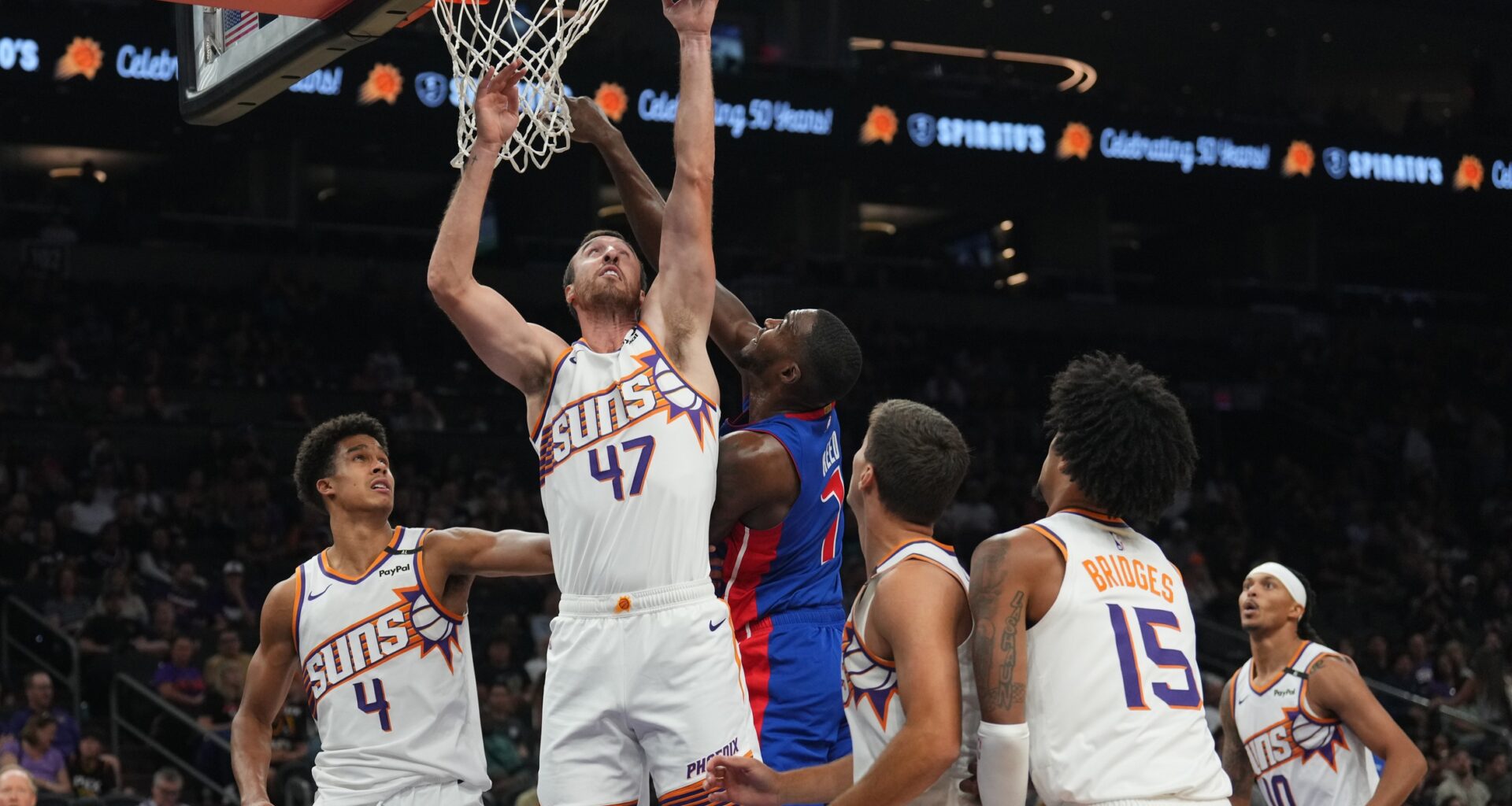
The Charlotte Hornets were drafting with yet another top-10 selection. This time, they selected Wisconsin big man Frank Kaminsky with the No. 9 overall pick. Kaminsky just finished his senior campaign where he won National Player of the Year and Big Ten Player of the Year in 2015. During the season, he averaged 18.8 points, 8.2 rebounds, and 1.2 blocks per game on elite efficiency in the paint and from beyond the arc. Led by Kaminsky, the Badgers would finish that year as the national championship runner-ups.
Charlotte needed to hit on the selection to end their streak of draft misses. Kaminsky had the production as a senior and had developed into the prototypical stretch big every NBA team was looking for at the time. However, the Hornets were inaccurate in their philosophy, never expecting the selection to become one of the worst whiffs in 2015.
It marked their fourth straight whiff and their second consecutive whiff on a Big Ten big man prospect after selecting fellow No. 9 pick Noah Vonleh in 2014. Kaminsky played consistent minutes for the Hornets and Suns, including three seasons of 10-plus points per game. He also developed into a serviceable stretch big. However, over his eight-year NBA career, he would fail to reach Charlotte’s heavy expectations and become worthy of his top-10 draft status.
© Joe Camporeale-Imagn Images