
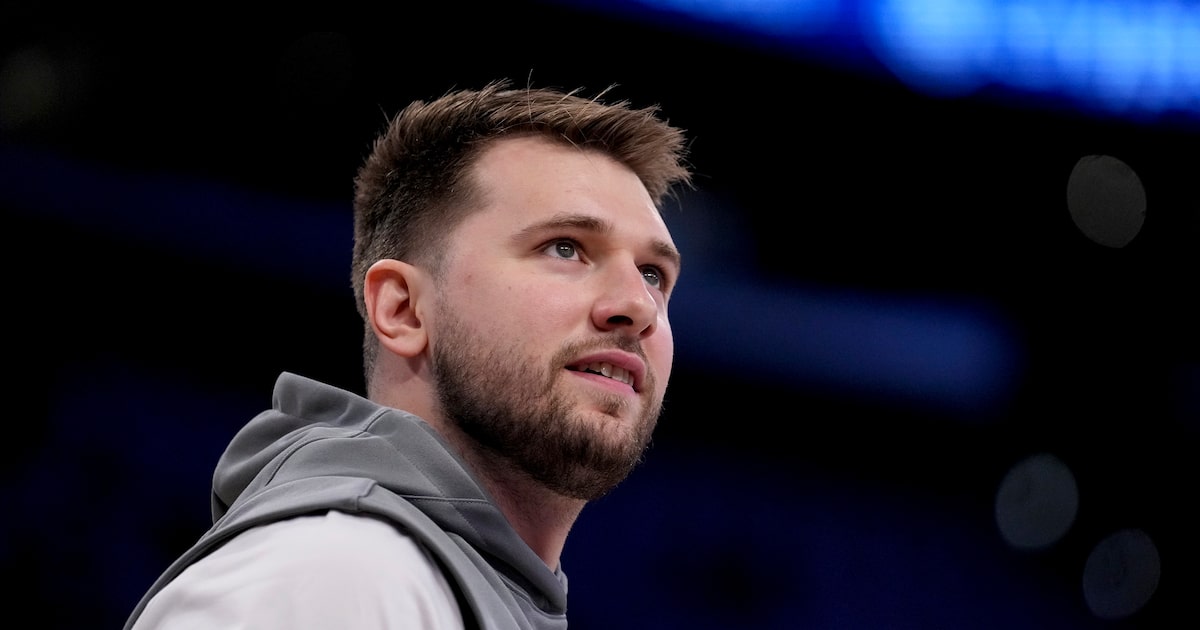
Luka Doncic is deep in his revenge body era.
The 26-year-old former Mavericks star — traded mid-season to the Los Angeles Lakers in a move that stunned fans and shook up the NBA — unveiled a leaner physique on the cover of Men’s Health in July. Gone is the guard whose weight was reportedly a factor in his exit from Dallas. In his place? A Luka 2.0: visibly fit at 6 feet 6, and locked in with a new mindset.
“Just visually, I would say my whole body looks better,” Doncic told the magazine.
Odds are, his body feels better, too. As Men’s Health reported, Doncic adopted an intermittent fasting plan in June “designed to limit inflammation and help his body recover better.”
Breaking News
At first glance, it might sound like diet-culture fluff — the kind of trend more often hyped by influencers than pro athletes. But the science behind intermittent fasting is real, with research linking it not just to weight loss, but also better brain function, improved heart health and even some anti-cancer effects.
Whether it will help you get fit like Doncic, though? That depends on you.
Related:Life goes on for Luka: Ex-Maverick’s motivated offseason should make Nico Harrison nervousWhat is intermittent fasting?
While it’s gained traction in recent years as a buzzy diet trend, intermittent fasting is less a diet and more a timed eating schedule, said Dr. Jaime Almandoz, an endocrinologist and associate professor of internal medicine at UT Southwestern Medical Center.
“Intermittent fasting, broadly speaking, involves alternating periods of eating and fasting,” Almandoz said, noting that it can be broken down into three main types.
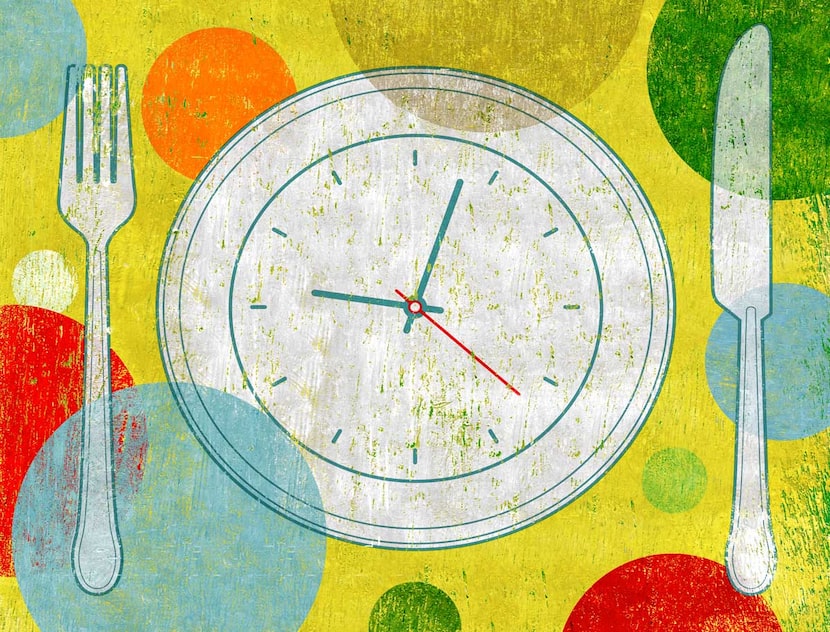
With intermittent fasting, you consciously decide when to fill your plate — and mostly, when not to.
Michael Hogue / Staff
One type, called alternate-day fasting, means eating little to no calories on fasting days, alternating with regular eating days. The 5:2 diet, another model, involves severely restricting calories — typically to anywhere between 500 and 1,000 calories — on two days each week, with normal eating the other five.
But the most popular kind, often seen as the poster child of intermittent fasting, is time-restricted eating, Almandoz said. This involves limiting food intake to a daily window, usually eight to 10 hours.
“I think what some people find attractive about intermittent fasting, particularly with the time-restricted eating, is that there’s not that emphasis on calorie tracking and restriction,” Almandoz said. “From that perspective, the restriction is when you’re eating, not what you’re eating per se,” he added, explaining that intermittent fasting “can be a really helpful tool for some people because it really simplifies when you eat. But it’s not a magic bullet — the key is to find something that fits within someone’s lifestyle.”
What the science says
When intermittent fasting results in a calorie deficit and weight loss, it may act as the catalyst behind many of the health benefits researchers have linked to the approach.
These benefits include dialing down inflammation by reducing adipose tissue (aka body fat), which can prompt the body to produce pro-inflammatory chemicals and hormones. A 2024 study from the University of Cambridge found fasting boosted levels of arachidonic acid — a fatty acid known to inhibit inflammation — in the blood of 21 participants after a 24-hour fast.
Similarly, a 2019 study from the Icahn School of Medicine at Mount Sinai in New York found intermittent fasting reduced the release of pro-inflammatory immune cells called monocytes in circulating blood. During fasting, these cells shifted into a kind of “sleep mode,” becoming significantly less inflammatory than in humans and mice who were regularly fed.

Dallas Mavericks guard Luka Doncic exercises during a team workout on Thursday, July 2, 2020.
Tommy Noel / Dallas Mavericks
Reducing inflammation does the whole body good, but especially vital organs such as the heart and brain. Fasting may help slow cognitive decline and neurodegeneration in the brain, at least in animal studies and limited human studies. For heart health, multiple factors come into play, including improved insulin sensitivity (when the body’s cells respond better to insulin and absorb glucose more efficiently) and healthier lipid levels. Together, these changes can help lower cardiovascular risk.
Intermittent fasting may even help cancer patients by making nutrients less available to malignant tumors, said Luis Rustveld, a dietitian and associate professor of family and community medicine at the Baylor College of Medicine.
“The idea behind this is that there are some metabolic changes associated with intermittent fasting, which causes cells to get less glucose,” Rustveld said. It’s thus less likely, he added, for the “tumor microenvironment to proliferate” or that the cells “would grow out of control. It’s an interesting finding, but it’s not yet validated in any prospective investigation [or] clinical trial.”
A 2024 study from Memorial Sloan Kettering Cancer Center found prolonged fasting reprogrammed natural killer cells — immune cells that target cancer — to become more effective at fighting tumors, at least in mice.
Whether these benefits last in the long run is an open question. Adherence to intermittent fasting can be challenging, said Almandoz and Rustveld, and not all approaches are guaranteed to deliver the same results.

Dallas Mavericks guard Luka Dončić (77) dribbles the ball during practice at the Mavericks Training Center in Dallas on Thursday, Sept. 28, 2023.
Juan Figueroa / Staff Photographer
For example, a 2024 study of 20,000 U.S. adults found those who ate within an eight-hour window were more likely to die from heart disease than those who ate over 12 to 16 hours, suggesting that some forms of intermittent fasting may carry risks.
“We really need to have longer-term data to know if these benefits are sustained and whether or not [they] actually outperform other dietary strategies,” Almandoz said. These other strategies, he added, include obesity medications, such as the popular GLP-1 drugs, and weight-loss surgery.
Your fitness mileage may vary
Thanks to the internet — and the information you’re reading now — almost anyone can hop on the intermittent fasting bandwagon. But whether you get the same health benefits depends on your commitment to the lifestyle, paired with solid nutrition and regular exercise.
Intermittent fasting can trigger the biochemical pathways involved in cellular repair, such as after a workout, Almandoz said. But he noted “it’s not really proven to speed up healing after surgery or injuries,” adding that “good, high-quality nutrition and adequate protein intake remain critical for recovery.”
The importance of eating enough protein cannot be overstated. Doncic, for instance, reportedly consumes at least 250 grams of protein a day while following his intermittent fasting plan — a large yet fitting amount for someone of his size and athletic workload, said Allison Childress, a dietitian and assistant professor at Texas Tech University who specializes in culinary medicine. Getting enough protein is crucial because weight loss doesn’t just burn fat — it burns muscle, too.
“You will always lose some lean mass because it’s just the casualty of weight loss in general,” Childress said. “But if somebody gets more than 20% to 30% of the weight that they are losing as lean muscle, then it’s a problem.”
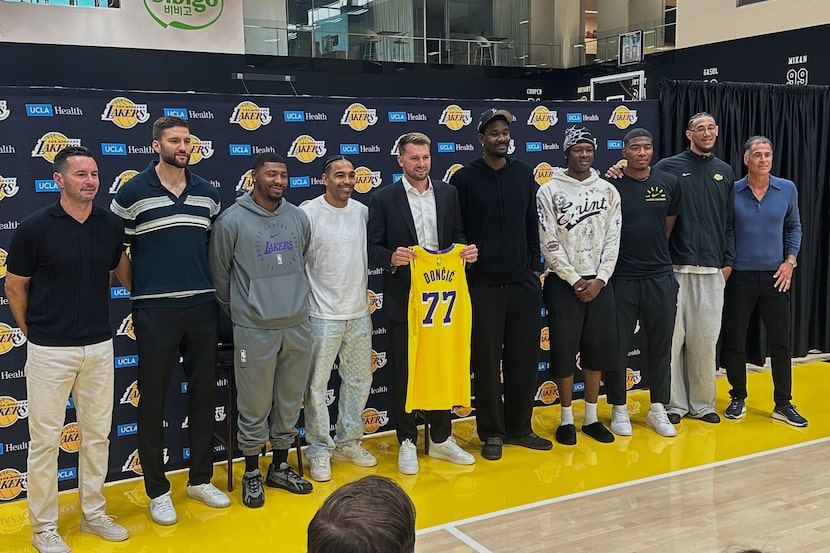
The Los Angeles Lakers, from left, Coach JJ Redick, Maxi Kleber, Marcus Smart, Gabe Vincent, Luka Doncic, Deandre Ayton, Adou Thiero, Rui Hachimura, Jaxson Hayes and general manager Rob Pelinka, congratulate Doncic on his three-year, $165 contract extension at the Lakers’ training complex in El Segundo, Calif., on Saturday, Aug. 2, 2025.
Greg Beacham / AP
Losing muscle isn’t just a cosmetic issue: It can be dangerous, especially for older adults or people with chronic conditions like liver or heart disease, Almandoz said. As we age, we become more susceptible to age-related sarcopenia, or muscle loss. That’s why older people often need to increase their protein intake to help preserve strength, mobility and overall health. (Intermittent fasting, Almandoz, Rustveld and Childress added, is not recommended for children or pregnant women.)
When it comes to nutrition, you don’t need to copy Doncic’s exact playbook. As Men’s Health reported, his diet is gluten-free and low in sugar, a level of restriction on top of the intermittent fasting that’s unnecessary for most people. Both Rustveld and Childress said cutting out gluten without a medical reason, such as celiac disease or a diagnosed food sensitivity, offers little weight loss or health benefit and may limit important nutrients if your diet is not otherwise well-balanced. You also don’t have to eat nearly as much protein as Doncic does to stay healthy and strong.
If you’re inspired by Doncic to give intermittent fasting a go, Almandoz, Rustveld and Childress all recommend talking to a doctor, nutritionist or dietitian first. After all, most of us don’t have the luxury of an expert team guiding our meals and workouts. And unlike Doncic, who recently signed a three-year, $165 million extension with the Lakers, most of us aren’t training for the NBA.
Miriam Fauzia is a science reporting fellow at The Dallas Morning News. Her fellowship is supported by the University of Texas at Dallas. The News makes all editorial decisions.