
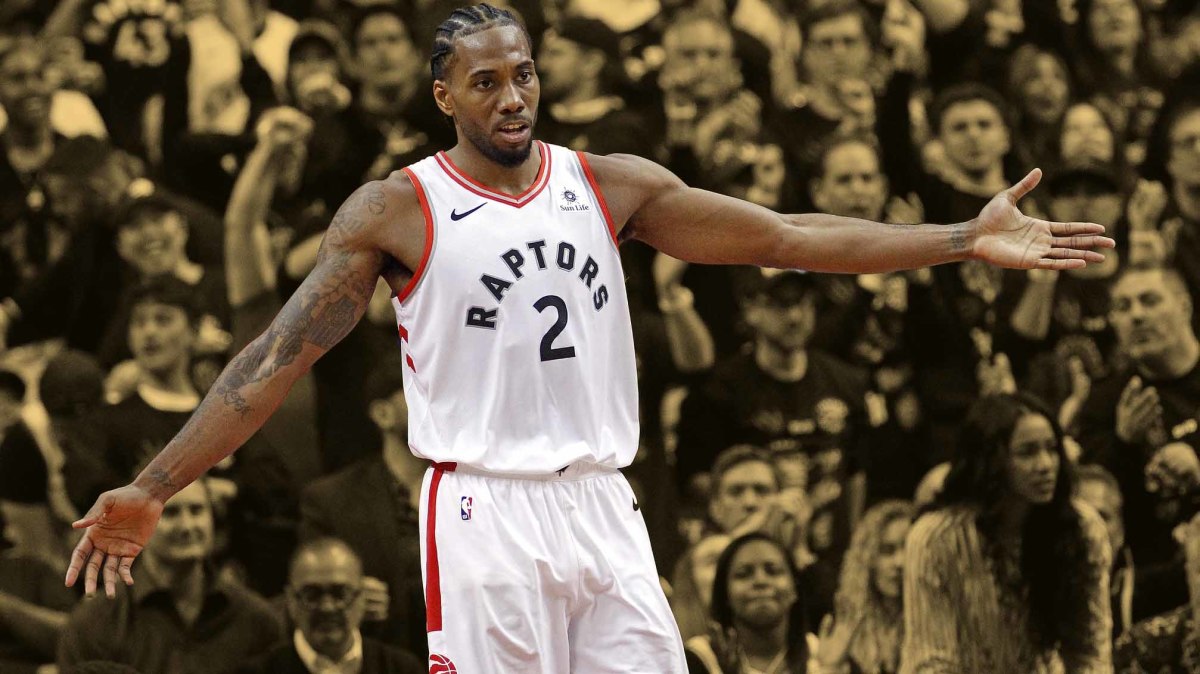
“I wouldn’t be here right now” – Kawhi Leonard believes his career would’ve been over a long time ago without load management originally appeared on Basketball Network.
In the eyes of many, Kawhi Leonard’s 2019 title run with the Toronto Raptors was one of the most impressive in modern NBA history.
Advertisement
He had just spent nearly a full year away from the game, played only nine games in San Antonio the season before and became the subject of endless criticism for how he left the Spurs. People questioned his injury, questioned his motivation and some said he quit. Others thought he was faking it.
But when the dust settled in June, Leonard held his second Finals MVP trophy. Toronto had its first championship in franchise history, and the image of Leonard calmly walking off the floor after hitting the game-winner against Philadelphia in Game 7 was etched in history.
For him, the moment felt earned. It was the work that went into simply being healthy enough to suit up at all.
Advertisement
“It was big,” Leonard said of the rest days he took throughout the 2018–19 season. “When it got bad, we ended up taking, you know, four or five games off. And, you know, if we didn’t do that, I wouldn’t be here right now.”
A strategy built for survival
That Raptors season was unlike anything Leonard had experienced before. He wasn’t playing under Gregg Popovich anymore. He had more control, more say in how he approached his body. Toronto’s front office had been upfront that Leonard would not be pushed past the limit.
Advertisement
If he felt something, he’d sit. If he needed time, he’d get it. The Raptors called it “load management.” It was mocked at first. Then it became a model.
Leonard played in just 60 games that year, with the team holding him out of back-to-backs and any night where his surgically repaired quadriceps felt even slightly off. The plan was designed to get him in top shape by May.
“For sure,” Leonard said when asked if it really made that big of a difference. “I don’t think I’d be playing right now if I would’ve tried to go through that season [without it].”
Advertisement
In San Antonio, Leonard’s camp had already seen what could happen when the pain got out of hand. He had been hurt before, but this was different. He had played through pain plenty of times in the past, but this wasn’t something he could push through.
Proof of concept
When the playoffs began, Leonard looked like himself again. He averaged 30 points per game in the postseason, shot over 49 percent from the field and played some of the best defense of his career. His legs were under him. His explosiveness was back. The limp that appeared on certain nights during the regular season was gone. There were still tough games, of course, but he was whole.
Advertisement
He outdueled Giannis Antetokounmpo in the Eastern Conference finals and beat a Warriors team that had made five straight trips to the Finals. Injuries hit Golden State hard, but nobody questioned who the best player on the floor was. Leonard never needed the validation, but after all the criticism in San Antonio, the win was personal.
There was still some debate at the time — and there is today. Load management has its critics. Some believe stars should play every night, no matter what. Others worry about what it would mean for fans who paid to see certain players and ended up watching them in street clothes. But for Leonard, there was no debate.
Even now, entering the 2025-26 season after Leonard once again played limited games due to injury, plenty criticize his ability to stay healthy enough to play an entire season. Despite the two-time Finals MVP deploying load management years ago, it likely hasn’t awarded him anywhere near the number of games under his belt one would expect, given all the time off.
Advertisement
This offseason, Leonard reportedly trained his body hard to simulate an entire postseason run, so it’s safe to say his body — and how he approaches taking nights off — is still something he is carefully trying to figure out.
This story was originally reported by Basketball Network on Aug 5, 2025, where it first appeared.