
I can remember my first NBA basketball game.
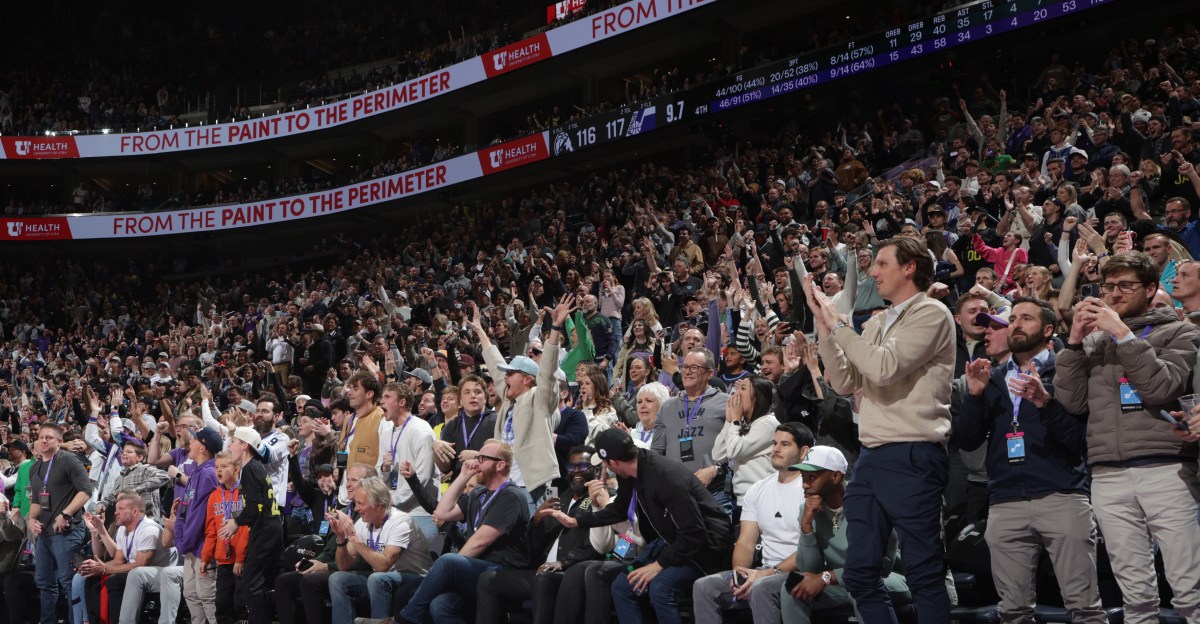
2012. My local Utah Jazz with Jamal Tinsley running point and Big Al Jefferson carving up the post against the cascading mane of Steve Nash and the Phoenix Suns. My spiked hair, crunchy with enough hair gel to taxidermize a panther. Leaning over the frigid railing of the upper bowl. I can still recall the thumping atmosphere as the DJ flooded the building with Pitbull’s “Give Me Everything” and Breathe Carolina’s “Blackout” at every timeout. The bass reverberated around my skull like a pinball game as I drank in the final ounce of every passing moment.
The oxygen evaporated from the arena when Nashty stepped through the defense to hit the go-ahead free throw line runner. CJ Miles’ desperation fallaway floated aimlessly. Millsap’s tip-in was devoured by the replay monster. All in one game: anguish, sorrow, sudden celebration, then more sorrow. The Utah Jazz experience.
I remember feeling my heart race as Utah Jazz ticket prices plummeted…
I couldn’t wait to get another taste of the action. In the coming years, of course, I would. Especially once I became financially independent. On a college student’s budget, there was zero chance I was buying anything more expensive than absolutely necessary, so it had to be the top row for yours truly. And what a harrowing expedition the path to the summit can be. The air gets thin near the peak. The climate, despite the elevation, becomes dense and stuffy. Each step stretched steeper than the last, as those onlookers, after reaching their seats unharmed, watched in horror with every intrepid step each subsequent climber.
I shudder to imagine what would happen if I missed a step from that incline — they should really make you sign a waiver before climbing to your folding chair in the Alps. The flight of a 3-pointer looks drastically different from the eagle’s nest. Oblong, even. The first few shots to go up always seem to stray airborne before miraculously changing course and finding the net. Pure mystery. I crave the basketball experience.
But basketball is becoming an expensive hobby.
I remember feeling my heart race as Utah Jazz ticket prices plummeted in the months leading into the 2022 season. After gutting the roster of star players Rudy Gobert and Donovan Mitchell, my hometown franchise made a deliberate effort to do the unspeakable in professional sports: be good at being bad.
Utah began its reconstruction. Hard hats handy, tearing the depth chart down to rubble and a vacant pit, the Jazz decided to forego winning for a while. Just long enough to draft the next basketball deity and lead a revolution through the NBA. Temporary torment; hypothetical success.
But before they could mature into good, they had to plummet into bad. In turn, the ticket prices were amortized alongside the inferior on-floor product. It’s simple math: bad basketball equals cheap basketball. A measly two dollars for nosebleed seats? Who cares about the matchup when entry is essentially free?
Fair is fair, and fan support didn’t falter; the arena remained packed to the rafters game after game.
Average per-game fan attendance by year (Utah Jazz):
2021-22: 18,306
2022-23: 18,206
2023-24: 18,206
2024-25: 18,175
When the Delta Center’s maximum capacity is 18,175 for basketball games, these numbers are evidence of a community entirely committed to its team.
But a shift is taking place in the expected price of being an in-person, live-it-as-it-happens basketball fan is casting doubt on the long-term health of live attendance. Over 3,000 fans took part in a recent Action Network poll gauging the general sentiment surrounding the sale value of ticket prices in each NBA team’s market.
The results paint an ugly picture: Live NBA basketball attendance has become too expensive for the average fan, and Utah, especially, is voicing its disapproval. 60% of Jazz fans feel “priced out” of attendance. That’s not entirely baseless, either. The numbers agree, as last season’s ticket prices averaged $218 — good enough for 13th highest in the entire NBA and knotted with Chicago, a team with a stronger pedigree, in a much larger market, that collected 22 more wins than the last-place Jazz.
Many variables can factor into ticket prices. The capacity of the arena and quality of its amenities, market size and demand, and star appeal (both home and away) all play a part in the price for entry, but considering the current state of Utah’s franchise, one can’t help but wonder if we’ve crossed a threshold.
The Salt Lake City metro area stands as the sixth-smallest market in the NBA. And though Ryan Smith insists the opposite, Utah is still a minnow in this pond. The cost to get in would make you expect otherwise.
Of course, viewership isn’t entirely exclusive to those within the walls of the Delta Center. One can always watch games on local cable with KJZZ or with a Jazz+ subscription, and such availability has not gone unappreciated in the age of NBA League Pass restrictions and blackouts. But watching NBA basketball in-person is something every basketball fan should get to experience. It’s just different.
What good is a $3 hot dog when you’re forking over $100 to get through the doors?
Programs like the $3 fan-friendly in-arena menus have been received with well-deserved applause, but what good is a $3 hot dog when you’re forking over $100 to get through the doors?
Since you’ll most likely be attending with at least one other person, a friend, child, family member, what have you, you’ll be charged at least twice as much on tickets, food, and the mysterious fees that ticketing apps refuse to elaborate on. I would strongly caution against taking your son or daughter on a halftime trip to the team store to check out a brand new Ace Bailey jersey — that’ll drain you roughly $120 a pop (don’t even get me started).
How many people do you know who can afford themselves ten trips to watch a Utah Jazz game each season? Five trips? Three?
And hey, wasn’t this the team that just finished the 2025 regular season ranked dead last?
The issue doesn’t just stem from Utah’s comparatively high prices. The Dallas Mavericks came under fire when they announced swelling season ticket prices soon after dealing away franchise centerpiece and superstar draw Luka Doncic. In an attempt to satiate the literal angry mobs outraged about the state of Dallas basketball, the Mavs chided that over 4,200 seats can still be purchased for under $40 per game.
NBA basketball is becoming a luxury. One that fewer and fewer can afford.
In fact, almost universally, ticket prices are soaring. Prices from the 2024-25 season are up 21.43 percent from the year prior. That number doesn’t look to fall any time soon. Entry to the Knicks v. Celtics playoff matchup in Madison Square Garden rocketed to an astronomical average of $1900. The most affordable tickets for the same game? Enough to set you back nearly $800.
The cost of fandom is escaping the reach of the median fan — it’s abandoning anyone without cash to burn. The lower bowl is full of tucked-in buttoned-up dress shirts attending the game on the company dime, when it should be stuffed with Joe Ingles jerseys, Thurl Bailey goggles, and a Ronnie Price UVU replica uniform.
It’s no wonder that the league faced a viewership crisis last season. With the rise in ticket prices, NBA basketball is becoming a luxury. One that fewer and fewer can afford.
Of the individuals surveyed, Jazz fans reported spending $500 or more 30 percent of the time. That’s good enough for the third highest in professional basketball.
Percent of fans who spend $500+ on an average gameday experience:
Toronto Raptors: 38%
New Orleans Pelicans: 32%
Utah Jazz: 30%
Increasingly so, it feels the soul of professional basketball belongs to the corporate consumer, distanced from the rabid fanatics and starry-eyed kids dreaming of the day they may lace up for their favorite squad. I know, I know, “basketball is a business”. The reactionary cliché of every executive and player fighting to keep emotion out of the equation. In the immortal words of Anthony Davis, “The business of basketball is a business just like all other businesses”.
When did it all become about the money, even at the expense of the consumer? Where did we lose our grip? For the kids who shoot in their driveway from the moment they get home from school until it’s too dark to see the rim. The covering of the ball so worn down that it looks like a grayed-out ball of frayed twine. The net so snaggled and used that it’s hardly more than a heap of string holding on for dear life on the single remaining rung. Hands blackened and dirty from hours outside.
Everyone in the NBA was, at one point or another, that kid dreaming of their chance to play under the lights. To hear the roar of the crowd. To celebrate victory. To mourn defeat. Those feelings should be available to everyone — the experience of basketball — but when a fan base insists that they can’t afford to watch their team, the sport is facing a serious problem.
Stop gatekeeping this game from its fans. You’re doing more harm than you know.
Calvin Barrett is a writer, editor, and prolific Mario Kart racer located in Tokyo, Japan. Currently writing for SB Nation and FanSided, he has covered the Utah Jazz and BYU athletics since 2024 and graduated from Utah Valley University.