
The Toronto Raptors, throughout most of their history, haven’t exactly been seen as villains of the NBA.
But one deal they signed a little over a year ago might be causing a bit of friction around the rest of the league.
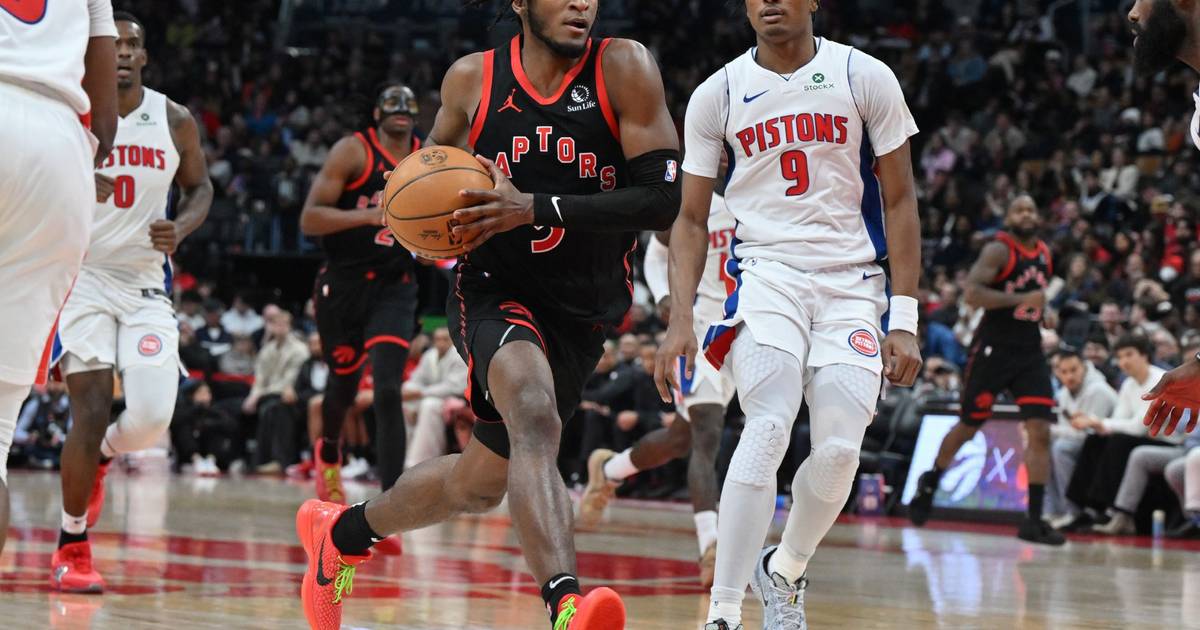
Last summer, Toronto had a contract extension with point guard Immanuel Quickley worth US$175 million on a five-year deal, or an average annual value of US$35 million.
Several other players around the NBA remain in negotiations with their teams as restricted free agents, including Golden State forward Jonathan Kuminga, Chicago guard Josh Giddey, Nets wing Cam Thomas, and Philadelphia guard Quentin Grimes.
The Quickley extension was one of the last major pieces of business in the final year of his time with the Raptors for former team president Masai Ujiri, who was let go in June.
“That contract screwed up a lot of things, and that’s why you can’t use [comparable players in contract negotiations]… I don’t think Toronto got enough heat for that number because Immanuel Quickley is not a $32-33-million [per year] guy,” Marks said.
With a few months before the season, there’s still enough time for all the aforementioned free agents to sort out deals with their new teams. But every day that they remain unsigned, front offices and fanbases alike might be rueing the decisions made last summer by the Raptors’ front office.
But ESPN’s Bobby Marks reported this weekend that other teams around the league have found the deal holding them back in their own negotiations.
The Raptors “totally screwed up restricted free agency,” Marks said in a recent ESPN segment.
Quickley was an established NBA player at the time of his deal, playing 291 games split between the New York Knicks and Toronto. But he’d only started 65 games since coming into the league, 38 of which were with Toronto after coming over in a midseason trade.
Quickley has averaged 17.9 points, 6.3 assists, and 4.2 rebounds in 71 games for the Raptors in his career over the past two seasons.
“That’s where [other restricted free agents] are looking at as the benchmark [of what their contracts should look like],” Marks added.
Lead photo by
Dan Hamilton-Imagn Images