

Writer: Andrea Teran
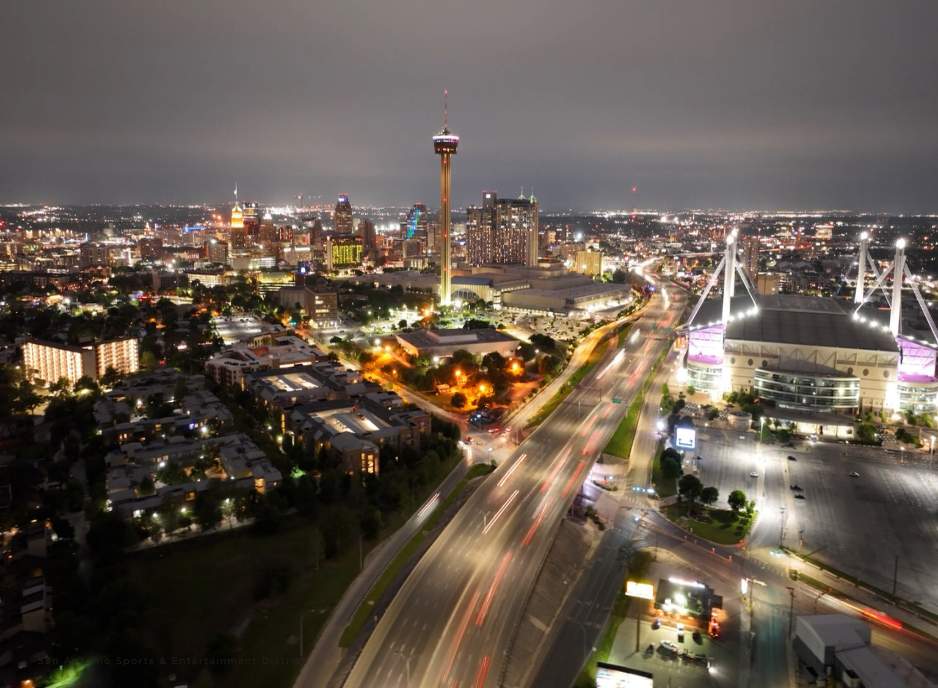
August 2025 — San Antonio Spurs leadership has pledged more than $1 billion toward Project Marvel, a proposed downtown sports and entertainment district anchored by a new arena. The package includes $500 million for the construction of the arena, with guaranteed coverage of cost overruns, another $500 million for adjacent development, and $60 million in community incentives such as affordable ticket programs, local business contracting, and childcare initiatives.
Arena costs are projected between $1.2 billion and $1.5 billion, meaning that the Spurs’ contribution would represent about one-third of total expenses. The wider Project Marvel initiative, estimated at $3 billion to $4 billion, also encompasses an expansion of the Henry B. González Convention Center, Alamodome improvements, and a land bridge reconnecting the East Side.
Read more: Nirenberg’s final move: Project Marvel and the future of San Antonio
In a July 24 letter to City Manager Erik Walsh, Spurs Chairman Peter J. Holt wrote, “Since the City of San Antonio first approached our organization about a potential partnership, the San Antonio Spurs have remained committed to pursuing an equitable agreement that benefits our community as a whole, strengthens our economy, honors our city’s legacy, and serves generations to come without raising taxes on local residents.”
During a special City Council session on July 25, Walsh told council members that San Antonio could contribute between $350 million and $500 million toward the Spurs’ proposed downtown arena, though he emphasized the figures were preliminary. The funding would likely come from mechanisms such as a Project Finance Zone, which captures state hotel occupancy and sales tax revenue within a three‑mile radius of the Convention Center, as well as a Hemisfair-area Tax Increment Reinvestment Zone tied to new property development. Bexar County officials have also discussed contributing through a voter-approved venue tax on hotel occupancy and rental car revenues, with estimates ranging up to $311 million depending on final revenue projections.
The planned convention center expansion is also considered central to San Antonio’s competitive edge. “Tourism and hospitality are the third-largest industries in San Antonio, and they’re deeply woven into the city’s identity,” Yldefonso Rodriguez Sola, assistant director of the Henry B. González Convention Center, told Invest:. He noted that cities such as Nashville and Oklahoma City have reinvented themselves with major convention investments, while Dallas is planning a new convention center. “If we stop investing, we fall behind. We need to think 10 or 20 years ahead. The convention center acts as San Antonio’s living room. It’s often the first experience many executives and business leaders have with the city. That impression matters.”
Mayor Gina Ortiz Jones, who took office in June, has stressed the importance of ensuring transparency and accountability as negotiations continue. She has advocated for a revenue-sharing model that could allow the city to capture a portion of income from ticket sales and property taxes within a designated zone, citing structural budget deficits projected to reach $148 million in 2027.
Community leaders argue that the investment would benefit the entire city, not just downtown. “There’s a misconception that investment in downtown only benefits downtown. The opposite is true,” Trish DeBerry, president and CEO of Centro San Antonio, said in an interview with Invest:. “We generate economic return for the entire city through hospitality, sales, hotel taxes, and overall development. A vibrant downtown drives broader prosperity.”
Walsh told council members during the special session that “a lot needs to happen,” noting that further negotiations are needed before a term sheet is finalized. If approved, tax collections for the project could begin in 2026, with major construction, including convention center expansion, expected to start around 2028 and continue into the early 2030s. As the city approaches its August 18 referendum deadline, the stakes remain high.
“We’re fortunate because city executives support our needs and continue to invest in the building so our fans and artists can have an amazing experience and we can remain competitive,” Stephen Zito, assistant director of Convention Sports Facilities at the Alamodome, told Invest:.
Top photo was a courtesy of the City of San Antonio.
For more information, please visit: