
We’ve officially reached #NBAugust. The month of August used to be the driest period on the calendar for transactions. A handful of contract guarantees would trigger during this month, along with the occasional camp signing. Essentially, August was when the NBA world went on vacation, returning in September to fill out rosters ahead of training camp.
About seven or eight years ago, that started to change. Now, August is usually filled with some lingering trade rumors, usually those surrounding stars who may or may not have asked out of their current situations. We also get some roster shuffling with two-way contracts, and, of course, camp deals galore.
This summer, we’ve got all that, plus we still have some good free agents on the market. It’s a weird time, where real NBA news is still pending, despite NBA front offices sneaking in a day off here and there when they can.
Today, we’re going to look at some free agent situations, as well as a few roster questions that are top of mind despite being firmly in #NBAugust.
The Restricted Free Agents
We opened the summer wondering what might happen with these four restricted free agents. Over a month into free agency, we’re no closer to having any answers on any of this quartet.
There are a number of factors keeping this foursome unsigned. All are restricted free agents, meaning a rival team would have to make a big offer to pry them away from their incumbent teams. The challenge this summer is that only three teams went the cap space route.
The Brooklyn Nets, who already hold the RFA rights for Cam Thomas, are still sitting on cap space. However, they aren’t investing in big contracts through free agency, as the Nets are rebuilding. The Milwaukee Bucks went for cap space, but used it to sign Myles Turner in a targeted signing. The Memphis Grizzlies also went the cap space route, but used their space to renegotiate-and-extend Jaren Jackson Jr.
That means that finding a team willing to extend an offer sheet was nearly impossible for the restricted free agents. Sign-and-trade deals have been discussed, but that’s a tripod that can be tricky to balance. The incumbent team needs to agree, the new team needs to agree and the player needs to agree. Getting two parties in sync is hard enough. Adding a third ratchets up the difficulty quite a bit.
Restricted free agency is always hard on the players. That’s by design. The CBA (and this isn’t anything new with the current CBA, by the way!) is set up for teams to have an advantage on re-signing the players they drafted (or “discovered”) and developed. It’s been this way for years and often results in the players taking deals that are at least somewhat team-friendly.
Only two players in recent years have signed offer sheets as restricted free agents. Deandre Ayton is the most famous example, as the Indiana Pacers signed him to an offer sheet that the Phoenix Suns almost immediately matched in 2022. A year later, Matisse Thybulle signed an offer sheet with the Dallas Mavericks that was matched by the Portland Trail Blazers. Every other player to make it to restricted free agency over the last four offseasons has seen the process play out without an offer sheet.
Of this year’s remaining quartet, Josh Giddey and the Chicago Bulls seem the most likely to stay together, but are reportedly apart on contract terms. Both years and dollars seem to be an issue here. Still, both sides here don’t seem to be so far apart that they can’t get there. This one mostly seems to be a lack of urgency on the part of either party. The Bulls know that no one is signing Giddey to an offer sheet. Giddey feels strongly enough about his value as a player that he’s not pressed to come down from his ask. Expect something to still get done here that sees Giddey in Chicago long-term.
Things have been largely silent with Quentin Grimes and the Philadelphia 76ers. Early on, it was posited that Grimes wanted a deal worth $20-25 million AAV. The counter was that the Sixers wanted Grimes on something in the $15 million AAV range. Since then, things have gone quiet. Much like with Giddey and the Bulls, there isn’t a lot of urgency here. Unlike Giddey and the Bulls, Grimes and the Sixers seem to be fairly far apart on a new deal. Re-signing Grimes to anything north of $15 million will put Philadelphia over the second apron. Going to anything near $25 million will likely mean that the 76ers will finish the season as a second-apron team, barring a major salary-shedding move. That’s the gap these two need to bridge.
Cam Thomas is in a complicated situation. The Nets still have a whole bunch of cap space, even when you account for agreed-to-but-not-signed deals for Day’Ron Sharpe, Ziaire Williams and Ricky Council IV. But because they are the only team with cap space, Brooklyn has no reason to move on a new deal for Thomas that they don’t deem a fair value. Thomas has been outspoken about where he sees himself as a player. That’s understandable, as tagging the scoring guard with the “empty calories” tag is unfair. Thomas has improved as a playmaker and can score in a variety of ways that is only matched by the best scorers in the league. This situation is a flashing warning light for Thomas to sign the qualifying offer. That will see him paid $5.9 million for the upcoming season, which is a steal for the Nets by any measure. Following this year, Thomas will be an unrestricted free agent. And, crucially, he’ll have a no-trade clause this year, as Thomas would lose his Bird Rights if traded while playing on the qualifying offer.
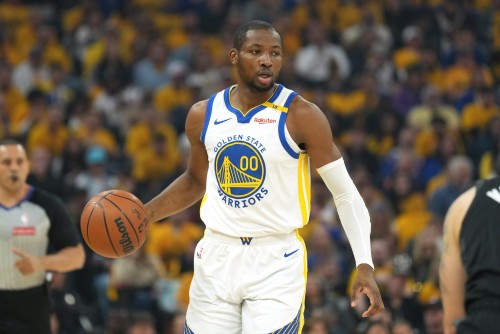
As for Jonathan Kuminga…this one is a mess. Kuminga and the Warriors aren’t close to a new deal. There are teams, the Sacramento Kings chief among them, who would like to work a sign-and-trade for Kuminga. That’s a complicated process, where Base Year Compensation (BYC – essentially Kuminga would count for half of his new salary on the outgoing side for the Warriors, while counting for the full amount of his new salary for the acquiring team) would be triggered. But it’s not so complicated that it can’t be overcome.
There’s also a world where the Warriors don’t seem to be thrilled with the idea of losing Kuminga, but also don’t seem to want to pay the young forward either. That’s left Kuminga with short-term offers on the table that are effectively one-year deals. However, Golden State seems intent that Kuminga waives his implied no-trade clause if he signs what is effectively a one-year deal. That’s a no-go for Kuminga, as that essentially equals signing a delayed sign-and-trade deal, but without Kuminga having any say in where he’s being traded to. The qualifying offer doesn’t really seem to be in play here…yet. But each day we get close to camp at the end of September is one day closer to Kuminga betting on himself and playing out the year on the qualifying offer with a one-year no-trade clause. Keep an eye on a sign-and-trade eventually getting done, as that seems the best way to satisfy both Kuminga and the Warriors.
The Veteran Free Agents
The above list represents the 10 best available free agents, removing the aforementioned foursome of restricted free agents. There’s a bit of everything there, as you have some guards, a couple of forwards and a handful of bigs.
Horford, Melton and Payton are long-rumored to be signing with the Golden State Warriors (more on them in a bit!). Their situations, both contract value and length, are tied to the Jonathan Kuminga situation. The Warriors aren’t signing any free agents to a deal that will hard cap them, which could put an unmatchable offer sheet in play for Kuminga. Right now, the Brooklyn Nets seemingly have little interest in signing Kuminga using cap space. Same with any team sitting on their Non-Taxpayer MLE. But if the Nets or another team knew they could land Kuminga with the Warriors having no ability to match, that could change things.
Because of that, Horford, Melton and Payton are in a holding pattern. Given that trio seemingly has a preferred destination of the Bay Area, they seem content to wait it out.
The rest of the list has largely been crickets as far as free agency goes. There have been the occasional whispers surrounding Simmons, Westbrook and Brogdon, but nothing has come to pass just yet. Brogdon is the most plug-and-play of this group, and there are a handful of teams that could use his on- and off-ball skills. Simmons and Westbrook are trickier fits, because they are on-ball playmakers whose need for usage no longer matches their ability to justify that usage.
Coffey will end up as one of the best value deals of the offseason at this point. He’s a playable rotation wing, in a class that didn’t have many of those. It’s kind of a mystery why he’s still on the market, but perhaps holding on for a while will see him land a deal above the veteran minimum amount.
Lyles, Boucher and Achiuwa are all backup bigs, but that doesn’t mean they don’t have value. All three could help teams who need to fill out their frontcourt rotation. Given how late we are in the process, all three are probably looking at veteran minimum deals. But landing in the right spot should help their value for another run at free agency next offseason.
Teams Who Need to Sign a Player(s)
Cleveland Cavaliers – must sign at least one player
Detroit Pistons – must sign at least one player
Golden State Warriors – must sign at least five players
New York Knicks – must sign at least two players
Philadelphia 76ers – must sign at least one player
NBA teams have to carry at least 14 players on standard contracts. There are exceptions to this rule, which allow for teams to drop below 14 players for up to 14 days at a time, with a max of 28 days per season. Because of this minimum roster requirement, it’s fairly rare to see a team enter the regular season with fewer than 14 players signed to a standard deal.
The group of five teams above are all in slightly different places with hitting their roster minimum.
The Cavs are currently the only NBA team that is above the second apron, as they sit $19.7 million over that marker. That means Cleveland is facing a massive tax bill. However, they’ll sign a 14th player eventually, because they have to. Look for one more targeted veteran minimum signing, likely in the frontcourt. Running it back with Tristan Thompson likely makes the most sense here.
The Pistons are miles away from the aprons or the luxury tax. They simply haven’t found a player to fill out their roster with yet. Detroit is limited to offering veteran minimum deals to free agents. However, having a bunch of flexibility under the luxury tax, as well as having a TPE of $14 million, has the Pistons in great shape to take a player on in trade from a team that needs to shed some salary.
We touched on the Warriors above when discussing both Jonathan Kuminga and the veteran free agents. They’ve got a lot of work to do, but everything will hold until the Kuminga situation is resolved one way or another.
The Knicks are again dancing around a second-apron hard cap. New York can fit in a rookie minimum deal (James Nnaji? Mohamed Diawara?) and a veteran minimum signing. This roster is at least two-deep with rotation players at every spot, so the Knicks can afford to be picky with filling out the bench. No team in the league has done a better job over the last year or so with working with tight margins under a hard cap than New York has.
As for Philadelphia, their 14th spot seems earmarked for Quentin Grimes. That’s the logical path, at least. From there, the Sixers can figure out how/when/if they want to fill out to the 15th spot, which would increase the team’s post-Grimes tax bill.
Teams Who Need to Waive a Player(s)
Brooklyn Nets – need to waive at least two players
Charlotte Hornets – need to waive at least three players
Dallas Mavericks – need to waive at least one player
These three teams are in different spots from each other, but all have roster moves to make to get down to the maximum allowable of 15 players on standard contracts.
The Nets are still sitting on over $20 million in cap space, even after factoring in reported agreements with Day’Ron Sharpe, Ziaire Williams and Ricky Council IV. That means that eating a couple of contracts is no big deal for Brooklyn. In fact, they’ll be the prime trade partner for teams that need a facilitator by taking on another contract or two.
Brooklyn has to get to the salary floor before the start of the regular season, or they’ll have a cap hold for the difference put on their books. Even more important: The Nets would miss out on the luxury tax disbursement from the NBA at the end of the season. That means they will get to the salary floor one way or another. If that comes through taking on contracts and having dead money on the book, so be it. It all counts the same when it comes to the floor.
As it stands, there aren’t any “easy” cuts for the Nets at the moment. They have some high-salary vets who aren’t going anywhere. They drafted five players in the first round of this year’s draft, and those players are all staying. And there are a few other players who the team likes a lot. Plus, Cam Thomas is still unsigned.
If we had to make a projection right now, we’d say that Drew Timme, one of Tyrese Martin or Jalen Wilson, and Dariq Whitehead have the least chances of sticking around. The team has added a lot of frontcourt depth, lessening the need for Timme. Same on the wing with Martin or Wilson. Whitehead is a former first-round pick, but he hasn’t been able to stay healthy or to break through. It’s probably time to cut bait there.
The Hornets are over the cap, but well under the tax. They’ve got 18 players on standard deals though, and none are camp deals. That means that Charlotte has three cuts to make. Pat Connaughton was acquired in a salary-clearing move. The Hornets have a bunch of younger wings that they are prioritizing playing. That means Connaughton is likely gone.
Things get a bit more difficult after that. DaQuan Jeffries saw some rotation minutes last year, but the guard group is pretty full. He’s also on a non-guaranteed deal.
The last one is the most difficult. Moussa Diabate also has a non-guaranteed contract, but he’s an important player for frontcourt depth. He’s not going anywhere. That means cutting another guaranteed deal. The guess here is that decision comes down to Nick Smith Jr. or Josh Green. Smith played better last season, but he’s stuck behind a lot of other off-ball guard options. Green can swing up to play the three and he’s a better 3&D option for a team that needs that skillset. For now, Smith is probably the one who goes.
Dallas is in a tough spot too. They reportedly have an agreement to re-sign Dante Exum, but the Mavericks don’t have a roster spot for him at the moment, nor the room under their second-apron hard cap. That means that someone will have to go for Exum to come back.
Brandon Williams has the only non-guaranteed contract on the roster, so that’s where you probably look first. However, Dallas is still light on ballhandlers while Kyrie Irving rehabs. Could that mean Williams stays, while Mavs mainstay Dwight Powell could be on the chopping block? He’s got an expiring deal at $4 million. If Dallas were to trade Powell into a team’s exception or cap space, they could create some additional wiggle room under that second-apron hard cap. Powell has been there forever, but the Mavericks are deep in frontcourt options, Powell has fallen out of the rotation and the long-time center was brought in under different ownership and front office groups. That’s the safer, and more logical, move than waiving Williams. But safety and logic don’t always win out in the NBA.