
After more than two decades at Mohegan Sun Arena in Uncasville, the Connecticut Sun will likely have a new home as soon as 2027 with discussions of a potential sale rapidly progressing.
But where that home will be remains a question with multiple bids still on the table to purchase the WNBA franchise. A move to Boston has been speculated since the Sun began playing one-off games at TD Garden in 2024, but the state of Connecticut isn’t letting its last major professional sports team leave without a fight. Regardless of the buyer, the sale is poised to be the largest in the history of women’s professional sports.
The Boston Globe reported Saturday that Mohegan Tribe ownership reached a deal to sell the Sun for $325 million to a Boston-based group led by Celtics minority governor Steve Pagliuca, and the offer reportedly includes an additional $100 million commitment to construct a dedicated practice facility for the team. But both the Sun and Pagliuca publicly denied Sunday that there is an agreement in place.
The Sun can’t be relocated from Connecticut without approval from the WNBA and its Board of Governors, and the Globe reported that the league could force the Mohegan Tribe to sell to an in-state buyer. The WNBA also put out a statement Saturday which noted that Boston did not put in a bid during the league’s most recent round of expansion and said nine bid cities that were not awarded franchises “currently have priority over Boston.”
A source familiar with the negotiations told The Courant that a Hartford-based investment group has submitted a competing offer exceeding $300 million to purchase the franchise and keep it in-state, moving the team’s home arena to the PeoplesBank Arena downtown. The arena, formerly known as the XL Center, is in the midst of a $145 million renovation aimed at attracting more concerts and providing more amenities and seating options.
A source familiar with the discussions said Monday that PeoplesBank Arena could easily accommodate WNBA’s summer schedule, and it also would be a boon to downtown restaurants and bars because the summer season is typically slow in the city. According to the source, conversations over the use of the downtown Hartford arena have delved into how to accommodate the training and practice in the short term. There have been preliminary talks about a potential deal structure for leasing, the source said.
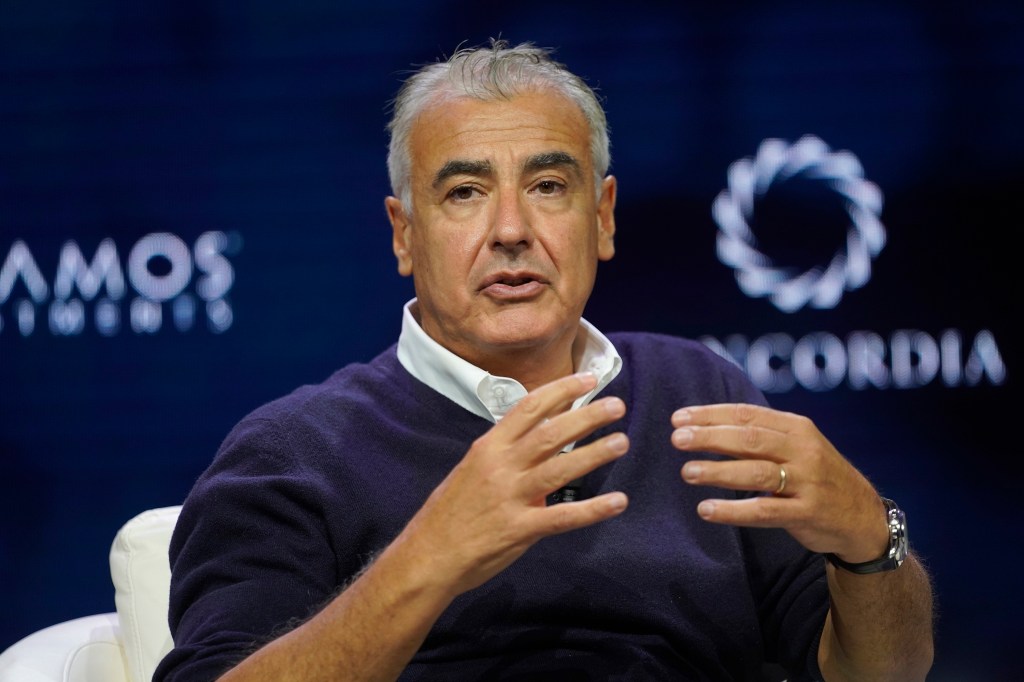
The Hartford bid includes prominent investors from around the state including several Hartford-area corporations, but its primary backer is Marc Lasry, the billionaire co-founder and CEO of global investment firm Avenue Capital Group.
Hartford Mayor Arunan Arulampalam said Monday his discussions with Lasry have focused on where a training and practice facility might be located and what a move to Hartford would mean for the city. One area that quickly emerged was the area around the western side of Constitution Plaza, a natural location because it would easily connect via Temple and Pratt streets to PeoplesBank Arena.
“There could be offices, a practice facility and maybe even some housing for some of the players,” Arulampalam said. “My understanding is one of the things they heard from the players is they want something more of a city feel, and livable downtown lifestyle that players in other cities have.”
The housing could be units that already exist or ones that are converted from office space. Much of Constitution Plaza, now mired in foreclosure and receivership, has been mentioned as a prime candidate for further conversion from office to residential. The discussions, Arulampalam said, are in the earliest stages and how the practice facility would be financed still would need to be worked out.
“One thing that I think is worth mentioning is that (Governor Ned Lamont) is really engaged in this conversation, where he really wants to see the Sun stay here in Connecticut,” Arulampalam said. “We’ve talked about a lot of ways in which [the Capital Region Development Authority] and frankly a number of corporations and corporate leaders can sit down and can support this.”
CT leaders want Connecticut Sun to stay in state. Here’s what’s being said
What are Lasry’s Connecticut ties?
Lasry was born in Morocco but spent most of his childhood in West Hartford after immigrating to the U.S. at age 7 with his parents and two siblings. His father Moise worked as a computer programmer for the Community Renewal Team in Hartford, and his mother Elise taught French at the Renbrook School for many years. She later left Renbrook to direct the English as a Second Language (ESL) program at Wesleyan University, and she also served as director of ESL programming at Hartford Community College from 1980-91. Lasry graduated from Hall High School in West Hartford before attending Clark University in Worcester, Mass. for his undergraduate degree. He also holds a J.D. from New York Law School.
Lasry currently has permanent residence in New York City, but he maintains a 14,000-square foot estate in Westport.
Why is Lasry interested in a WNBA team?
Lasry was an owner of the Milwaukee Bucks for nearly a decade before he sold his 25% take to Cleveland Browns owners Jimmy and Dee Haslam in 2023 at a valuation of approximately $3.5 billion, according to ESPN. He has taken a recent interest in women’s professional sports, making unsuccessful attempts to purchase Angel City FC and the North Carolina Courage in the National Women’s Soccer League, but he told Front Office Sports in June that he still hopes to acquire an NWSL team in the future. The Sun would be Lasry’s first foray into the WNBA.
Lawsuit against Lasry
Lasry is embroiled in an ongoing legal battle with former Avenue Capital Group employee Gina Strum, who initially sued Lasry in Oct. 2024 alleging sexual harassment by the CEO. Strum’s October lawsuit claims that she refused multiple sexual advances by Lasry while working for the firm, and she also alleges that Lasry “fraudulently induced Strum into a business deal by promising her equity in a venture he knew at the time would not provide her with any equity opportunities.” Days before the suit was filed, Lasry and his Avenue Capital co-founder Sonia Gardner filed their own complaint against Strum claiming she was “engaged in a vindictive and wrongful attempt to blackmail and malign Avenue and its founders.”
Strum filed a $100 million countersuit in May, which states that, “Lasry engaged in a pattern of grooming and predatory behavior, using his authority, personal disclosures, and emotional manipulation to erode professional boundaries and cultivate inappropriate dependence. Strum asserts claims for, among others, sexual harassment, sexual assault, defamation, retaliation, breach of fiduciary duty, and fraud.” Avenue Capital put out a statement in May again denying Strum’s claims and asserting that it was Strum who engaged in inappropriate contact towards Lasry.
“Avenue’s lawsuit against Ms. Strum is not retaliation – rather, it is a direct and appropriate response to hold her accountable for her defamatory actions,” the statement said. “Avenue is determined not to accede to Ms. Strum’s threats and remains entirely confident in its position. Avenue, Mr. Lasry and Ms. Gardner will be responding to her false allegations – and pressing their own claims – as part of the litigation process.”
Reporting from Courant reporter Ken Gosselin is contained in this article.
Originally Published: August 4, 2025 at 12:33 PM EDT