
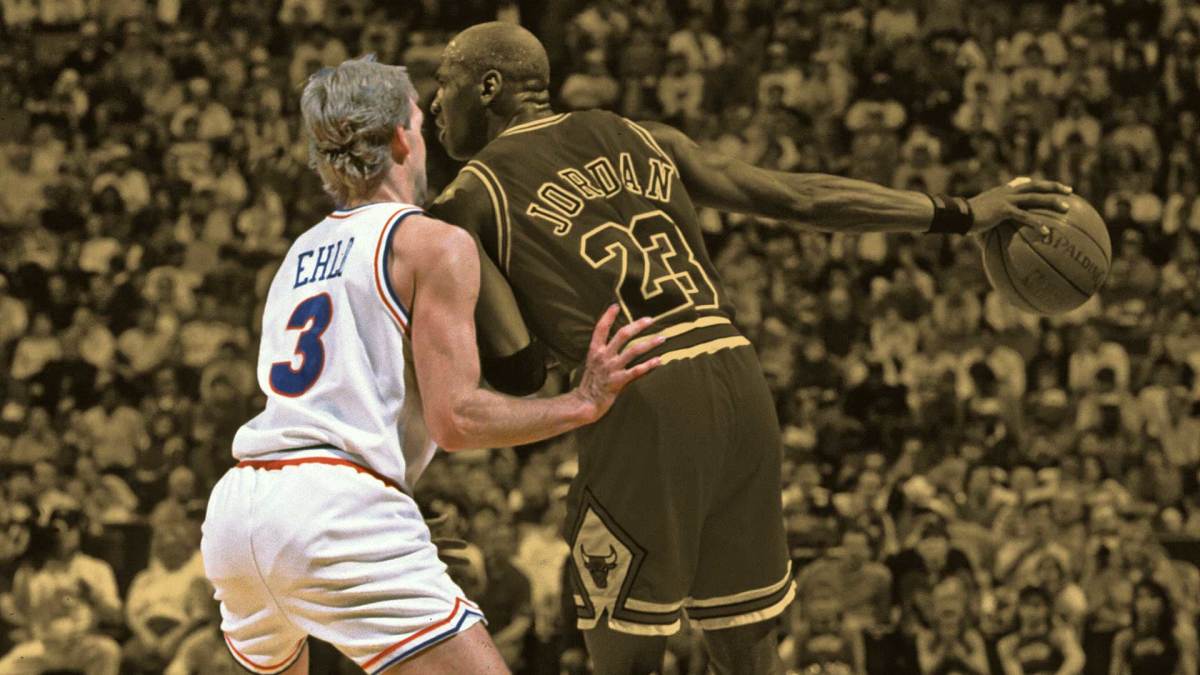
In the 1980s and early 1990s, the NBA’s Eastern Conference was a battlefield. The Boston Celtics dominated. The Philadelphia 76ers were competitive. The Detroit Pistons turned defense into a blood sport. The New York Knicks clawed at contenders like alleycats. And at the end, Michael Jordan’s Chicago Bulls won it all.
But perhaps no team emerged more broken than the Cleveland Cavaliers. Year after year, they crafted a roster that flirted with the makings of a dynasty. Yet, it was overshadowed by the agony of postseason exits, especially at the hands of the Jordan-led Bulls.
Cleveland’s woes
Between 1988 and 1993, Cleveland fell to the Bulls four times in six playoff seasons. Each time, the heartbreak deepened. And each time, the Cavaliers were outplayed, outlasted, and outwilled.
Advertisement
“We just ran into a buzzsaw,” former Cleveland guard Craig Ehlo said. “Either we battled the Pistons in the late ’80s, or all of a sudden, on came along Chicago. And we couldn’t get past Chicago either. I think with the roster that they assembled and had they not traded Ron Harper, we probably would have had a good shot at a title.”
But to Ehlo and others from that era, Jordan wasn’t the only factor costing the Cavs their shot at immortality. For them, the breaking point came not with a jump shot or a sweep but with a trade, one that altered the entire trajectory of the franchise.
In November 1989, after just seven games into the season, Cleveland sent away Ron Harper, a 25-year-old, 6’6″ explosion of speed and strength who had emerged as their anchor on both ends of the floor. Harper was averaging 22 points, nearly seven rebounds, seven assists, and over two steals per game in those early contests.
Advertisement
He was everything the Cavaliers needed in a league slowly being reshaped by aggressive, scoring guards. But instead of letting him flourish, Cleveland dealt him to the Los Angeles Clippers for Reggie Williams and the rights to Danny Ferry.
Ferry, drafted second overall that year, had refused to play for the Clippers and instead took his game to Italy. The Cavaliers saw a potential Larry Bird, a high-IQ forward who could stretch the floor. What they gave up, however, was something much more immediate and irreplaceable.
Had Harper remained in Cleveland, Ehlo believed the future would have been different. It wasn’t an exaggeration.
A tough conference
The Cavaliers had assembled an enviable core from their legendary 1986 draft — Brad Daugherty, Harper, and Mark Price all arrived that year. That trio, along with seasoned role players like Larry Nance and Hot Rod Williams, was primed to contend. But the pieces, while dazzling, never aligned in time.
Advertisement
By 1992, the Cavaliers reached the Eastern Conference finals — their highest postseason mark of the era. But even then, it felt like a team trying to recover from a missed opportunity rather than capitalize on a present one.
“The pieces of the puzzle were great,” Ehlo said. “You have Brad Daugherty as a rookie…And then Mark Price was our point guard, and Ron Harper was our off guard. We had Rod Williams that came off the bench. The pieces of the Puzzle were all right for us to make a run at some championships.”
But the Eastern Conference showed no mercy. Even stable franchises like the Milwaukee Bucks — who made eight straight conference semifinal appearances through the 1980s — never reached the NBA Finals. For Cleveland, climbing the ladder in that era wasn’t just about talent.
Daugherty, a five-time All-Star, suffered back issues that shortened his career. Price, while a floor general and one of the best shooters of his generation, battled injuries that disrupted his rhythm. Nance aged quickly, and the team’s chemistry never quite recovered from the Harper trade. Ferry, who was supposed to be the future, never evolved into a franchise-altering player.
Advertisement
From 1988 to 1993, Cleveland averaged over 47 wins per season, including a 57-win campaign in 1991–92. That season, it was top five in both offensive and defensive rating and showed signs of a true contender. But all of it was nullified by the immovable obstacle that was MJ.