
 (Rich Storry/Getty Images)
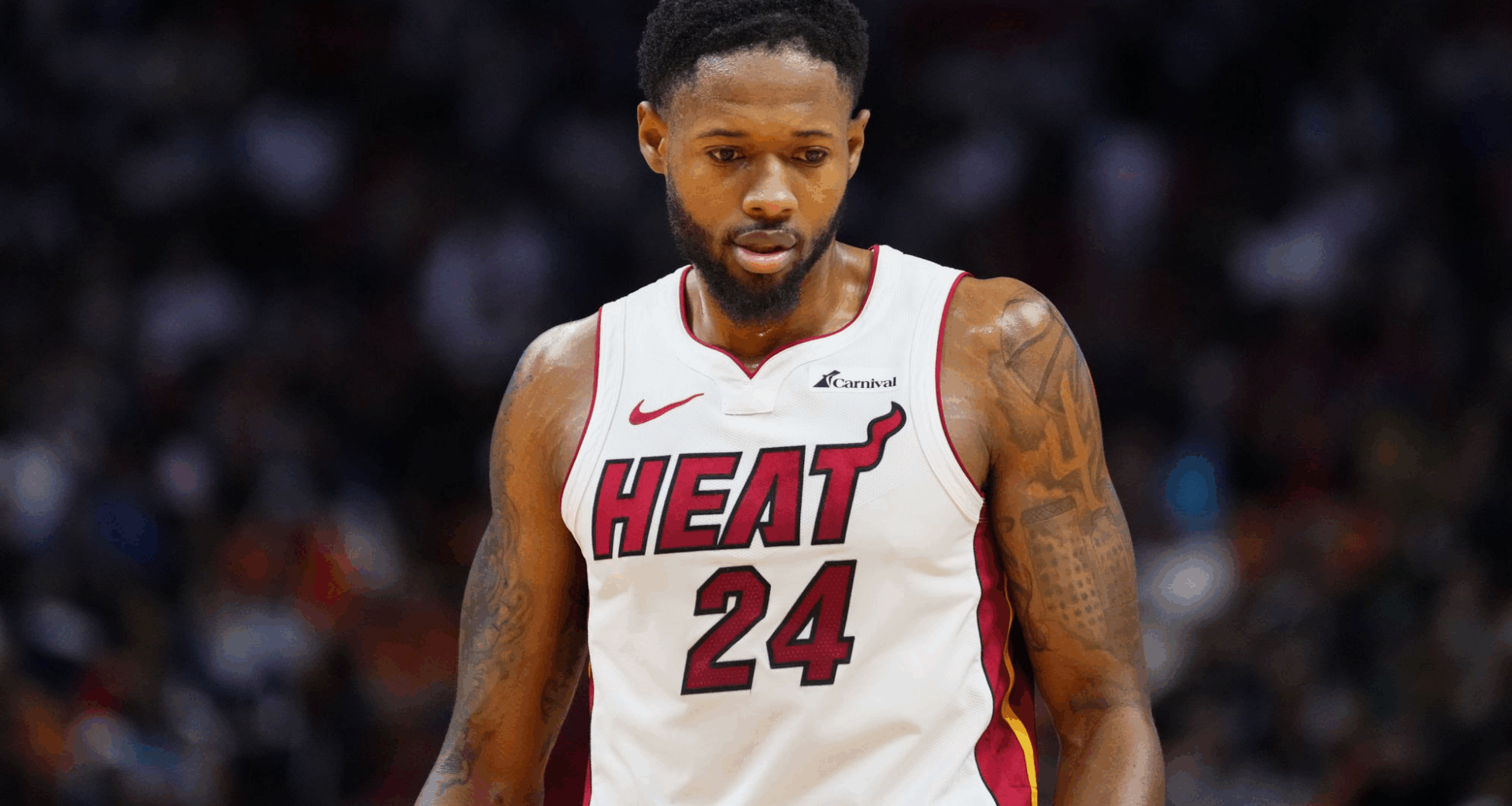
In case you may have missed it, the Miami Heat traded forward Haywood Highsmith and a 2032 first-round pick to the Brooklyn Nets in exchange for a top-55 protected 2026 second-round pick.
So, that pick likely won’t convey, barring something completely unforeseen, thus meaning the Heat essentially dumped Highsmith’s salary for nothing in return.
The reason was justifiable, to some degree. Miami dips $4.2 million below the luxury tax — avoiding repeater tax penalties — and now can sign any free agent for the veteran minimum and stay under the tax.
While our very own Dan Riccio beautifully talked about the Heat’s asset mismanagement in terms of what the Heat have gotten back from their undrafted talent, I want to take another approach to this.
What I’m most frustrated with is the Heat continuously attaching second-round picks to get off of contracts when it’s unnecessary
And by attaching yet another second to get off of Highsmith’s contract, it’s clear that no lessons have been learned, which has been beyond frustrating from an asset management perspective.
Heat continues to light second-round picks on fire for no good reason.
Earlier this summer, one thing I wrote was that the Heat needed to learn their lesson from the Terry Rozier trade. Specifically, the Heat attached a first-round pick to get off of Kyle Lowry’s expiring deal to acquire Rozier. Unless you’re getting a considerable upgrade, attaching assets to get off of contracts is no bueno.
The Heat have had an affinity of doing this with second-round picks, too.
Over the last three summers, they’ve flipped four combined second-rounders by attaching them to players to get off of contracts.
They attached one second-round pick to Dewayne Dedmon ahead of the 2022-23 trade deadline
They attached two second-rounders to Victor Oladipo in the summer of 2023
They attached one second-round pick to Haywood Highsmith
Not to mention, they also traded three second-round picks to acquire K.Z. Okpala, who appeared in 98 career games spanning four seasons.
It’s clear they don’t value second-round picks. You can see all of the second-rounders they have traded here. Of course, they’re not as valuable as first-round picks, but teams have traded second-rounders to acquire quality talent; a perfect example was the Heat trading one second (plus re-rerouting P.J. Tucker) to acquire Davion Mitchell in the five-team Jimmy Butler trade.
But while the Heat have repeatedly traded seconds, in a time where NBA teams are more than willing to trade (and acquire) second-rounders as opposed to an extra first-round pick (or player), Miami has a poor history of supplementing for those lost.
As Dan highlighted here, the lone second-rounder that they added for a few of their recent departures — namely Gabe Vincent, Max Strus, Haywood Highsmith and Duncan Robinson — was one whole pick in the Strus sign-and-trade. That’s it. They also acquired one second from Oklahoma City when they amended the first-round pick protections (from the original Jimmy Butler trade in 2019) in 2023.
That’s not enough.
All in all, the Heat have been objectively bad at managing their second-round capital — when cost-controlled contracts have never been more important.
Ironically enough, they found a fringe first-round talent in Pelle Larsson at No. 44 overall in 2024. Again, I ask: Why not lean into what you’re most successful at (drafting, scouting), instead of relying on undrafted talent that you’ve failed to sell high on? If you don’t use them, why not supplement 2nds to use them as a means to upgrade your roster via trade?
The Heat did not have to duck the luxury tax by Friday, Aug. 15. Not a single iota was forcing any sort of salary dump by mid-August. They had until the trade deadline to find a deal — be it for Highsmith or otherwise — to get under the tax, which isn’t calculated until April.
Instead, one was found for a meaningless second-round pick that was never going to convey.
Why were they so desperate to dump an injured player six months before the deadline? Why not wait until Highsmith’s value was higher? That doesn’t just go for him, but any of their players on the roster.
Whether they sign Kai Jones, another free agent or utilize a 2-for-1 trade to get them back to the 14-player minimum, salary dumping Highsmith (or someone else) could’ve been done in January or February — for something more valuable than what they received Friday.
Now, Miami doesn’t own any of its own second-rounders through 2032 — and has just one in total (2027).
For an organization that always leaves the table short of assets when trying to acquire (star) talent, you’d think they’d try to do what’s necessary to acquire assets — not continuously burn them when players’ value is at its lowest.
It’s a hopeless hamster wheel that continues to spin. For every step forward (Powell), there are three steps back.
In general, the Heat have a good front office. But they have been their own worst enemy way more often than not when it comes to their recent asset management in more ways than one.
***
To check out our other content, click here.
Follow Hot Hot Hoops on Twitter/X here!
Follow Hot Hot Hoops on Instagram here!
Check out Hot Hot Hoops on Facebook here!
Subscribe to our YouTube channel here!