
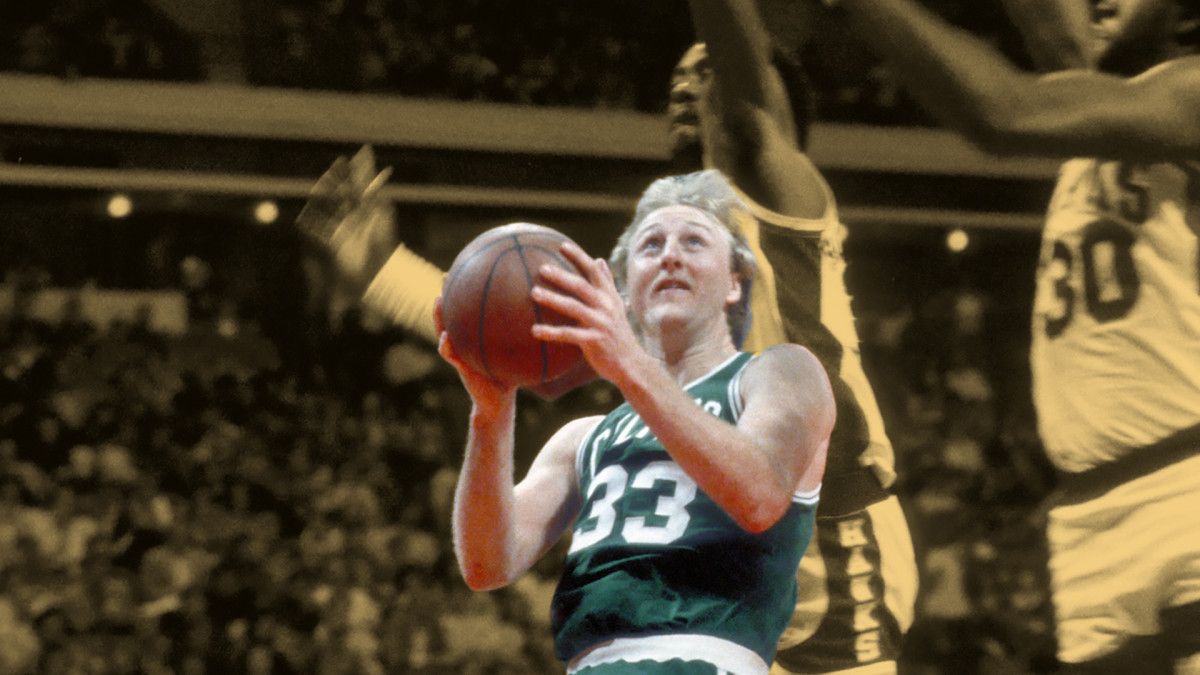
When one considers how rapidly Larry Bird transformed the Boston Celtics from a 29-win franchise to the league’s best team in his rookie year, and then to NBA champs in his sophomore year, it’s natural to assume that the 12-time All-Star was fully focused on attaining success since day one. However, according to veteran sportswriter Dan Shaughnessy, that wasn’t entirely the case.
Behind the scenes, the Celtics organization was so frustrated with one player that they felt compelled to trade him, believing he was a bad influence on Bird and potentially holding him back from reaching his full potential.
Advertisement
The Celtics were desperate to trade Rick Robey
From the outside, it looked like the Celtics were determined to improve their perimeter defense after losing to the Philadelphia 76ers in the 1982 Eastern Conference Finals and getting eliminated at the hands of the Milwaukee Bucks in the ’83 playoffs, so they brought in Dennis Johnson.
Yet Shaughnesys revealed how there was more going on. Rick Robey, a 6’11” big man who hadn’t averaged points in double digits since the 1980-81 campaign and was averaging less than 20 minutes per game, had already become a frustrating figure for the Celtics franchise, and not just because of his low production.
Advertisement
The growing friendship between Robey and Bird truly concerned the Celtics’ top ranks. The two were known to party and enjoy themselves extensively on the road, something the Celtics’ front office feared would derail Bird’s development. Thus, the team decided to end this bond as soon as possible.
“Larry had a long history with this guy because Joe B. Holland recruited him to Kentucky. Larry wanted to play at Kentucky when he was in high school,” Shaughnessy said. “They brought in Robey, who was slower but seven feet… Robey ran with Larry; they were like-minded guys. Robey was only playing eight minutes per night, and Larry had to get out there.
“Larry was the one paying for the lifestyle they had on the road. Red traded Robey for Dennis Johnson… it wasn’t just basketball. Part of it was to get Robey the hell out of town. Getting rid of the guy who was keeping Larry up at night,” he added.
Advertisement
Bird blossomed after Robey was out of Boston
The results were immediate and empathic. The Celtics won two championships in the next three seasons. Larry claimed the MVP honor in each of the three seasons after consistently averaging over 24 points per game — something he hadn’t done in any campaign before that.
Clearly, the organization had gambled on protecting their superstar’s potential, and it paid off. Meanwhile, Robey’s career faded quickly; after three unremarkable seasons with the Phoenix Suns, he was out of the league by the age of 30, averaging just 4.7 points over 111 appearances, including five stars for the team.
Advertisement
This shows how even the greatest talents need the best company to flourish. And how an organization needs to be stern in even breaking close friendships without a second thought, even if that move doesn’t please their franchise cornerstone.
This story was originally reported by Basketball Network on Aug 24, 2025, where it first appeared in the Old School section. Add Basketball Network as a Preferred Source by clicking here.