

The Last Dance documentary generated enough reactions to saturate the entire social media feed for months after its release.
However, most striking was that a good number of the criticisms came from inside the Chicago Bulls’ locker room. Fans all over the world loved the gripping 10-part documentary, which gave a spicy behind-the-scenes look at Michael Jordan’s career and the Bulls dynasty.
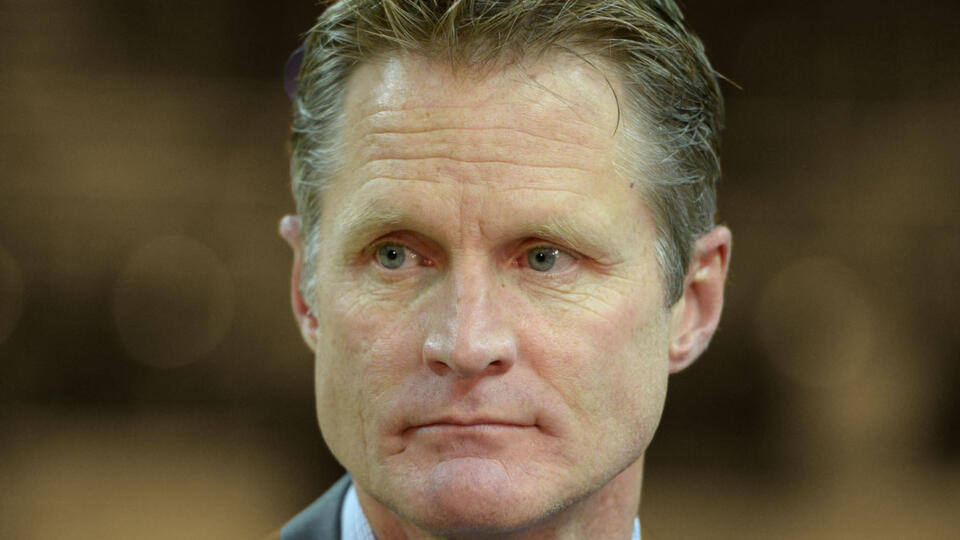
But some people from the team’s past felt that their stories weren’t told or were downplayed. Steve Kerr was a key player on the Bulls, but more so, today’s fans may just see him as that little dude who got whacked by MJ.
Kerr’s portrayal
For many people, Steve’s parts in The Last Dance were some of the most humanizing parts of the documentary. He was a sharpshooter who made the championship-winning shot in the 1997 Finals after Jordan famously told him to “be ready.”
That memory will always be a great one in NBA history, but Kerr wasn’t very happy with how much screen time he got compared to some of his teammates.
“I thought I was frankly portrayed a little too much and a little too often,” Kerr said. “It’s interesting, because you make a documentary like that, even though it was 10 hours of coverage, they could’ve gone on and done 50 hours probably.”
“But I know a lot of us felt like Ron Harper and Luc Longley should have been mentioned,” he continued. “They were starters on that team, actually starters on all three championship teams and we didn’t get much reference to them. So it was a little bit embarrassing that I was on there so often.”
Kerr joined the dynasty in 1993, when the Bulls were rebuilding after Jordan’s first retirement. When he got there, Steve immediately took the role of the “guts and glue” guy. And don’t let the size fool you — he’d get physical and even spar some words if he had to. That’s the kind of culture No. 23 set.
Kerr was always there during the rough years of the mid-1990s, from Jordan’s return in 1995 to the franchise’s steady march to three more championships in a row. However, his time in Chicago was also marked by selflessness, which often drew attention away from him, making Steve’s discomfort with the imbalance in The Last Dance even more uncomfortable.
The documentary’s choice to re-examine Kerr’s personal tragedy, the Beirut murder of his father, Malcolm Kerr, in 1984, was heartbreaking and extremely emotional. Although it gave spectators a unique look into the human side of the game, Kerr felt that it also made him more noticeable than his teammates, whose contributions had been just as important.
Zoning in on the player
Several decades after their time in Chicago, Kerr became one of the greatest NBA coaches, having led a dynasty of his own in Golden State. The former guard doesn’t mind being portrayed, especially being one of the players in close proximity to build a narrative.
“But I understand the filmmakers had to focus on what they wanted and who was accessible,” Kerr said. “Luc’s buried somewhere down in western, remote Australia. So there were some things that I would’ve liked to have seen.”
Jordan and Kerr had developed a friendship because MJ realized the sharpshooter’s toughness after he ate that punch and got right back up. Talk about earning Mike’s respect.
After leaving the Bulls, Kerr won titles as a player and head coach of the Golden State Warriors, which gave him a unique dual viewpoint on creating greatness.