
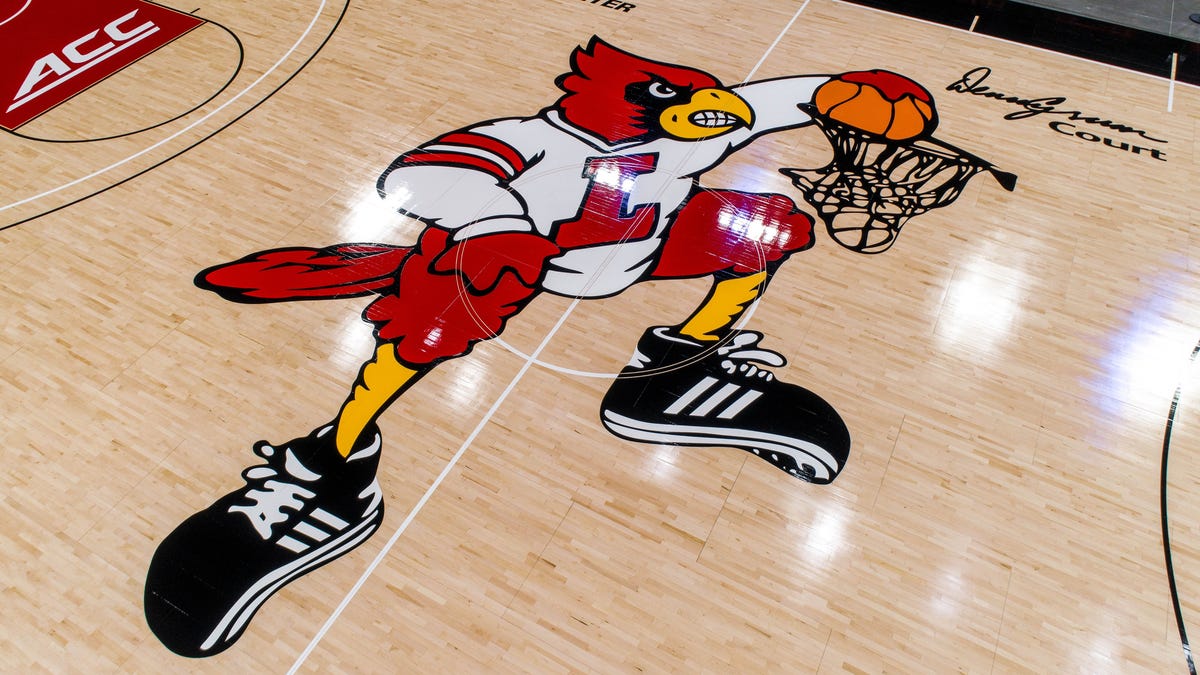
Louisville remains the only NCAA men’s basketball program to ever have its championship title stripped.
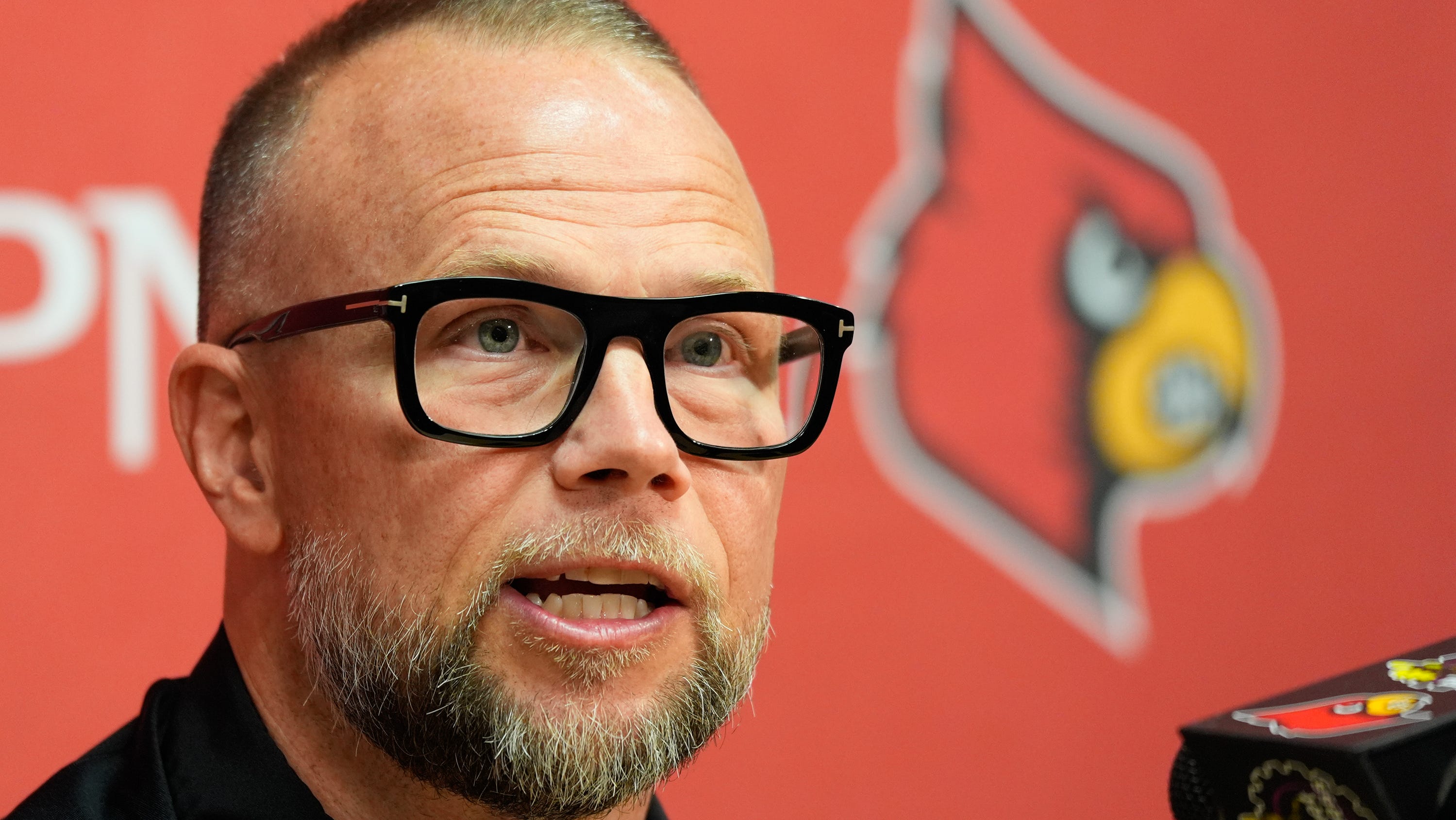

Louisville men’s basketball coach Pat Kelsey on new group of players
Louisville men’s basketball coach Pat Kelsey talks about his recruiting process and the team’s chemistry ahead of the 2025-2026 season.
In 2023, U of L honored the championship team’s 10th anniversary by raising a banner that reads “2013 Final Coaches Poll #1” ahead of a home game against Clemson.
The University of Louisville Athletics Association is looking to engage in conversation with the NCAA about reinstating the men’s basketball team’s 2013 national title, athletics director Josh Heird told The Courier Journal.
U of L men’s basketball had its 2013 NCAA championship vacated in 2017 – a decision the governing body upheld in 2018 – after a sex scandal involving payment of strippers to dance for and prostitutes to have sex with players and recruits. The NCAA also stripped the Cards of 123 wins from 2010-14, including their 2012 Final Four appearance. Louisville remains the only NCAA men’s basketball program to have its title dispossessed.
Because no other team has ever had its national championship banner forcibly removed, no other school has ever taken efforts to rehang one. As such, there’s no clear path (or timeline) forward. “There’s no playbook for this,” Heird said. The only part of the process Heird is certain of is that it should start with a conversation between U of L and the NCAA. Wherever things end up after those conversations will determine next steps.
“The situation, everything surrounding the NCAA, the landscape in college sports is drastically different,” Heird said. “The recent punishments that were handed down to Michigan (football). There’s just a number of things that we can point at, I think, for us to be able to say, ‘Hey, look, we need to engage in a conversation here about having the opportunity to have this banner up.'”
Before and since Louisville’s 2013 title was vacated, more prominent college football and basketball brands receive lighter punishments for similar – if not worse in terms of competitive advantage – crimes.
Kansas was accused of using apparel partner Adidas to lure in recruits after a 2017 FBI investigation into bribery in men’s college hoops. The Jaykawks were originally accused of five Level I violations but had their punishments downgraded by the Independent Resolution Panel. Kansas was placed on a three-year probation and had to vacate wins from the 2017-18 season, including its 2018 Final Four appearance. But there was no postseason ban or further suspension on head coach Bill Self or assistant coach Kurtis Townsend.North Carolina used fake classes to help dozens of athletes gain and maintain academic eligibility, a fact that the NCAA did not dispute, but received no penalties. The NCAA said no rules were broken. The reasoning?: These fraudulent “paper” courses were not exclusively available to athletes.Miami booster Nevin Shapiro told Yahoo! Sports in 2011 that he provided “thousands” of impermissible benefits to at least 72 athletes from 2002 through 2010,” including men’s basketball and football players. Then Miami, in an effort to avoid major punishment from the NCAA, imposed a one-year postseason bowl ban on itself and suspended eight members of the football team. The NCAA conducted its own investigation and put Miami on probation for three years, docked three football scholarships for three seasons, imposed recruiting restrictions and suspended former coach Frank Haith for five games (which he served at Missouri).
The latest example of injustice came Aug. 15 when the Committee on Infractions – which is independent of the NCAA but charged with levying penalties for violations – issued its decision on the Michigan football sign stealing scandal. After nearly two years, the COI assigned the following sanctions:
A fine equal to the anticipated loss of all postseason competition revenue sharing associated with the 2025 and 2026 football seasons;A 10-year show-cause penalty for former head coach Jim Harbaugh (who now leads the NFL’s Los Angeles Chargers);An eight-year show-cause penalty for former staffer Connor Stalions;An additional game suspension plus a two-year show-cause penalty for current head coach Sherrone Moore; Four years probation;A three-year show-cause penalty for former assistant Denard Robinson;A $50,000 fine, plus 10% of the budget for the football program;A fine equivalent to the cost of 10% of the scholarships awarded in Michigan’s football program for the 2025-26 academic year;A 25% reduction in football official visits during the 2025-26 season;And a 14-week prohibition on recruiting communications in the football program during the probation period.
Not included: the vacating of any wins, the revocation of Michigan’s 2023 national title or a postseason ban. The NCAA’s investigation began in October of 2023, months before the Wolverines won the Big Ten and College Football Playoff.
The COI’s explanation read: “Given those facts (that Michigan’s violations are a Level I case and that Michigan is a repeat offender), multi-year postseason ban would be appropriate. That said, the NCAA Constitution states, ‘Division and, as appropriate, conference regulations must ensure to the greatest extent possible that penalties imposed for infractions do not punish programs and student-athletes not involved nor implicated in the infractions.’ See NCAA Constitution 4-B-4.
“The panel determines that a postseason ban would unfairly penalize student-athletes for the actions of coaches and staff who are no longer associated with the Michigan football program. Thus, a more appropriate penalty is an offsetting financial penalty.”
Heird was asked about getting the 2013 title restored at a press conference in 2022 after the NCAA handed down sanctions for the 2017 violations U of L basketball committed with Adidas (which involved aspiring sports business manager Christian Dawkins, who represents current Cardinals Mikel Brown Jr. and Khani Rooths) to funnel payments to recruits.
“While I’m not going to sit up here and make any promises, I can tell our fan base unequivocally that if there’s an opportunity for us to do something along those lines, we’re going to try to do it,” Heird said. “So while that’s (the March-April run itself) never going to be taken away from our fans, from our student-athletes that played in that game, to recognize them is important to me. And if there’s an avenue to get that done, then that’s what we’re going to try to do.”
Mayor Craig Greenberg told The Courier Journal this summer that he’d be willing to help lead the charge, adding that it “would be great for the university and for the city and really for all the fans.”
In 2023, U of L honored the championship team’s 10th anniversary by raising a banner that reads “2013 Final Coaches Poll #1” ahead of a home game against Clemson. This banner was created, Heird said at the time, in communication with NCAA staff and the COI. Perhaps getting the official 2013 championship banner back would entail the same kind of communications.
Or, perhaps the ULAA will have to take the legal route.
Five former Louisville players sued the NCAA in 2018, which ended nearly a year-and-a-half later in a settlement restoring Luke Hancock’s Most Outstanding Player award and as well as his, Gorgui Dieng’s, Stephen Van Treese’s, Tim Henderson’s and Michael Marra’s statistics in the record books.
At the time (2019), it seemed highly unlikely that the NCAA would restore the title associated with Hancock’s MOP. But college sports, and the NCAA, have changed a lot since then. The organization has seemingly gotten softer on violations as constant litigation over eligibility and anti-trust violations erodes its authority and confidence.
Perhaps now is the Cards’ time.
Reach college sports enterprise reporter Payton Titus at ptitus@gannett.com, and follow her on X @petitus25.
This story was updated to add a gallery.