
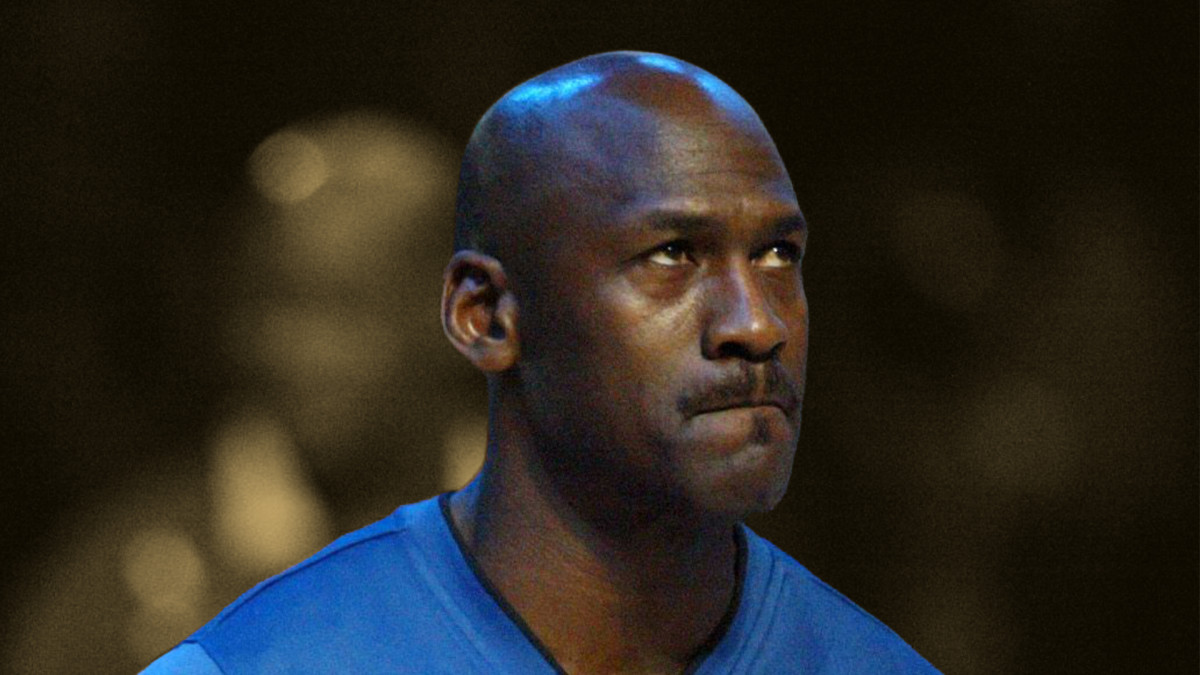
Michael Jordan often faced criticism for staying quiet on social issues, but Etan Thomas learned that there was more to the story than meets the eye. During their two seasons together on the Washington Wizards, Thomas saw that His Airness worked behind the scenes in ways few people noticed.
According to Thomas, he and MJ struck up a conversation when the latter noticed the former reading “Soul on Ice” by Elridge Cleaver. The book was essentially a collection of 17 essays reflecting on Cleaver’s experiences in life and prison. The website Goodreads describes it as having “ultimately changed the way the United States looked at the civil rights movement and black experience.”
Advertisement
“That got into a conversation going and Michael’s guy (a part of his entourage) talked about the charitable things he did without publicity,” Thomas said, per Harvey Araton of The New York Times. “He mentioned an event at an all-white golf club, where of course they let Michael play, but there were no Black members, and how Michael threatened at the last minute to back out if they didn’t change their policy.”
Why MJ did not want people to know
For the longest time, Jordan was painted as a sports superstar detached from the struggles around him. Critics gobble up the anecdote in which The Black Cat told people, “Republicans buy shoes, too,” even though Sam Smith clarified that MJ said it in jest.
Advertisement
Thomas himself formed a particular picture of Jordan around those reports. However, after learning about his discreet contributions, he asked the Chicago Bulls icon to bring them into the light.
“I told Michael, ‘That’s something people should know and then maybe they wouldn’t be saying the things they do about you.’ He just said, ‘I don’t do that,'” Thomas recalled. “And his guy said, ‘See what I mean?’ After that, I could never hold him up as the antithesis of the activist athlete, the opposite of Muhammad Ali and Bill Russell. It’s not that simple.”
The Dallas Mavericks drafted Thomas in 2000, so at first, he couldn’t grasp why Jordan kept his activism under wraps. However, through his book and podcast research, Thomas discovered that David Stern was pulling the strings. The late commissioner had a clear mandate: players were discouraged from speaking out on social issues, with the warning that it could hurt the league’s marketability.
Advertisement
“He was 100 percent clear in those days — everything was about growing the game, the bottom line,” Thomas stated. “He was dead set against anything that might turn off the fan base. Even when I came in and made antiwar comments, David told me, ‘Be careful.'”
MJ paved the way
The NBA saw Michael’s potential as the global ambassador for the game and he was more than happy to play his part. While many lash out against MJ because of this, some activists kept an open mind. Dr. Harry Edwards, for instance, recognized that Jordan was simply laying the foundations for the next wave of black athletes who followed.
Advertisement
As former Nike executive Sonny Vaccaro maintained, powerful athletes like LeBron James wouldn’t have had the platform they have today if not for MJ showing the way.
“LeBron can only be the way he is today because Michael made it OK for corporations to put their money, huge amounts of money, on athletes, especially Black athletes. Over time, their power and voice has grown,” Vaccaro opined.
Fans should not expect Jordan to be the loudest voice in the room anytime soon. The guy did not even endorse a presidential candidate in 2024, so that’s highly unlikely.
Advertisement
However, his reluctance to speak up publicly doesn’t change the fact that his influence gave today’s players the freedom to do so. Jordan may not have been Ali or Russell, but he built the stage that the others are now standing on.
This story was originally reported by Basketball Network on Aug 29, 2025, where it first appeared in the Off The Court section. Add Basketball Network as a Preferred Source by clicking here.