
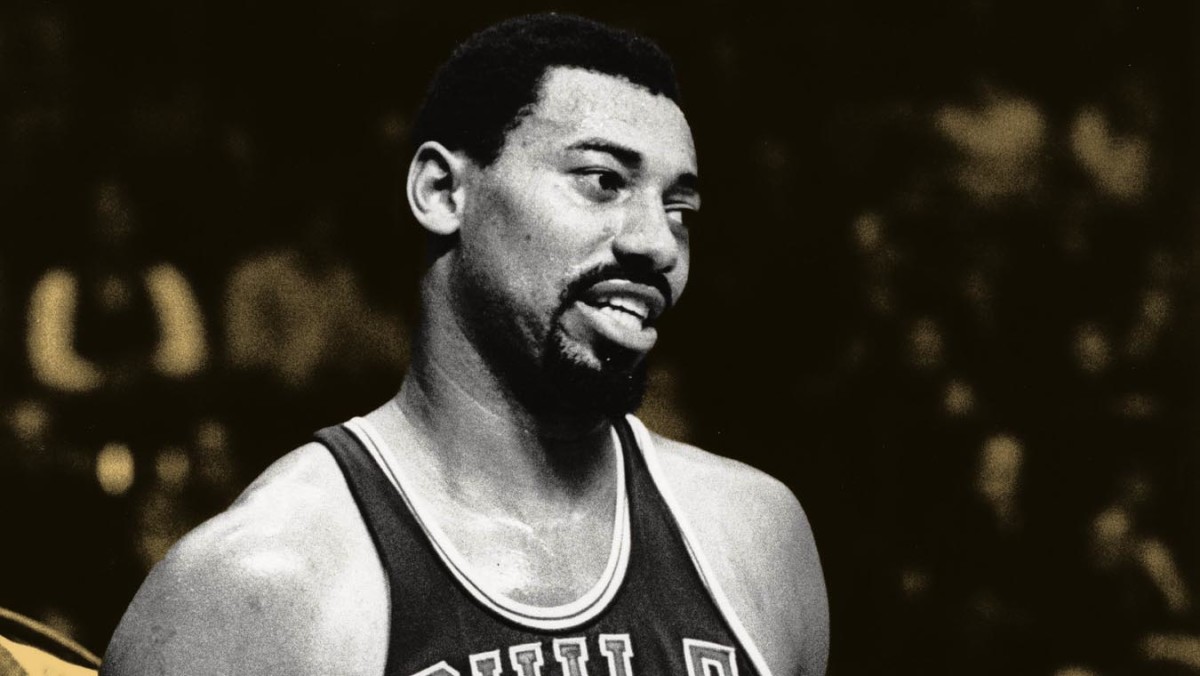
In August 1986, the retired Wilt Chamberlain discussed a truth that NBA fans still recognize today. Every generation seems to produce players — often centers — who bend the game’s rules of expectation.
Sometimes that change in style is so unusual that it leaves people unsure how to react. Some celebrate it for pushing basketball to new heights, while others see it as less of a blessing. Chamberlain, judging by his remarks at the time, clearly belonged to the latter group.
Advertisement
Wilt’s blueprint
The late Chamberlain is remembered for historic feats: scoring 100 points in a game, averaging 50.4 points for a season or grabbing 55 rebounds in one night, yet through it all, he achieved something even more profound.
One who attested to this is his former Philadelphia 76ers teammate, Billy Cunningham, who spoke in-depth about how Chamberlain redefined NBA norms.
For instance, despite standing 7-foot-1, Wilt moved with the speed and agility of a guard, and Billy even called him the fastest player on those 76ers rosters.
Advertisement
Furthermore, The Big Dipper, by embracing weight training, was doing what’s commonplace today at a time when most of his peers barely took basketball seriously, let alone committed to extra sessions in the weight room.
All in all, the 13-time NBA All-Star was the prototype for a trailblazing center, and having lived it himself, Wilt the Stilt knew exactly what it meant when another big man challenged basketball’s norms.
When innovation isn’t enough
Nowadays, we recognize a few types of centers that redefine what came before them.
Advertisement
One is the “unicorn” big man, capable of doing it all on the court, with Kristaps Porzingis and, more recently, Victor Wembanyama as prime examples. Players like Brook Lopez, Karl-Anthony Towns and Al Horford — all premier stretch fives — represent another type by consistently knocking down shots from well beyond the arc.
However, transformative centers aren’t only a thing of the present. They also existed in the mid-1980s, and according to Wilt, those at the time were the players who could “run, jump and shoot” — skills uncommon for bigs of that era.
While the Los Angeles Lakers icon didn’t name names, Hakeem Olajuwon, Patrick Ewing, Jack Sikma and Ralph Sampson all fit that profile — a profile that didn’t automatically earn Chamberlain’s acknowledgment.
Advertisement
After all, the four-time MVP was quick to remind everyone that “there’s very little on the basketball court that hasn’t been done before,” citing himself as an example. As Wilt pointed out, having performed norm-breaking moves like behind-the-back dribbles himself, why would he be impressed by others doing exactly the same?
Ultimately, it was only fitting that Chamberlain’s then-favorite center — as he revealed in that interview — wasn’t someone trying to reinvent the game. It was Boston Celtics legend Kevin McHale.
During that time, McHale mastered what the basketball icon had praised most about his game — inside scoring. The Black Hole went on to average a career-high 26.1 points per game that season, most coming from trapping opponents in the low post and dominating them with exceptional footwork and a dazzling array of moves. It may not have been innovative, but it was supremely effective — and that, as Wilt certainly would have agreed, was what ultimately counted.
Advertisement
This story was originally reported by Basketball Network on Aug 30, 2025, where it first appeared in the Old School section. Add Basketball Network as a Preferred Source by clicking here.