
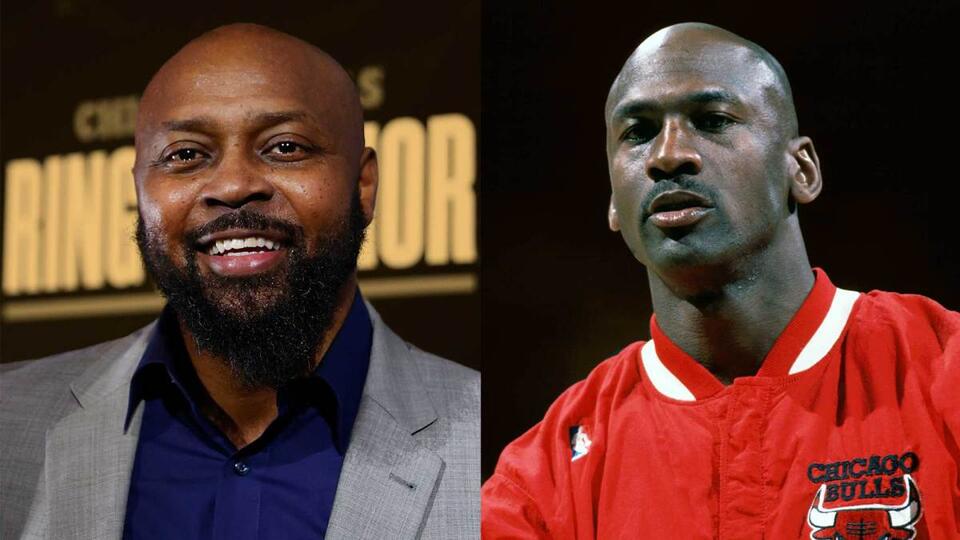
For years, Horace Grant’s time alongside Michael Jordan has been remembered for the championships they won together, but his view of MJ as a teammate was far less flattering.
The tension between the two was on full display in The Last Dance, which retold the infamous story of Jordan taking away Grant’s meal after a bad game. Years later, Shannon Sharpe asked the three-time champ to discuss his leadership.
“If you didn’t confront Mike, he would ride you every day, all day, all the time,” Grant told Sharpe. “You had to stand up for yourself. I didn’t have a problem with Mike the player; I had a problem with how he tried to motivate me.”
The price of playing with Jordan
In Grant’s telling, Jordan’s leadership style left no room for indifference. But that was exactly the challenge. If you wanted to stand up to Mr. Air, you’d better have come prepared. To his credit, it definitely seems Grant hung in there.
In his second season, he started 79 games and averaged 12 points and 8.6 rebounds while shooting over 50 percent from the floor, becoming a reliable third option behind Jordan and Scottie Pippen.
By the 1990-91 season, Grant had become an essential part of the Bulls’ championship formula, averaging 12.8 points, 8.4 rebounds and 1.6 blocks during the regular season. In the playoffs that year, he did the little things that helped Chicago finally get past Detroit, the team that had ousted them in three straight postseasons.
The Bulls swept the Pistons in the Eastern Conference finals and went on to win their first title, beginning a three-year run that cemented Jordan’s first dynasty.
A dynasty built on tension and results
Grant’s nine seasons in Chicago were among the most productive of his career. He posted six straight years of averaging double figures in points and at least eight rebounds, shot over 50 percent from the field in seven of those seasons and made the 1994 All-Star team after Jordan’s first retirement.
He played in 111 playoff games with the Bulls, winning three titles and averaging 11.2 points and 8.9 rebounds in the postseason, so it is not a surprise that he felt that he was equal to MJ, and that is not something that Jordan felt, so they clashed repeatedly.
“It was more of a problem with him and Horace. Horace and Michael didn’t really see eye to eye. Horace was a twin, so he believed in everything being equal,”said Pippen.
But here was the ultimate factor on whether Jordan loved you as a teammate or not: consistency. Yes, scoring 20 one night was nice. Grabbing 13 rebounds another night was nice. But Jordan wanted to see an all-out effort for 48 minutes every night. Have a good first and bad second half, and he’d let you hear it — in front of everyone.
Luc Longley knows all too well about that. The Bulls of that era remain one of the greatest teams in NBA history, winning 67 percent of their regular-season games during Grant’s tenure and going 60-20 or better three times. Behind all the banners and accolades, stories like this one show Jordan’s dynasty was built on as much conflict as it was on greatness.