
The latest subject of investigation from a new episode of the hit podcast Pablo Torre Finds Out is Kawhi Leonard and the Los Angeles Clippers.
There is a lot to unpack about whether or not Ballmer and the Clippers will receive discipline for the allegations. That decision will not come until the league concludes its own investigation, but until then, we can take a look back at the relatively recent history of salary cap circumvention in the NBA.
Of course, there are not too many examples of such occurrences because teams typically abide by the collectively bargained agreement. Plus, the fear of potential discipline makes it less likely for a team to potentially follow such a route.
However, here are the confirmed investigations that are at least relatively similar, beginning with Joe Smith in 2000.
1. Joe Smith
The closest example we have for Leonard and Ballmer is what happened between former No. 1 overall pick Joe Smith and the Minnesota Timberwolves in 1999.
Here is more from (via Sportico):
The alleged move by Ballmer and Leonard is reminiscent of the salary cap scandal involving Joe Smith and the Minnesota Timberwolves after the 1998-99 lockout. At the time, Smith signed a below-market value deal with the Timberwolves to apparently help the team add veteran talent around All-Star forward Kevin Garnett.
A year later, a league investigation revealed team owner Glen Taylor and general manager Kevin McHale secretly promised Smith that if he signed a below-market free agent deal, he would eventually sign a seven-year, $86 million pact. Smith would sign three one-year contracts for under $3 million per year, which allowed the Timberwolves to retain his “Bird rights” and exceed the salary cap to sign him to a lucrative extension after the final one-year contract. The machinations violated the NBA’s salary cap rules.
The late commissioner David Stern handed down strict punishments on all parties. He voided Smith’s contracts as well as his “Bird rights.” Minnesota was fined $3.5 million and stripped of its first-round draft picks for five seasons from 2001 through 2005. (The team would get two of those picks back in later years.)
Taylor was barred from team operations through Aug. 31, 2001, while McHale took an unpaid leave of absence through July of that year; both were effectively suspended for the 2000-01 season.
As noted by legal expert Michael McCann, however, this is potentially “harder to prove” considering the endorsement deal brings a third party into the mix.
Smith’s incident was a direct negotiation with former Timberwolves governor Glen Taylor and Kevin McHale.
2. Andrei Kirilenko
After the severe punishment for the Timberwolves following their recruitment of Smith, NBA salary cap circumvention was quite uncommon in the league.
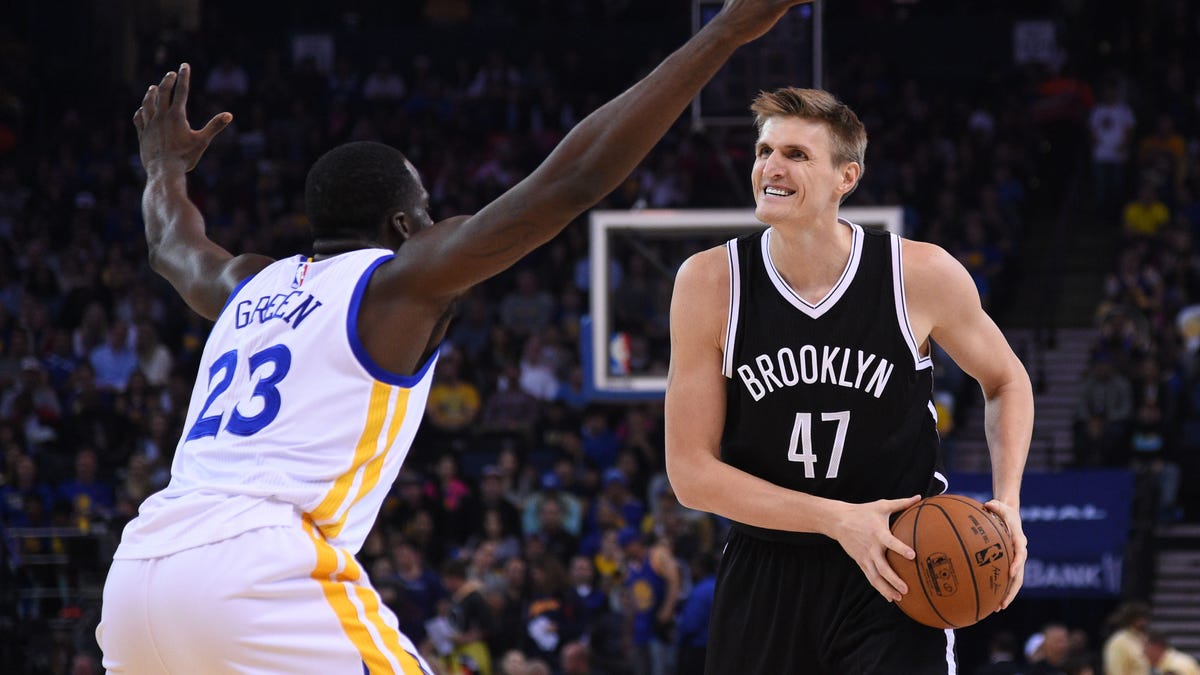
Another notable example involved Andrei Kirilenko and former Brooklyn Nets governor Mikhail Prokhorov.
Kirilenko was a former NBA All-Star who opted out of his final year of his contract for $10.2 million with the Timberwolves in 2013 to become a free agent.
He then signed with the Nets for a two-year deal with an average annual value of $3.2 million, significantly less money than he would have made in Minnesota.
This decision was suspicious to those around the league. Here is what former NBA insider Adrian Wojnarowski wrote at the time (via Yahoo):
Within the NBA, there had long been those promising that deals would start popping up involving Prokhorov that made no fiscal sense, theorizing that high-end players could take less within the constraints of the salary cap and still make up the difference in clandestine pacts.
Once the Russian billionaire convinced a superb Russian player to take $7 million less to be a backup to Pierce, the rest of the NBA’s reaction was instant and uproarious. For the first time now, the Nets have truly arrived as a contending franchise. They’re good, with a chance to be great, and the rest of the NBA wants an investigation.
“Brazen,” one Western Conference GM told Yahoo! Sports.
“Let’s see if the league has any credibility,” one NBA owner told Yahoo! Sports. “It’s not about stopping it. It’s about punishing them if they’re doing it.”
Another Eastern Conference GM: “There should be a probe. How obvious is it?”
The telephone calls and text messages kept coming on Thursday night and Friday morning, and the reason was simple: Few trust Prokhorov to honor the NBA’s salary-cap rules and regulations.
Kirilenko said he “can’t control” conspiracy theories that others may have had about his decision.
He added that he wanted to play for a “shot to win a title” with the Nets. His agent emphasized similar messaging (via Wall Street Journal):
“I give him credit for it,” Kirilenko’s agent Marc Fleisher told The Wall Street Journal. “He said ‘I’ve made well over $100 million in my career. The difference isn’t going to change my lifestyle so, let me pursue the ability to possibly win a title.'”
The signing also allowed him to play alongside his former Jazz teammate Deron Williams.
Prokhorov was adamant that he did nothing wrong, either (via Star Tribune):
“I respect all the NBA rules, and we play by the NBA rules. But I want just to stress once again, like with the luxury tax, I will do whatever I can in order to win championship, but under the NBA rules, please make no mistake about this.”
Kirilenko played for CSKA Moscow, a team owned by Prokhorov, from 1998 until 2001 before coming to the NBA.
The league conducted a “thorough” investigation, per New York Post, and they were cleared following a probe in 2013.
3. DeAndre Jordan
Shortly after the controversy about Kirilenko, the Clippers (owned by Ballmer at the time) were actually penalized for what was considered a failed attempt to lure DeAndre Jordan to re-sign with the organization.
Here is what Tim Bontemps wrote in 2015 about the situation (via New York Post):
The Clippers, who eventually convinced Jordan to re-sign with them, was slapped with a $250,000 fine for “violating NBA rules prohibiting teams from offering players unauthorized business or investment opportunities,” the league announced Tuesday.
According to the league, the violation was a potential third-party endorsement opportunity for Jordan. The Los Angeles Times reported the Clippers offered an endorsement deal with Lexus worth $200,000 per year.
The rules are in place to prevent teams from doing under-the-table deals with players for more money than what they’re able to offer under the salary cap.
Ironically, the rule violation by the Clippers came during their presentation to Jordan on July 2, the day after free agency began – and the day before Jordan agreed to sign with the Dallas Mavericks. Given that timeline, it’s clear the pitch wasn’t enticing enough to get Jordan to stay in Los Angeles, something the NBA made clear in its ruling.
USA TODAY Sports reported that Jordan never took the endorsement and it did not impact his free agency decision.