
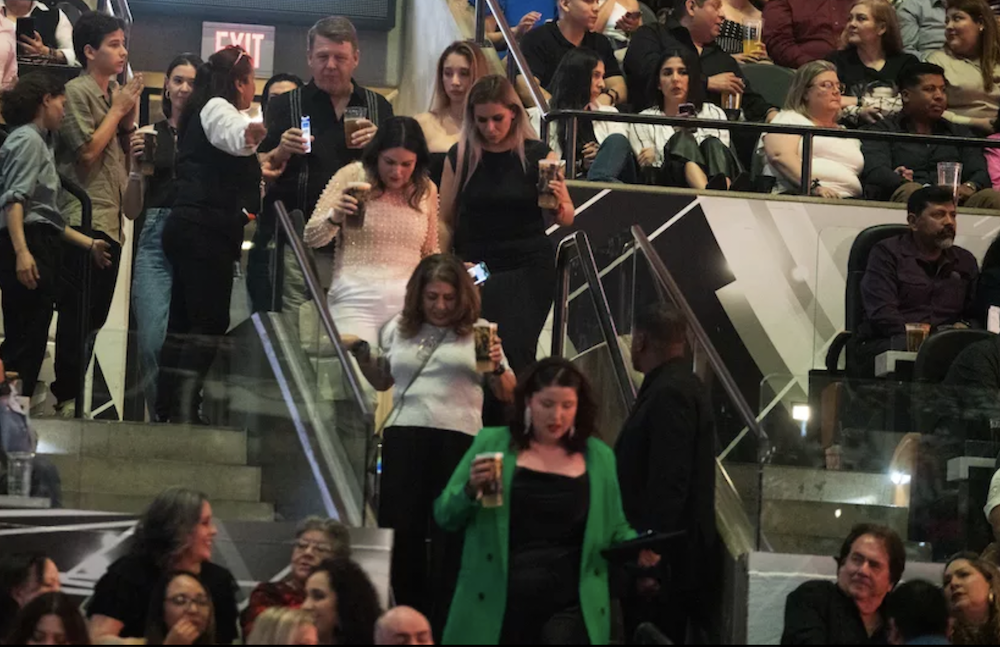
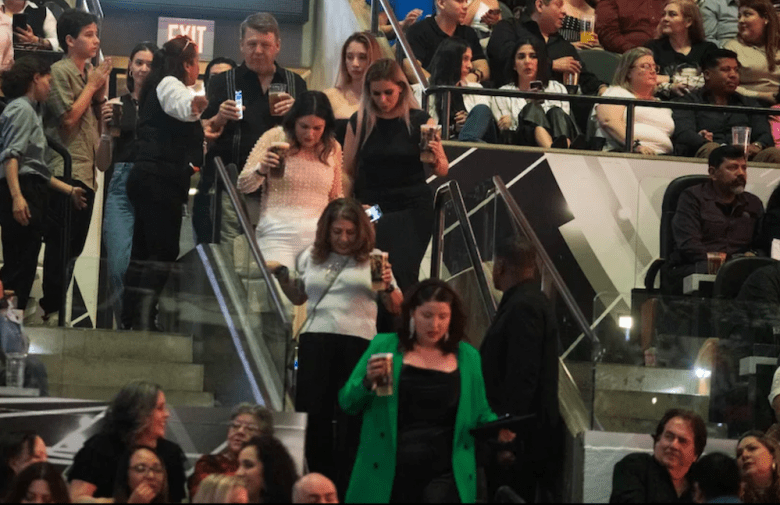
 Fans file to their seats during a Spurs game. Credit: Courtesy Photo / Spurs Sports & Entertainment
The term sheet between San Antonio and the Spurs is murky and doesn’t appear to give the city as favorable a deal as those secured by other NBA metros, according to one of the nation’s leading sports economists.
“In more recent years, arena financing is typically much more than half private, and here you have a situation where the Spurs are paying considerably less than half,” said leading sports economist Andrew Zimbalist, who teaches at Massachusetts’ Smith College. “So, that’s problematic.”
Last month, City Council, on a 7-4 vote, approved a term sheet outlining an arena deal with the Spurs Sports & Entertainment. Under the agreement, the city will contribute $489 million toward the $1.3 billion sports facility, while Bexar County will throw in $311 million.
The Spurs will cover the rest, including cost overruns.
The city’s portion will come in the form of a tax increment reinvestment zone (TIRZ), or property tax revenue created by new economic development at and around Hemisfair. The city also will capture revenue from a new downtown area that was initially allocated to state coffers.
Meanwhile, the county’s share will come from revenue generated by raising its visitor tax to 2%.
Local voters will either approve or reject both the city and county provisions at the November ballot box.
Proponents of the arena deal maintain it won’t cost San Antonio taxpayers a dime.
Don’t bet on that, Zimbalist cautions.
As currently structured, the funding plan relies on the notion that hypothetical economic development around the new arena — and the property taxes that come with that development — will cover both the city’s commitment and any interest.
“There are two issues with that,” Zimbalist said. “Number one is that to have a plan for a mixed-use development is different than actually having the mixed-use development. Anybody can make a plan, but whether or not you can get private developers and contractors to invest in that … is another matter.”
The second issue, the professor cautions, is whether bars, restaurants and other ventures that sprout up around the new arena are actually new businesses, or just existing ones that relocated to the district.
Arena proponents assure the public that the city’s financing won’t require money from the city’s general fund, which faces a $170 million-plus deficit over the next two years. If the development around the arena is largely the result of relocation, the city may need to dip into those coffers.
“The problem is that you still have the same restaurant, but it’s in a different part of the city,” Zimbalist said. “The idea that it’s going to generate additional tax revenue might be completely fallacious.”
In turn, that could exacerbate the city’s existing deficit and hurt its ability to pay for essential services such as roads, schools and police.
Apparently thinking ahead, Spurs Sports & Entertainment has promised to contribute an additional $500 million to fund surrounding economic development with a guaranteed taxable value increment of $1.4 billion over 12 years.
However Zimbalist sees potential problems there as well. The terms of SS&E’s economic-development commitment remain murky, he explained.
“What kind of commitment do the Spurs actually have to go through with this?” Zimbalist said. “Will the Spurs down the road say, ‘Oh well, we were going to go through with it, but … Donald Trump messed up the economy and we can’t go forward?’ What if there’s some kind of natural disaster, so they can’t come up with it, or they come up with some other reason and say [they] need some additional incentives from the city?”
While the term sheet has more legal weight than a memorandum of understanding, the document still appears to offer enough wiggle room to escape accountability, according to the professor.
“I want to see in the contract that they’re going to spend $500 million on mixed-use development,” Zimbalast said. “And then the question is whether or not they’re going to be taking activity from other parts of the city and not creating new activity.”
Indeed, Jon Taylor, a political science professor at the University of Texas at San Antonio, said the lack of details surrounding the Spurs’ commitment to economic development could be the deal’s Achilles heel as it heads to voters.
“Are we talking about encouraging mixed-use development? Are we talking about incentivizing job creation and entertainment?” Taylor asked. “If they’re going to pledge that type of money, let’s see where and how they’re doing it.”
However, Taylor said he’ll be surprised if more details and a contract binding SS&E to those terms aren’t released by election day for that exact reason. The precise terms may not have been released yet because the team wants additional leverage, he added.
“It’s just a sinking suspicion,” Taylor said. “As in, ‘Well, you know, we’re already promising $500 million, we can go up to $650 million if you’ll do the following …’ That kind of stuff.”
Even if SS&E commits to significant economic development, Zimbalist said the overall terms don’t appear to be all that favorable compared to similar deals recently inked between NBA teams and other cities.
Most of the arenas built in the past decade have at least been half-financed by team ownership, the professor said. Indeed, Los Angeles’ Intuit Dome, San Francisco’s Chase Center and the Philadelphia 76ers’ new arena were all privately financed in their entirety.
Zimbalist said the shift to private-sector financing is so team owners can retain all the revenue generated from their new facilities.
Meanwhile, SS&E has only agreed to pay for 38% of San Antonio’s new arena while also refusing to enter into any sort of revenue-sharing agreement with the city.
Subscribe to SA Current newsletters.
Follow us: Apple News | Google News | NewsBreak | Reddit | Instagram | Facebook | Twitter | Or sign up for our RSS Feed
Related Stories
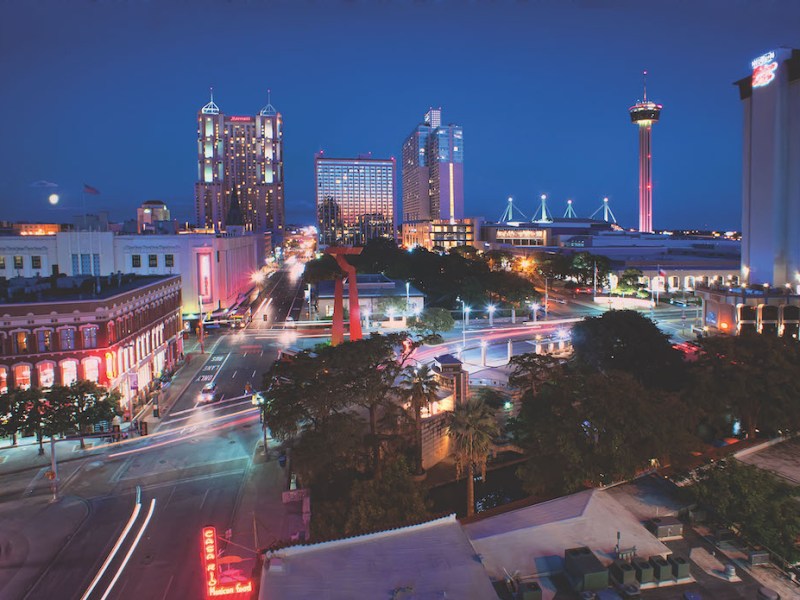
The city’s term sheet with the Spurs leaves many open question voters should be concerned about.
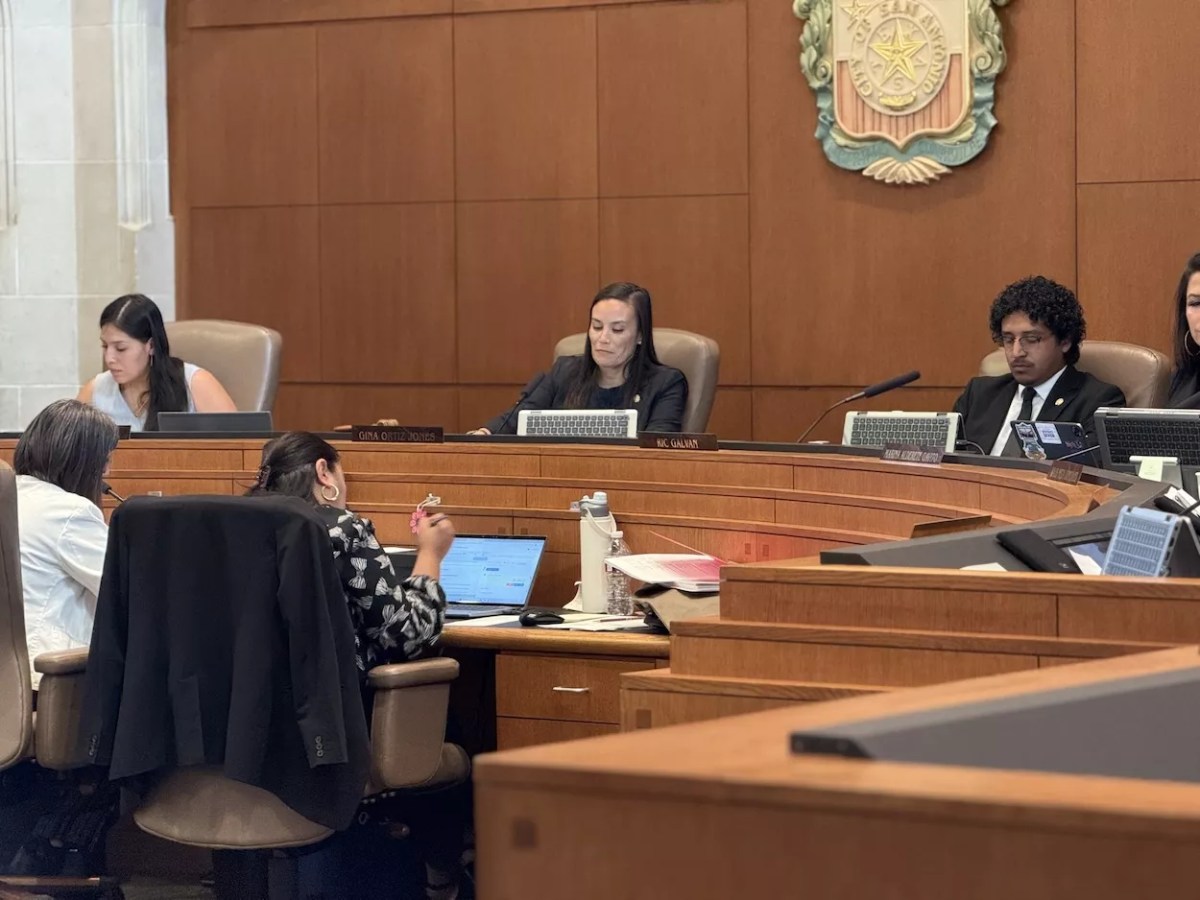
The vote occurred with no discussion from council but roughly four hours of public comment.
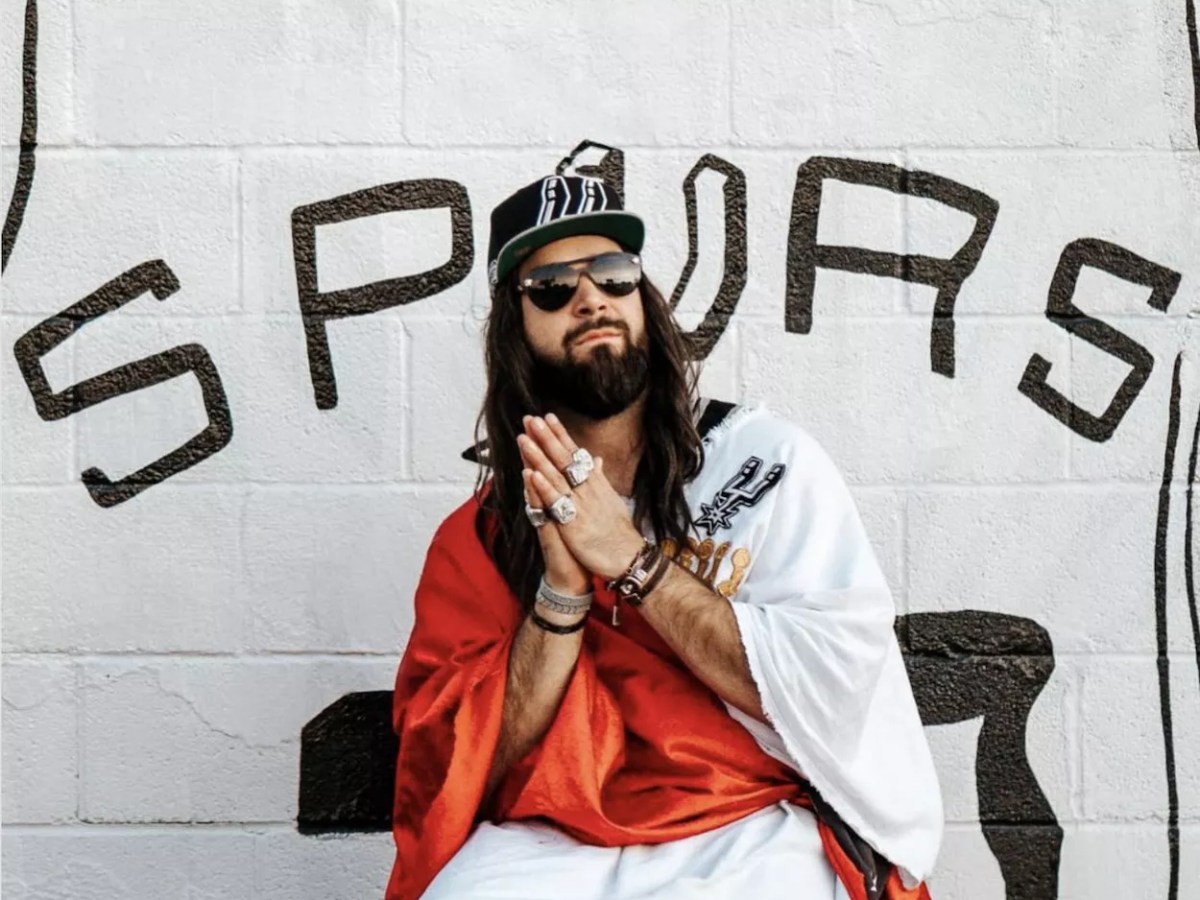
Spurs Jesus asked Mayor Jones if there is an economic impact analysis on what would happen if the Spurs left town.
This article appears in Sep 3-17, 2025.