
There may be no more frustrating experience for sports fans than losing access to watching their teams play on TV because of a carriage dispute between a regional sports channel and a cable or satellite operator.
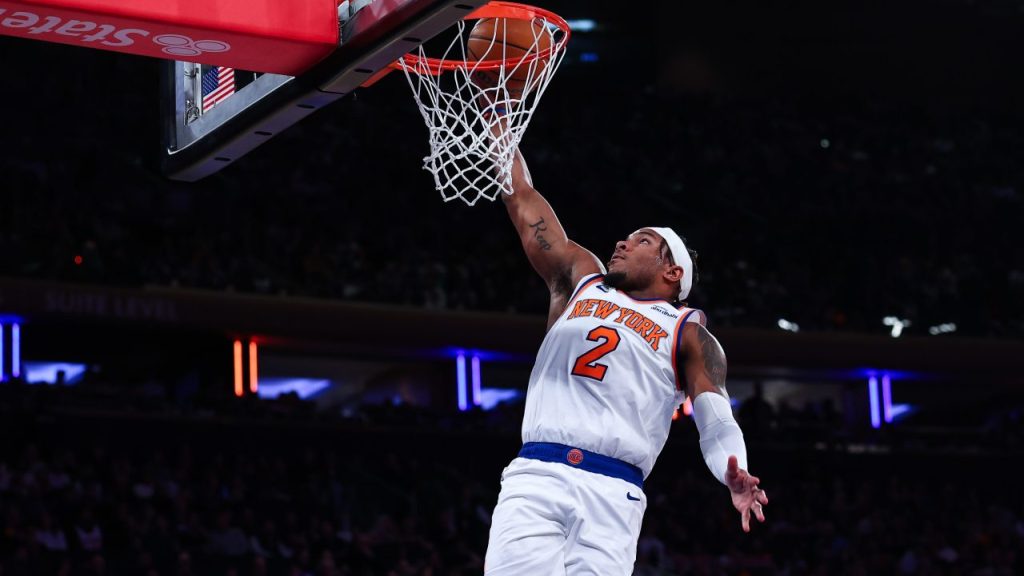
With Altice, the owner of the Optimum cable system, and MSG Networks at odds in the New York metropolitan area, two state legislators have made it clear that they want both sides to resume negotiations to bring Knicks, Rangers, Islanders and New Jersey Devils games back to their customers.
Assemblywoman Michaelle Solages, who represents the 22nd Assembly District in Long Island’s Nassau County, and state Sen. Jamaal Bailey, who represents parts of The Bronx and Westchester County, were among the first local officials to call attention to the impasse. They’ve remained in contact with both sides since the blackout went into effect at midnight on New Year’s Day.
On Thursday, the MSG channels (which are run by Knicks and Rangers owner James Dolan) and Optimum traded salvos on social media. The Knicks, Rangers and Islanders retweeted separate statements from the assemblywoman and state senator, with Optimum replying to both legislators in kind.
“Sports is the world’s greatest social currency,” Bailey said in a phone interview. “So when people are facing trying times, they want to sit down in front of their TV for a couple of hours, and they want to watch their team. In addition to me being a ridiculously obsessed Knicks fan who’s also an Optimum customer, I thought it was important to jump in for the constituency, for myself and for everybody.”
A new carriage deal will be appreciated by their constituents, but it’ll be critical for both carrier and channel. Both Bailey and Solages’ districts represent over a half-million residents, all within Altice’s coverage map, and as is the case around the country, many of them have already cut the cord in recent years. The operator closed out Q3 with 1.94 million video subscribers, down 13% vs. the year-ago 2.23 million.
Guggenheim’s Curry Baker sent a note to investors in which he estimated that in 2025, Altice is projected to pay MSG $127 million in carriage fees—or about one-third of the network’s distribution revenue, with the bulk of the remainder coming from Verizon Fios and Charter’s Spectrum system. MSG will lose $347,945 per day for as long as the blackout continues.
Although there are people who believe that elected officials should focus their energies on other “serious” matters instead of a staring contest between billion-dollar companies, Assemblywoman Solages says the impasse reflects one of those serious concerns.
“People are right now going through affordability crisis, and rates of everything are increasing,” Solages said. “New Yorkers need affordable programming, especially with the price that it costs to go to these sports live.”
This is far from the first time when politicians have spoken out about a carriage dispute, with some of the most famous legislative flexes involving several U.S. senators speaking about the availability of the NFL Network in the late 2000s. Yet even those battles did not have a reported direct intervention of an elected official like what took place in New York back in 2012.
A 48-day blackout of the MSG RSNs by Time Warner Cable (now Charter) began on midnight of New Year’s Day that year. The Knicks and Rangers were blacked out in about half of the city, including their home borough of Manhattan. And when Jeremy Lin entered the Knicks’ starting lineup to begin the “Linsanity” run that February, the dispute had finally reached critical mass.
It was reported that then-Gov. Andrew Cuomo leaned on the public demand to bring Dolan and the late Glenn Britt, the CEO and chairman of Time Warner Cable at the time, back to the table to hammer out a deal. Also credited with forging a new agreement at the time were then-state Attorney General Eric Schneiderman and the late NBA commissioner David Stern.
Solages and Bailey said such high-level influence doesn’t appear to be in the cards in the early days of this dispute. “The tools that we have as legislators, … I’m not ready to use (them) because I think it’s too early in the process,” Solages said. “I think it would be unacceptable for us to be at a point where we have to use legislative tools to compel two parties to come together.”
“As legislators, you’re generally very mindful about the concept of government overreach, certain things private actors should be able to take care of themselves,” Bailey said. “That being said, there are certain times where you have to use the ability to influence, the ability to say not only are legislators themselves paying attention, but our respective constituencies are paying attention.”
This isn’t the first time the lawmakers have come together through sports. Solages and Bailey co-sponsored the Athletic Training Licensure Act, which designated athletic training as a licensed profession in the state in the aftermath of Buffalo Bills safety Damar Hamlin’s cardiac event two years ago. The bill was signed by Gov. Kathy Hochul in December 2023.
For Bailey, a former high school basketball player, and Solages, a former athletic trainer, a problem in the sports world can hold great importance in the halls of government due to the wide attention given to the games.
“We can focus on state issues, national issues, international issues,” Solages said, “but it’s about the everyday moments in people’s lives that are equally as important as those big-ticket items. When someone turns on the channel and doesn’t view their sport or entertainment, it really impacts them. Because it’s not just about losing access. It’s losing those cherished traditions, the joy and camaraderie while these games are being played.”
With additional reporting from Anthony Crupi.