
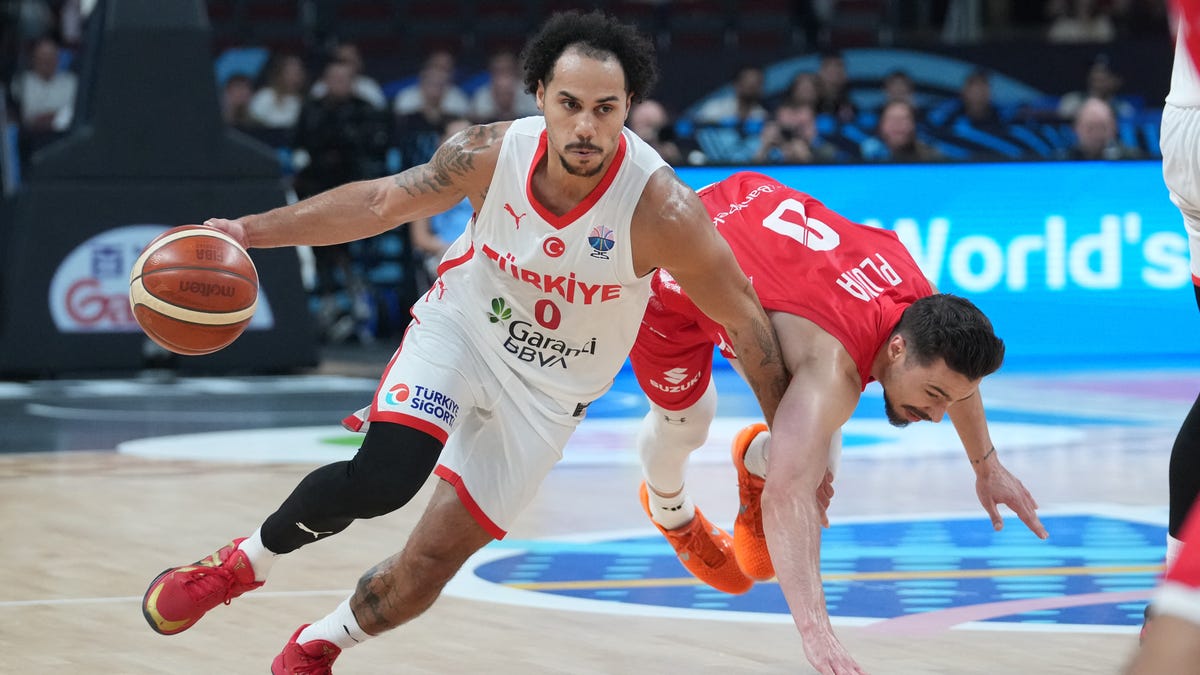
Shane Larkin, Anadolu Efes’ star guard and a naturalized player for Turkey, has carved out a second home – and a legacy – overseas after an early NBA stint marked by constant change and a major ankle injury. Standing at 5-foot-11, Larkin’s blend of burst, pick-and-roll craft and shotmaking has translated into Euroleague titles and National-Team prominence. In an exclusive HoopsHype interview, Larkin detailed why Turkey “means everything” to him, why he chose a starring role in Europe over fringe NBA deals, and how basketball became his refuge while managing OCD. He also reflected on playoff intensity on both continents and praised Alperen Sengün’s rise as Turkey’s next great talent.
How does representing Turkey’s National Team feel to you, especially since you’ve made the country your home?
Shane Larkin: I mean, it means everything to me. Obviously, I’ve played basketball for quite some time, and early on in my career, I was kind of bouncing around a lot from team to team. Every single year for the first five years of my career, I was in a new city, new state, new teammates, new coach, new coaching staff, new surroundings. So when I landed in Turkey and started having some success, I had an opportunity to once again make another jump and go somewhere else. But I think I just wanted to find my footing and kind of be able to grow with the group of people that I felt really comfortable with. And obviously, I made the decision to stay in Turkey, and I never looked anywhere else since then. So it’s been enjoyable, and to be able to now, after 7-8 years, sit here and play for the National Team and represent Turkey means everything because I think the way they’ve supported me and the way they’ve taken me in as one of their own has really amplified my life in multiple ways, not just on the basketball floor. It means everything to me to be able to represent them.
Did constantly adjusting to new coaches and teams take more of a mental or physical toll on you, compared to college?
SL: I mean, yeah. I think I played with the same AAU team. I played two years in college, so I wasn’t accustomed to the constant change. I think being able to be comfortable and being able to be truly who you are, and your teammates understand who your coaches are, the training staff, the city, the organization, everything, it allows you to kind of grow and blossom into who you’re going to be. I was never able to find that opportunity anywhere in the league or early on in my career. When I finally was able to find that, I think that’s when you started seeing my kind of improvement and see what kind of player I could actually turn into. And I think a lot of people go through it. The quote-unquote journeyman is a saying in basketball. And it’s difficult. It’s not easy. And you see a lot of guys who, especially smaller backup point guards that kind of go through that. Ish Smith played for, I think, half the NBA. So it’s just part of the game. It’s part of the journey. And it wasn’t something that I wanted to continue to do. So when I finally found a home and I felt like this is a place that I could grow and kind of be who I wanted to be and grow into the player that I thought I could become, it just felt really good to find that place. And like I said, once I found that place, it just felt like home, and I didn’t want to go anywhere else.
You’ve found a home in Turkey, and more Americans now represent other countries. What makes your case different?
SL: I think just the emotional ties that I have to Turkey. I genuinely, from the bottom of my heart, feel like it’s a home to me. In the summer now, I go back to the States maybe for two weeks, and then I come back to Turkey, and I’m traveling around Turkey and around Europe for most of the summer. I still love home, my family’s there. I’m still very much in love with the homeland. Turkey has definitely become that second home for me, where I go to Turkey and I’m very comfortable with my surroundings. You know, I have my spots, I have my friends, I have my restaurants, I have my whole situation in Turkey that feels like something that is so comfortable to me that even in the summer now I go see my family back home and after about two weeks I’m like, “Yeah, I’m going to go back home to Turkey.” You know, so it’s different and it’s not something that I ever really would have expected, but you just don’t know until you know. And I think a lot of people are hesitant to kind of make those jumps because they don’t know what to expect. But I think if you have an open mindset and you kind of walk into a scenario with an open heart, you never know what can happen. And Turkey just captured my heart, captured my mind. And, you know, it’s become truthfully like a second place for me to be.
And what advice would you give to American athletes hesitant about representing another country versus chasing an NBA role?
SL: I think my advice would be to just be open-minded. In order to do this at any level you have to love the game of basketball because you’re gonna end up in these places in the world where you don’t know anybody at first. But the one thing you do know if you take this jump or you take this leap overseas is you do have basketball, so if you really are going to attempt it, you have to love the game of basketball. I would say that’s the first thing. And if you do, then you just have to be open-minded to the experience. You have to be open-minded to the opportunities that are out there. You know, when I was growing up, it was all NBA, NBA, NBA, NBA, NBA.
I was lucky enough to accomplish my goal at 20 years old, get drafted 18th overall, break my ankle a week after the draft, and then kind of hopped around. And then there was an opportunity where it was like, OK, take a non-guaranteed deal in the NBA and continue to fight for that or go overseas and play 30 minutes a night and kind of see what that looks like. And, you know, thankfully, I had an open mindset where I didn’t want to do that third point guard kind of non-guaranteed deal, wait for somebody to get injured. It’s like you’re waiting for somebody’s downfall for you to take advantage of it. And that just didn’t feel right to me. I felt like if I wanted to get that opportunity, it was because I deserved it because of my play, not because of somebody’s injuries. And I had an open-minded. And I went to my first year in Spain. I had a great time. I loved my time in Vitoria-Gasteiz, Spain. It’s a very small city, probably 250,000-300,000 people. But I had an amazing time. I fell even deeper in love with the game of basketball. And since then, it’s just kind of carried me to all the different places that I’ve been. And I would say my advice would just be that. You have to love the game of basketball and be open-minded to the different cultures. And the willingness to be comfortable outside of your comfort zone. Because if not, it’s not going to be an enjoyable experience at all.
How do people react when you say you love playing abroad and were fine leaving the NBA?
SL: They’re surprised. I mean, I think that’s a natural reaction. I had a few incredible seasons over here and I had opportunities to go back to the league and I was like, “Nah I’m cool, like I’m good where I am”… and when people hear that, they don’t understand what it is like to be one of the better star players in Europe. You have to really experience it to fully understand it, but I would explain it as if… I’m not comparing myself to any star player in the NBA at all, but like the way I’m sure Kyrie Irving was being treated in Cleveland is the same way that Kendrick Nunn is now being treated in Athens, the way that I’m treated in Istanbul, Mike James is treated in Monaco. You know, these superstar players live in these cities and they have these certain lifestyles that you wouldn’t really understand it unless you were over here and you got to see it first hand.
And then, on top of those lifestyles, just the overall passion for the game of basketball, the way the game is played. It’s just a style that I think fits more of my character and who I am. And I feel like maybe the league over here doesn’t show enough of the lifestyle and what is available to these guys. But I think if more people were able to understand the lifestyle that you can live and the way that you can play in the game of basketball and the way it’s played over here, then I think more people will be open to making that jump. And I think you’re seeing it now. I think more people are starting to make those jumps and starting to fully understand what it is. You know, that Jabari Parker interview years ago went viral when he had tears in his eyes, and he was like, “You know, I found the love of the game of basketball again.” And I think a lot of those stories happened over here, and I think those should be told more, but you know, it’s just been a blessing to be over here, and all the experiences have been great as well.
It’s surreal to see nobody with a phone in their hand—just watching a basketball game, with thousands of people locked in from buzzer to buzzer. It gives you goosebumps.
SL: I mean, yeah, and like you said, it’s more of a college football kind of atmosphere. That’s kind of more so the vibe around European basketball. You go to these games, especially in cities like Istanbul, Athens, and Belgrade, where these basketball fanatics are there. It’s not about posting and being like, “Oh, look, I’m at the game,” or “Look at my outfit,” you know, and “Look at the players and the alley-oops and look at the pictures.” It’s not about that. And I’m not trying to take anything away from the NBA. It’s the most talented league, the most talented players, the best league in the world. Not taking anything away from it, but it’s just like the pure passion and the way that this game is idolized over here is a completely different way than it is in America. In America it’s entertainment of the best athletes and the best basketball players in the world and over here it’s genuinely about the game of basketball and the passion and the love for the game that comes with it and the love for the club as well.
If you really want to experience that, you have to come over and see a game for yourself. You have to be in those crowds, you have to be in those atmospheres and see what it’s like when Olympiacos plays Panathinaikos, when Red Star plays against Partizan, when Barcelona plays against Madrid, when Anadolu Efes plays against Fenerbahçe. You have to come see these atmospheres and see what that looks like. Once you are sitting in there, like you said, you get the goosebumps, and you have people, 10,000, 12,000, 15,000, from tip to end, standing on their feet, singing songs, chants. It’s just a different experience and something that I’ve thoroughly enjoyed and feels more connected to me in that way than I would say the NBA did.
How does the travel in Europe compare to the NBA grind, especially now that you’ve played several years with the same club in Istanbul?
SL: If you don’t know, you don’t know. And I would say, I’m not sure if every Euroleague team, but I would say 75-80 percent of all Euroleague teams charter everywhere, so it’s not like we’re riding on buses for 8-10 hours. I think because the term “overseas” is so vague and it’s so broad that not many people understand exactly what that means. Because somebody can say, “Yeah, I play overseas,” and they could be second division in Romania, and that probably means long bus rides and not the best hotels and stuff like that. But when you play for a Euroleague team, you’re staying in five-star hotels in the best cities in the world. Athens, Istanbul, Barcelona, Madrid, Paris, Monaco. You’re living in it, it’s not the NBA, I’m not going to say it’s the NBA, but you’re chartering everywhere, you’re making great money to do what you love to do, you’re traveling first-class kind of accommodations. The lifestyle is great.
If you can work your way up to being one of the better players or one of the star players in the league, your lifestyle is going to be very similar. You’re not going to be making $40-50 million a year like these guys in the NBA. Some of the higher contracts now are, in terms of gross contracts, worth $10-9 million versus what those guys are making in the NBA. It just depends on what you want to do. I think there are a lot of people who settle for the NBA lifestyle of being that 13th man on the team that doesn’t dress every single game, but they can say I’m in the NBA and I can wear my tunnel fits. I feel like a lot of people are hanging on to that as opposed to people who genuinely love the game of basketball. I can’t sit here and name individuals specifically, but I think there are a lot of guys who hang on to that dream because of those certain things, as opposed to guys who really love the game of basketball, who really love the hoop. And I think the ones who really love the hoop take that jump and want to be the star players of these teams over here. And I think if you saw the lifestyle that they live, it’s probably much better than that 12th man that nobody cares about in the NBA. So it just depends on your personality and who you are. And I think that’s what it comes down to.
How would you compare Euroleague’s tactical style to the NBA’s pace-and-space approach focused on threes and layups?
SL: The game is a bit slower. Obviously, you don’t have the same level of athletes that you have in the NBA. So the game is much slower. It’s more tactical in terms of the defense is going to be switching every single game. Because in the Euroleague at least, you don’t play three games a week. You play max two games a week, and sometimes it’s one game a week. So you have a week to prepare for your next team, or you have three or four days in between. In the NBA, you play back-to-back, so it’s like, how much preparation can you actually sit there and do? So game plans are much more structured, and they’re much more focused on taking certain things away from teams and individuals so that they can do what makes them best.
So I would say tactics are much more involved as a slower game, and each game is going to look differently in the way that you want to attack the defense or you want to defend the other team. So I would say the pace and space of the game, and you know, having everybody on the floor five out who can shoot, is kind of making that transition into the Euroleague a bit more than it has in the past. But I would say the traditional bigs are still in Europe. You still have that back-to-the-basket, shot blocking, big body in the paint. Whereas in the NBA, most of the fives now are athletic guys who can switch, block shots, lob threats. Not really much back-to-the-basket game is played in the NBA anymore. It’s more face-up, drive and kick. So there are similarities, but I would say the overall concepts are a bit different with the rules and everything that goes into the differences in the game.
You’ve experienced both NBA and Euroleague playoffs, Boston in the NBA and multiple titles in Turkey. Which is tougher, in your opinion?
SL: The NBA playoffs is the toughest thing that there’s going to be. Let’s call it what it is. Like, at the end of the day, the best basketball players in the world are in the NBA. 82 games, it’s tough to show up every day and play defense like it’s a last possession. But you get into those playoffs and it’s like, all right, four games. You gotta win four games to move on to the next round. And when it really comes down to that, I think the competitive raises, the discipline raises, and the attention to detail raises. Over an 82-game stretch, you’re gonna have those days where you show up and you’re just like, as a team, you’re just like, all right, bro, like today is just not the day, you know? Load management, some guys are gonna be taking off. Some guys are just like, I need to get my numbers up, you know, the incentives in the contract. So it’s a lot of things that go into that stuff. But the NBA playoffs are real basketball. And I think that’s when basketball fans watch the NBA. I know everybody’s talking bad about the NBA now, but if you watch the NBA playoffs, it’s still like extremely exciting, extremely competitive, and everybody’s playing hard. So I’m not gonna discredit the Euroleague and the Euroleague playoffs and the Euroleague Final Fours. Those are extremely difficult as well. And probably a bit more physical because you get away with a lot more stuff in Europe because of the spacing is not there, can’t see all the stuff that’s going on… But NBA playoffs are still like the NBA playoffs.
You’ve spoken about your OCD struggles. How have you managed it, and has it, in a way, made you a better player?
SL: Maybe it helped me become a better player because basketball has always been like my safe space. It was the one thing when I was young that would allow me to take my mind away from those struggles. So if I was ever in one of my episodes where I couldn’t stop with the hand washing and stuff like that, if I could get to a basketball court, it kind of just all disappeared for me. The basketball court has a lot of germs and a lot of stuff going on. A lot of guys are touching the ball, bouncing on the floor, the refs are touching it, it goes to the fans, a million things are happening to the basketball. But for some reason in my mind, whenever I have a basketball, it kind of just feels like everything disconnects, and it just kind of becomes my safe space or my safe haven. And it’s been that way since I was a kid.
So maybe it made me a better basketball player because whenever I did have those moments, I ran to a basketball court, and that kind of helped me develop my skills and stuff like that. I don’t necessarily know exactly how basketball could have helped me in any other ways, but it definitely helped me kind of take my mind away from my OCD when I was younger. I just all of a sudden started doing these things, and I was like, “Why am I doing this?” I have no idea why I feel like after I touch this thing right here, and I have to go wash my hands, however many times, eight times a day, or seven times the other day, or four times, or whatever my number was that day. So I didn’t really understand exactly what was going on with me at a younger age, and it started probably around nine years old, 10 years old, and my mom also has OCD in a different way. But she started seeing these behaviors in me and actually she took me to therapy at 10 and I was going to therapy for about a month and then they put me on this medicine and I was a very highly, highly competitive kid where it’s like if my mom or my sisters beat me at something, I was very upset and I would just like make them play me again.
Once I started taking these medicines, my competitiveness was just like gone because they’re like antidepressants, so it kind of like makes you like everything I was like, “No problem.” And then when I was trying to play basketball, I was terrible, ’cause I just didn’t care. I just didn’t have that drive or that motivation to compete, and that made me more frustrated than anything. So I immediately stopped taking these medicines, and I was just like, “I’m gonna treat my OCD as if it’s an opponent, and it’s gonna be me against this OCD every single day.” And slowly but surely, if my number was eight, the next day it was seven. And then maybe a month later, I got it down to six. And then maybe it went back up to nine, but I just kept working at it and I kept working at it and I kept working and I kept challenging it and competing against it. And at some point, you know, I was able to get it under control where it doesn’t affect me on a day-to-day basis anymore. And I still have my things that are no-go, but for the most part, my OCD is very under control, and it doesn’t affect my day-to-day activities at all.
If you could go back in time and give ‘rookie you’ piece of advice?
SL: Rookie me? 20-year-old me, I would tell myself to have more fun. When I got drafted, I put a lot of pressure on myself to make it work. And I kind of stressed myself out in ways that the game wasn’t as fun to me anymore. And I think because I got drafted 18th overall to Dallas, it was a winning franchise. We’re in win-now mode. I broke my ankle a week after I got drafted. So I was just sitting there for the first four or five months of the season just watching the team. And I knew at some point I was going to get an opportunity. And when I did get my opportunity, we were close to .500 right there, fighting for the playoffs. And instead of thinking about it as, “This is my first year in the NBA, I’m a rookie. Let me just go out there, be aggressive, make my mistakes”, and just have fun with the game of basketball and play the way that I had always played, which got me drafted. I thought more like, “Don’t make any mistakes. Go out on the floor and don’t f*ck up today. Don’t mess up.”
And I had a very veteran team that had won a championship – Dirk, Shawn Marion. And I was around a bunch of these veteran guys who were so good and so understanding of what it took to win that I was trying to hold myself to the same standard as them. It was impossible as a rookie coming in. Didn’t play preseason, didn’t play summer league, didn’t do any of that. The first NBA game was 40 games, 30 games into the season, with no practice. And it was just like, “Good luck, rook.” Mentally, instead of just being like, this is my dream come true. Like, let me just go out here and be me… I was more stressed out about things like, all right, don’t make a mistake. Don’t shoot this shot because if you miss it, they’re gonna be mad at you. Don’t make this aggressive move to the basket ’cause if you turn it over, you’re gonna get pulled out of the game. So I think if I had been able to just be like, “F it, let me just go out here and be me and play my game and make my mistakes”, I think I would have enjoyed it more, and I probably would have played much better as well. And that’s the advice that I would have given to myself sitting here today.
How did you injure your ankle, and do you see that moment as a turning point in your career?
SL: I mean, yeah, definitely.
It also sounds pretty significant, like not just a standard broken ankle that takes like eight weeks.
SL: Yeah, no, I have screws in my ankle. I know exactly how I had it. I remember the possession. I remember everything. I remember exactly why. We were in Dallas, about to go to the Summer League on the day. We had practice in the morning, and we were flying out after practice. I think this was the first practice Mark Cuban came to watch. And obviously, he just spent a first-round draft pick on me. This is a summer they were chasing Dwight Howard. They were trading back in the draft to save money to get Dwight, and it didn’t end up working out. So I was like, “Oh hell, now it’s more pressure on me. I gotta be, gotta be excellent now because of all the things that they’ve done to get me here.” And he walked into the gym, and I saw him kind of out of the corner of my eye, and I got a steal. And I had just come off of, at that time, the highest vert at the NBA combine. I had like a 44-inch vertical. I was like, “All right, I got this deal.”
It was like a one-on-one break with the big guy kind of trailing me. I was like, “I’m about to punch this. I’m about to go up and put my whole arm in the rim.” And I went to kind of take off, and when I took off, I kind of slipped a little bit, and my foot kind of turned in and just, just….just broke. I heard a big crack, and I was just lying there. I didn’t even get off the ground. It kind of just bent in on me. And I was just lying there like, “No way, dog, did not just happen.” And trying to be the tough guy, I lay on the floor for a little bit. I was in a little pain, but I got up and I walked off. Like very gingerly, obviously, I walked up the steps, put the game ready on, and I went in, and my ankle was like this on the game ready. And then after I took the game ready off, my ankle was like this. The team was traveling to Vegas later that day. And after I took the game ready off, Casey, the athletic trainer at that time, looked at me and was like, “Yeah, you’re probably not going to Vegas, bro.”
I was like, “It’s just a sprained ankle. I’ll be fine.” He was like, “Nah, you’re gonna go to the doctor.” Went to the doctor, got an X-ray, and then he just walked in shaking his head, and I just started, tears just falling down my face ’cause it was just like, “Why me, why now?” You know, I worked my whole life to get here. I was a three-star recruit. I didn’t go to high high-major school. I worked my behind off to get drafted. I got drafted in the first round. Nobody would have expected that when I first entered college two years before. And for it to happen at that moment was just like, “Why me? Why now?” And obviously, you do all the work and you get back and you get healthy, but I think it hurt my confidence that I was at the pinnacle, ACC Player of the Year, won the ACC title. I was at the highest of highs, got drafted 18th. I was at the best mental space I had been in in my whole career, playing basketball. And then for something drastic like that to happen, where it’s like for five months you can’t even step on a basketball court. It was challenging mentally.
Then obviously coming back and trying to get your rhythm and all this stuff on a team that’s winning, trying to win now is not the easiest thing as a rookie. So yeah, I mean, Rick Carlisle doesn’t like rookies, just has a different way of going about utilizing his rookies. And it was just a lot. And at the time, you kind of feel sorry for yourself. And you’ve got to fight those mental battles to try to get back on the floor and prove to yourself that you can play. And I had some good games that rookie year, inconsistent. But I would definitely say it was a turning point in my career, where I think going from the highest of highs of confidence to the lowest of lows, like, “Will I be the same guy?” You break your ankle, you get screws put in your body that are going to be there forever. This is not how this is supposed to be going. So it was definitely challenging, but it happens to a lot of people. So it’s just part of the game, part of the journey. You’ve got to try to recover however you can and work it out.
When did you feel normal again?
SL: Maybe halfway through my season in Brooklyn, three years later. To continue that story, I played the rest of that season in Dallas, and go back to Dallas after we lost in seven games to the Spurs that year. And then the staff there is like, “All right, we want you to go home for like 10 days, but then we want you to be in Dallas all summer.” I’m like, “Bet. I’m here. I’m going to work. I want to be a rotation guy next year.” And I felt like I was having a really, really good summer. Carlisle is always in the gym, so I was working with him a lot. Dirk was there because he obviously lived in Dallas. And the other rookie, Ricky Ledo, at the time, was like in Dallas a lot, playing and just working out every single day with the development coach, and just getting much better, and I felt like going into next season, I felt really good about where I was.
Then I go back home to Miami for a weekend, and I’m in a mall shopping, and I see on Twitter that Shane Larkin has been traded to the New York Knicks. I’m like, “What the hell?” I had no idea. I had just left Dallas two days before. All my stuff was there, my house, everything. Obviously, I’m super excited to go play for the Knicks. Like, this is amazing. And then obviously Phil Jackson was there. They just hired Derek Fisher. And my agent was like, “Yeah, you got traded to the Knicks. And we were trying to keep you in Dallas, but the Knicks were adamant about putting you in this deal”. So I was like, “Hey, you know, if they want me, then let’s go.”
Then I go up to New York and I’m working out all summer. I’m working out with this Chris Brickley, who was on staff at the time with the Knicks. I’m working out with Tim [Hardaway Jr]. Tim was a Miami guy, so we were working out a lot together. And then summer goes long, going to training camp, and first day of training camp, I’m out there before training camp starts, first guy on the floor, getting my ball handling in, working on pick-and-roll stuff. And Phil Jackson walks up to me, he’s like, “What are you doing?” Working on stuff. He was like, “Yeah, we don’t really do a lot of that, so you need to go work on your pass fakes.” And I’m like, but I’m like a pick-and-roll guard. I didn’t say this to him, obviously, ’cause greatest coach of all time, so I’m not gonna say anything as a 21-year-old kid. Like, “Yes, sir, I’ll go do that.” I don’t think anybody on that team was into the triangle offense, which is why we won 17 games.
So I think that alone hurts your confidence. In college, I was the No. 1 pick-and-roll guard. I got drafted to the Dallas Mavericks, who are a pick-and-roll-heavy offense. Then I get traded to the New York Knicks, running the triangle offense with Derek Fisher as the coach, saying I need to play like him. Which, okay, had a great career, but I don’t think anybody thinks about Derek Fisher as a pick-and-roll guard. He’s a defender, a big shot maker, a lot of respect for him and his career, but we are very different prototypes. It just wasn’t suited for my game and my style. I’m not a guy who comes across half court and picks it up and passes it to the wing, cuts to the corner. If you want me to affect the game, that’s not how I’ve done it ever in my career. I don’t think anybody had played the triangle in that role often. So it’s like, you’re sitting there with an extremely talented roster. Mind you, it’s Jose Calderon, who was a very respected guard at that time. Iman Shumpert, who was a great defensive wing. JR Smith, Carmelo Anthony.
We had a talented team, and you tell 15 guys, “Hey guys, you’re gonna play this new kind of style of offense that nobody’s played in the NBA for years, except Kurt Rambis in Minnesota,” which didn’t work there. And now you wanna come and bring it to the New York Knicks, and you have Melo playing at the pinch post, which I understand. I do understand. ‘Cause Melo, when he starts putting it behind his head in the jab, like you can’t guard him. However, maybe Melo can do it. None of us, none of the rest of us, is accustomed to this style of play. I mean, no disrespect. I understand the idea and the vision that it was. It just didn’t fit me and my style of game. So all year you’re just getting beat up with your confidence, ’cause you wanna play a certain way and you just can’t play a certain way. And I would say that is very frustrating. And I think coming off of an injured season, your first year, now you’re finally healthy, and now you’re not even able to play your game. You’re playing a style that doesn’t fit what you do best. So that’s obviously frustrating. So mentally that year, even though physically I felt better, mentally, you’re just kind of like beat up all season.
Then obviously go to Brooklyn, who made that massive trade, said we wanted to win a championship in five years. And then that next season is when everybody left, and then they just had to fill out the pieces with the roster, and I signed there. I was one of the first people they called in free agency that year, signed, and was extremely happy about it. Started the season decently. And then after 20 games, the coach was fired, the GM was fired, and it’s like a crap shoot the rest of the year. It’s just kind of like everybody is here just trying to get their numbers now. It’s just like being a team guy, a point guard, trying to get people involved. You have a bunch of 10-day guys coming in. You have call-ups. You’ve got guys going down to the G League. You’ve got guys asking for trades, being waived. Joe Johnson eventually leaves. And then we’re running plays through Brook Lopez and Thaddeus Young, which great players in their own right. However, in the upper echelon of stars in the league, like I don’t think those guys are going to carry you to ultimate success. No disrespect to them. It’s just they weren’t that kind of player. I end up having a decent season. I averaged like eight points, four and a half assists, good numbers across the board, shooting-wise, and I feel good about it. And then that summer, I turned down a player option to go back to Brooklyn because I’m like, “Oh, I had good numbers.” I was comparable with other backup point guards in the league, and my agent felt good about things. And then the next thing I know, I’m on a flight to Spain, playing in Europe the next year. It was a bumpy road, you know, at the end of the day, to say the least, but it all worked out the way it worked out. But I would say physically, and mentally, I didn’t really start feeling like myself until probably halfway through that Brooklyn year, through, ’cause of all that other stuff that I spoke about.
It was a long journey, but the end of the day, it’s part of it, and I’m not gonna sit here, and it’s not a sob story. It’s not a I got the short end of the stick thing. It’s just kind of like how things worked out, and who knows? In a different situation, in a different world, no injury, you never know how things could turn out, but it happened, and I can’t sit here and dwell on the past. I just have to be thankful for the moment and thankful for all the things that have happened, and it’s led me to be here today in the situation I’m in, which I’m extremely happy about. So it all worked out.
What’s the favorite moment that you look back on?
SL: That’s tough to pinpoint one moment, but I would say right now it’s probably one of the highlights for me. I wasn’t born in Turkey. I don’t have any ties to it. And you can only nationalize one player. It’s not like you can go naturalize six different people and say, “All right, whoever is playing the best is going to play today.” I would say the fact that they took that chance on me and now we’re sitting here with an opportunity to make some history for the country is probably the highlight of all of it. I think after 13 years being a pro, the highs and lows, winning Euroleagues, being in the Conference Finals with Boston… those are all extremely high moments that I’m extremely proud of. But to be here with a chance to potentially win a medal and do something that has not been done for the country, I would say, is bigger than any individual accolade that I could have. So I’ll say this one.
You’ve been able to see Alperen Sengun basically mature right in front of your eyes.
SL: Definitely.
You didn’t play with Hedo Turkoglu, but he’s seen as one of Turkey’s best. Do you think Sengun is already better?
SL: Funny enough, I was in Orlando when Hedo was the guy in Orlando. And when he went to the Fnals with the Orlando Magic. So I actually watched a lot of him growing up and was actually a big fan. And a very high-level player, I think, borderline All-Star for many years. But I think Alperen is just like a different kind of breed. I think he’s just like this hybrid kind of player that doesn’t come around too often. There’s not one thing he cannot do on the floor. He can handle the ball, he can pass the ball, he can shoot the ball, he has touch around the rim and he has IQ and he has the flashiness. You know, Giannis isn’t flavorful; he’s just so dominant. Like, he just runs through people, and he’s just so dominant in the way he plays, but you wouldn’t say Giannis has a flashy game. You know, Jokic is very fundamental, super high IQ, makes the incredible passes, but you wouldn’t say it’s like super flashy, flashy. So I think the combination of like the flair, the excitement, the talent, the IQ, all of it, and a 23-year-old kid that is only going to continue to grow and become better. I mean, no disrespect to Hedo. He still has a long way to go, but I think you kind of have to give it to Alperen as probably the best talent that’s come out of Turkey in a long time.
That’s what makes Sengun so fun and unpredictable to watch with the ball.
SL: And he’s going to tell you about it, too. It’s like, “When I’m having my day, I really don’t think anybody can guard me.” Like, that’s a 23-year-old kid from Turkey saying that. The confidence is just what sets him apart. Like you saw it when I played against him when he was 18 years old in the Turkish League, and it’s been that same kind of level of confidence, and just continued to build. And now with the accolades and All-Star, the world stage is now, everybody is watching him, and he’s just like, “I’m ready for this moment”. He dunks the ball the other day, and he walks down the court, and he’s like, “I told you.” Like, he’s heart, mind, it’s all there. The fundamentals are there, the attitude is there, the flash is there. Everything for somebody to break through and become that guy is all there for him. And I’m excited to see where his future is, and I’m glad to be a part of his journey.