
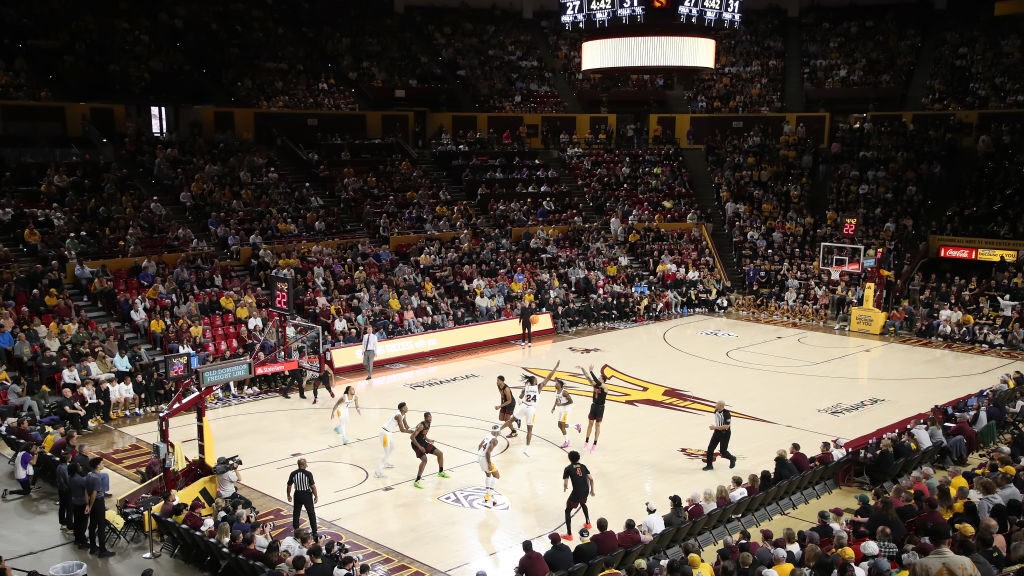
One former Arizona State men’s basketball player is linked to the NCAA’s investigation into alleged sports betting violations by 13 athletes representing six schools.
Matt Norlander of CBS Sports first reported the player is BJ Freeman, who parted ways with the program with five games left in the 2024-25 regular season.
Eastern Michigan, Temple, Arizona State, New Orleans, North Carolina A&T and Mississippi Valley are schools named in an NCAA press release published Thursday. In it, the NCAA said none of those players are currently with those schools.
“It was one athlete that was involved,” Arizona State athletic director Graham Rossini told Arizona Sports’ Burns & Gambo on Thursday. “We got word of it at some point over the summer after he had already been released from the team.
“As the release mentioned today, no involvement or wrongdoing on behalf of ASU.”
The allegations vary but “include student-athletes betting on and against their own teams, sharing information with third parties for purposes of sports betting, knowingly manipulating scoring or game outcomes and/or refusing to participate in the enforcement staff’s investigation,” according to the press release.
The schools and their men’s basketball staffs are not alleged to be involved in any sports betting, and the NCAA said it is not pursuing penalties for the schools that include ASU.
“Arizona State University is aware of the NCAA investigation and outcome related to a former student-athlete who is no longer enrolled at ASU. The university cooperated fully with all inquiries and was not implicated in any way,” the university said in a statement.
The NCAA Committee on Infractions has already finished with three similar cases involving Fresno State and San Jose State.
“The NCAA monitors over 22,000 contests every year and will continue to aggressively pursue competition integrity risks such as these,” NCAA president Charlie Baker said.
“I am grateful for the NCAA enforcement team’s relentless work and for the schools’ cooperation in these matters. The rise of sports betting is creating more opportunity for athletes across sports to engage in this unacceptable behavior, and while legalized sports betting is here to stay, regulators and gaming companies can do more to reduce these integrity risks by eliminating prop bets and giving sports leagues a seat at the table when setting policies.”
