
Before the Golden State Warriors took off and lorded over the NBA in the 2010s, there was one team that had the firepower and talent to win it all: the Los Angeles Clippers. After playing in the shadows of L.A.’s celebrated other team, the Lakers, the Clippers finally emerged with their own identity during the 2013-14 season, becoming the Lob City Clippers, after acquiring All-Star point guard Chris Paul.
CP3’s passing skills and incredible leadership brought out the best in everyone, especially high-flying big men Blake Griffin and DeAndre Jordan, who regularly finished off Paul’s lobs with thunderous dunks.
However, the Clippers’ success was not just due to their star trio, as they also had a strong supporting cast led by shooting guard JJ Redick, super off-the-bench scorer Jamal Crawford and veteran small forward Matt Barnes. And of course, none of this would have been possible without their head coach, Doc Rivers.
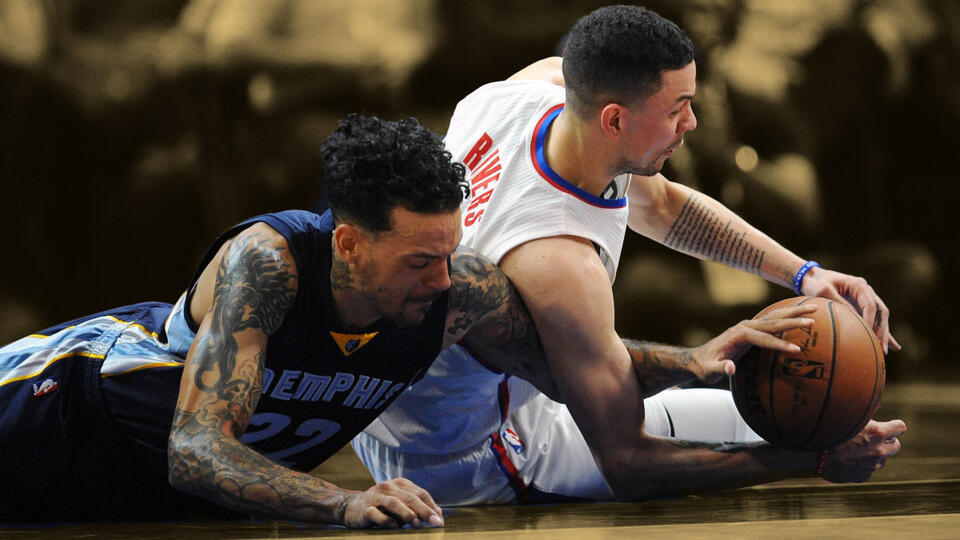
Barnes, however, contended that the Clippers never reached their full potential. He attributed this to internal conflicts and the erosion of Rivers’ credibility, mainly due to the controversial three-year contract he awarded his son, Austin.
A weird vibe
In 2014, the Clippers promoted Rivers to become their president of basketball operations, a role that ran concurrently with his position as the team’s head coach. This meant he had final say in all basketball-related matters.
And while Doc has always been considered one of the league’s most brilliant coaches and motivators, many raised their eyebrows when he gave his son, Austin, two different contracts in 2015 and 2016.
In July 2015, the younger Rivers signed a two-year deal worth $6.4 million. After averaging 8.9 points on 43 percent shooting in a reserve role, he again put pen to paper on a new three-year contract in 2016, one that paid him a whopping $35.4 million. Barnes said that it was at that point when things started to unravel within the Clippers organization.
“He brought his son over, and it was just some weird energy there,” Barnes disclosed on the “Club 520” podcast. “He paid his son. I’m not even mad. If I was in the position, I’d pay the s—t out of my son, too. But people don’t understand at the time what that did to people.”
Austin was by no means a scrub. A 6’4″ combo guard who went to Duke and was selected as the 10th overall pick of the 2012 NBA Draft, he could score and make plays for others. However, many questioned whether Rivers was worth the price tag he received from his father’s team.
“I mean, he was making more than me, Jamal, JJ — like guys that were putting in real minutes, you know what I mean? Playing in crunch time,” Barnes continued. “And it kind of had people looking at him funny… when the son came, the energy with that — like guys weren’t really off that.”
Too many cooks in the kitchen
Despite possessing ample talent for both offense and defense, the Lob City Clippers consistently faltered in the playoffs. While fans witnessed highlight-reel plays nightly, Barnes confessed that internal team conflicts plagued the locker room.
“Our superstars just butted heads. You know, Blake and CP had the best chemistry in the world at times and then didn’t see eye-to-eye at times,” he shared. “And then at the same time, it’s the emergence of DeAndre Jordan, where he’s starting to become a fringe All-Star player, Defensive Player of the Year, Olympic player. So, he’s kind of growing into his own.”
“And it was just — I felt like there were too many cooks in the kitchen,” Barnes continued. “So, there was just too much s—t, mental s—t that we couldn’t get over the hurdle.”
Not long after CP3 was traded to the Houston Rockets in June 2017, the Lob City Clippers’ dismantling continued with the departures of BG and DJ in the following seasons, marking the end of an era with so much style but not much substance.