
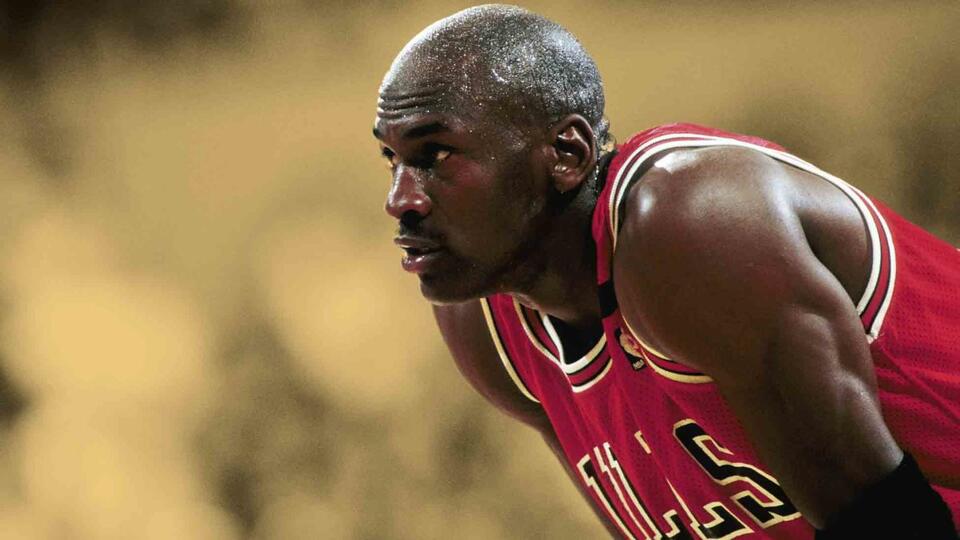
When you think of Michael Jordan, your mind instantly goes to the high-flying dunks, the indomitable will to win and his unstoppable scoring ability. The Chicago Bulls legend epitomized the notion of “you can’t guard him, you can only hope to contain him.”
Yet, Jordan was also an elite defender. He took on the responsibility of guarding the opposing team’s best player, often shutting them down for significant stretches of games. Of course, those outside of Chicago likely didn’t see enough of that to fully appreciate his contributions.
That defensive legacy came under scrutiny recently when former NBA guard Brandon Jennings shared a controversial take during an episode of the “Gil’s Arena” podcast. Jennings argued that Jordan’s elite, and now legendary offense, overshadowed his defensive contributions to the point where he doesn’t consider him a “great defensive player.”
The comment sparked immediate debate across social media, prompting Basketball Network to poll our readers on whether they agreed with Jennings’ assessment. The results were decisive: 88 percent of the respondents disagreed with Jennings, firmly believing that Jordan’s defensive dominance was a cornerstone of his legendary career.
For those who missed Jennings’ original comment, here’s what the former NBA guard said that ignited the controversy.
“I just feel like his dominance on the offensive end just took over anything he did on the court,” Jennings said. “If it came to defense, guys like Kenyon Martin, Rasheed Wallace, all these guys who are really defensive players, Imma take advice from them. But that doesn’t mean he didn’t play defense or anything like that. I just feel like the first person I’m going to talk about defense would be Gary Payton. So I don’t consider him a ‘great defensive player.'”
Jordan has an “all-time” defensive resume
There’s no denying that Jordan’s offense was key to his popularity. He helped put the NBA on the global map and took it to new heights with his superstardom. However, his defense also played a key role in each of his six championship runs.
That’s why Jordan ended his career with nine All-Defensive First Team selections, the last one coming in 1998. It’s also why he was named the NBA’s Defensive Player of the Year in 1988 and was in the top eight of voting for the award a further nine times.
“He’s the best superstar defender in the history of the game,” Doc Rivers told ESPN in 2020.
So, while you can pinpoint Jordan’s offense as key to his legacy and global success, the resume is there for all to see. He was a two-way talent before they became a prototypical archetype for NBA stars. And because of his desire to lock down opposing stars, he became arguably the most feared matchup in league history.
Jordan was a defense-first type of player
Like many elite NBA players, Jordan approached the game with a defense-first mindset. He set the tone on that side of the floor, using the momentum it provided him to spearhead his offensive forays. He took pride in watching an opponent’s confidence fade, knowing that he’d taken control of both the physical and mental battle.
“In my mind, Michael was actually a defensive player who also happened to be an exceptionally talented offensive player,” Former Bulls teammate B.J. Armstrong told ESPN. “In many ways, he knew the game on that side of the ball better. The way he moved, anticipated and invented ways to score based off what he saw on the defensive end … he never cheated the process.”
Unfortunately, Jordan’s career existed outside the scope of advanced analytics. However, if such metrics existed during his era, he would likely rank among the gold standard of contributors on both sides of the floor.
While Jennings may not view Jordan’s defense as a big part of his legacy, the numbers, accolades, and testimonials from coaches and teammates paint a clear picture — one of a two-way superstar whose defensive prowess was every bit as integral to his championship success as his iconic offensive brilliance.