
Not long after Auburn basketball coach Bruce Pearl announced his retirement on Monday afternoon, the school named his son, Steven, as his replacement.
Bruce Pearl won 244 games and five SEC titles (three regular-season, two tournament) and reached the Final Four twice in his 11 seasons on The Plains. The 38-year-old Steven Pearl was part of the Auburn staff that entire time, including the last two years as associate head coach.
The Bruce-to-Steven transition was an unusual, but not unprecedented move in college basketball. A number of other times in the modern era, we’ve seen a son immediately follow his father as head coach at a major program.
Some of those sons did quite well, while others failed miserably. Most were somewhere in the middle.
Before Steven Pearl, here are eight other times a son replaced his father as head basketball coach a prominent Division I school (listed in chronological order):
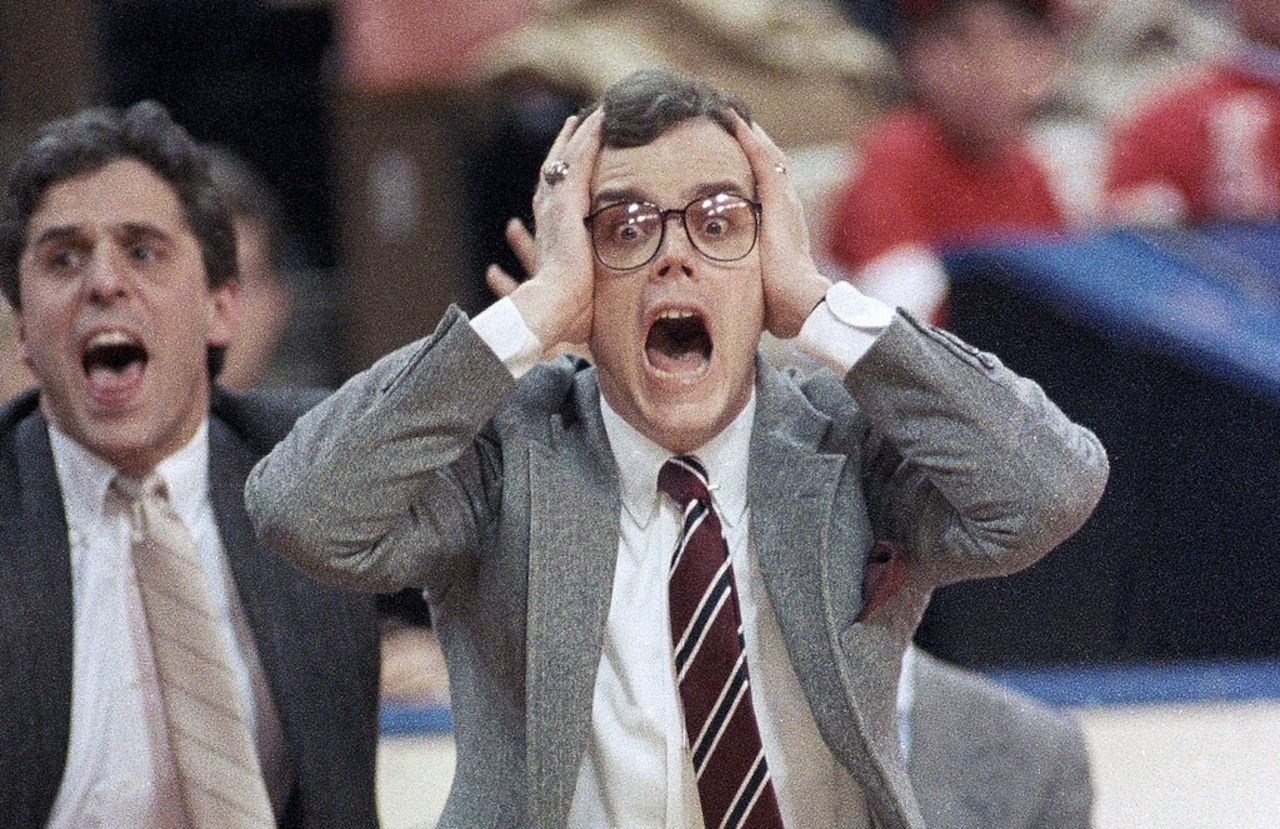 DePaul coach Joey Meyer reacts to his team’s play against LSU in an NCAA men’s college basketball tournament Midwest Regional semifinal in Cincinnati, March 20, 1987. (AP Photo/Al Behrman, File)AP1. Joey Meyer, DePaul (1984)
Though he’s remembered as a cautionary tale against nepotism in coaching, the truth is Meyer had some success — at least initially — after taking over the Blue Demons’ program when his legendary father, Ray, stepped down after 42 seasons that included 724 victories, 12 NCAA tournament appearances and two trips to the Final Four. Joey Meyer played for his father at DePaul from 1968-71 then spent 11 seasons as an assistant following a brief NBA career.
Seven of Joey’s first eight teams made the NCAA tournament, including Sweet 16 trips in 1986 and 1987. But things began to fall apart in the early 1990s, and he was fired after a horrific 3-23 finish in 1997. Joey Meyer later coached many years in the professional minor leagues, winning back-to-back NBA Developmental League championships with the Asheville (N.C.) Altitude in 2004 and 2005. He died in 2023 at age 74.
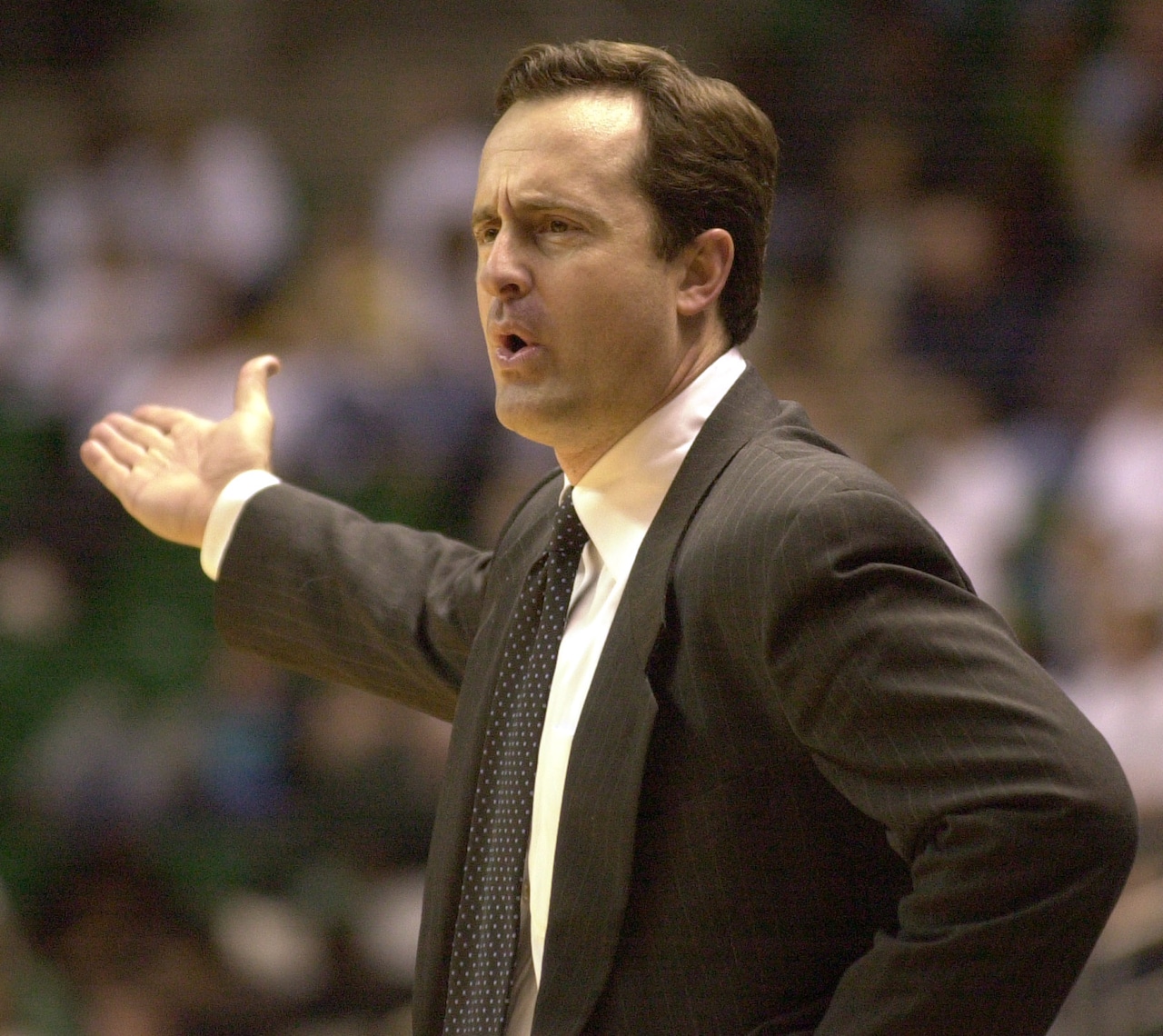 UAB basketball coach Murry Bartow is shown during a 2001 game vs. Charlotte. (Birmingham News file photo by Mark Almond)bn2. Murry Bartow, UAB (1996)
After playing for father Gene during UAB’s early 1980s glory days, Murry Bartow was on Bob Knight’s staff at Indiana before returning to his alma mater as an assistant in 1989. Gene Bartow — who coached the Blazers to the NCAA tournament seven straight years from 1981-87 and nine times overall, with an Elite Eight run in 1982 — stayed on as athletics director after stepping down as coach, and handed the job off to his son.
The Blazers reached the NIT in Murry’s first two seasons, then won 20 games and reached the NCAA tournament in 1999. That was the high-water mark for him at UAB, as he resigned in 2002 after three straight mediocre finishes. He later took East Tennessee State to three NCAA tournaments, and served as interim coach for partial seasons at both South Florida and UCLA.
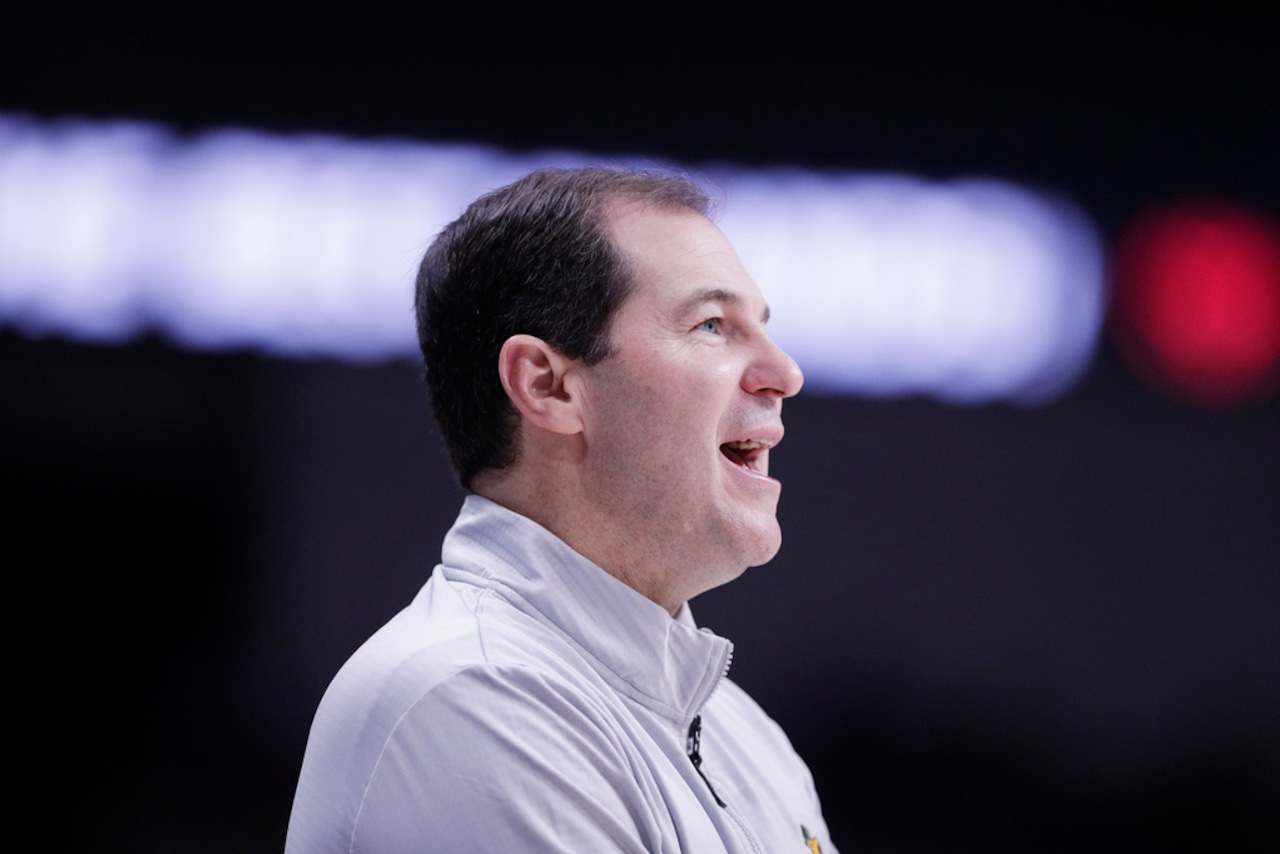 Before spending the last 23 years at Baylor, Scott Drew spent one season as head coach at Valparaiso after taking over from his father, Homer. (AP Photo/Young Kwak)AP3. Scott Drew, Valparaiso (2002)
The only man on this list who didn’t actually play for his father in college, Drew was a student manager at Butler before joining Homer Drew’s staff at Valparaiso in 1993. When Homer — who coached the Crusaders to five straight NCAA tournaments from 1995-2000 — retired in 2002 to take a job in the university president’s office, Scott ascended to the top job.
He led Valpo to a 20-11 record and an NIT berth his first season, then was hired away by Baylor. That brought Homer out of retirement to coach the Crusaders for another eight seasons before retiring again. Scott is entering his 23rd season at Baylor, having led the Bears to 466 victories, 13 NCAA tournaments and a national championship in 2021.
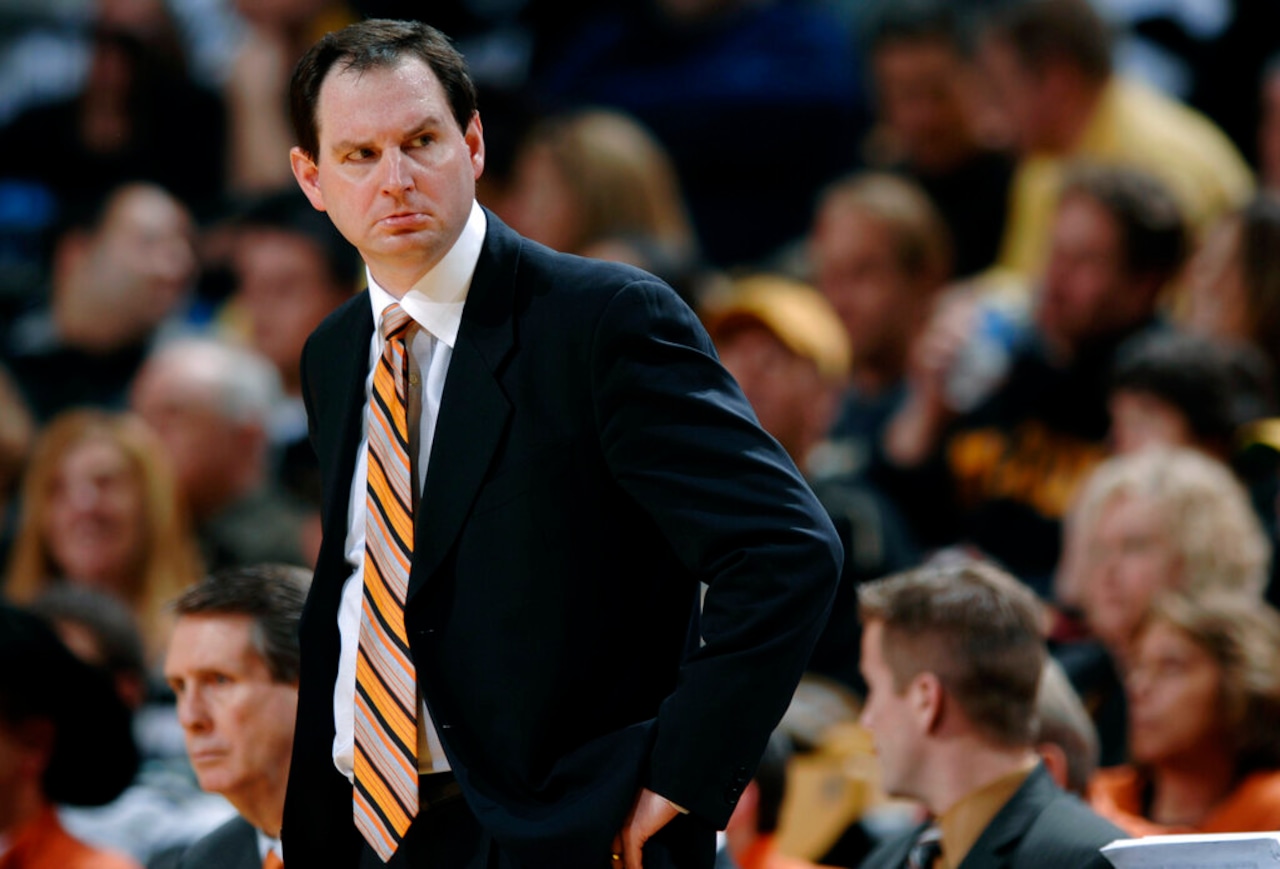 Oklahoma State head coach Sean Sutton stares at a referee during the first half of a college basketball game Tuesday, Feb. 26, 2008, in Columbia, Mo. Sutton was called for a technical foul during the first half. (AP Photo/L.G. Patterson)ASSOCIATED PRESS4. Sean Sutton, Oklahoma State (2006)
Sean Sutton played for his father, Eddie, at both Kentucky and Oklahoma State, then joined the Cowboys’ staff as an assistant coach in 1993. Eddie Sutton made a Final Four at Arkansas in 1978 and took Kentucky to the Elite Eight in 1986 before resigning ahead of NCAA sanctions three years later. He then spent 16 years in Stillwater (where he’d played in the 1950s), reaching the Final Four in both 1995 and 2004.
Eddie resigned from Oklahoma State in May 2006, three months after taking a leave of absence following a car accident in which he was cited for driving under the influence. Sean posted winning records in his two seasons as head coach, but lost in the first round of the NIT both years. He resigned with three years left on his contract, and has not been a head coach again, though he did spend six seasons (2011-17) as an assistant under younger brother Scott at Oral Roberts.
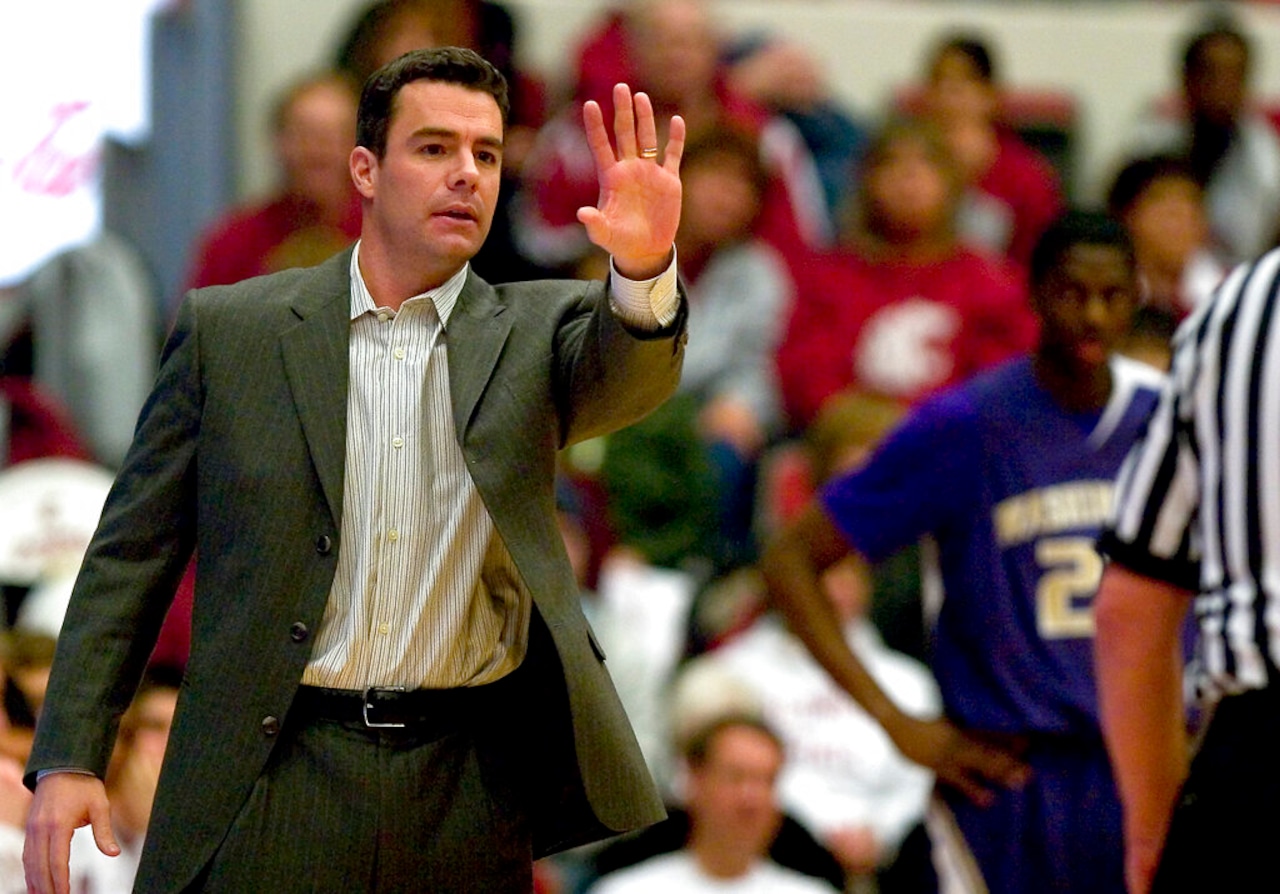 Washington State head coach Tony Bennett signals to his players during the first half of an NCAA college basketball game against Washington Saturday, Jan. 3, 2009 at Jack Friel Court in Pullman, Wash. Washington won 68-48. (AP Photo/Dean Hare)ASSOCIATED PRESS5. Tony Bennett, Washington State (2006)
Bennett starred as a point guard for his father, Dick, at Wisconsin-Green Bay in the early 1990s, then spent five seasons in the NBA. He was an assistant under his father on Wisconsin’s 2000 Final Four team, then later followed him to Washington State. Dick — who made six NCAA tournaments at Green Bay and Wisconsin and coached Wisconsin-Stevens Point to an NAIA runner-up finish in 1984 — retired after three losing seasons at Washington State and handed the program off to his son in 2006.
Tony Bennett made three straight postseasons — including a trip to the Sweet 16 in 2008 — with the Cougars, before he was hired away from Virginia. In 15 seasons with the Cavaliers, he won 364 games, six ACC regular-season championships and the school’s first national championship in 2019.
Bennett was a two-time national coach of the year, and five-time conference coach of the year. In a similar move to Bruce Pearl a year later, he retired abruptly in the fall of 2024, just weeks before the season started.
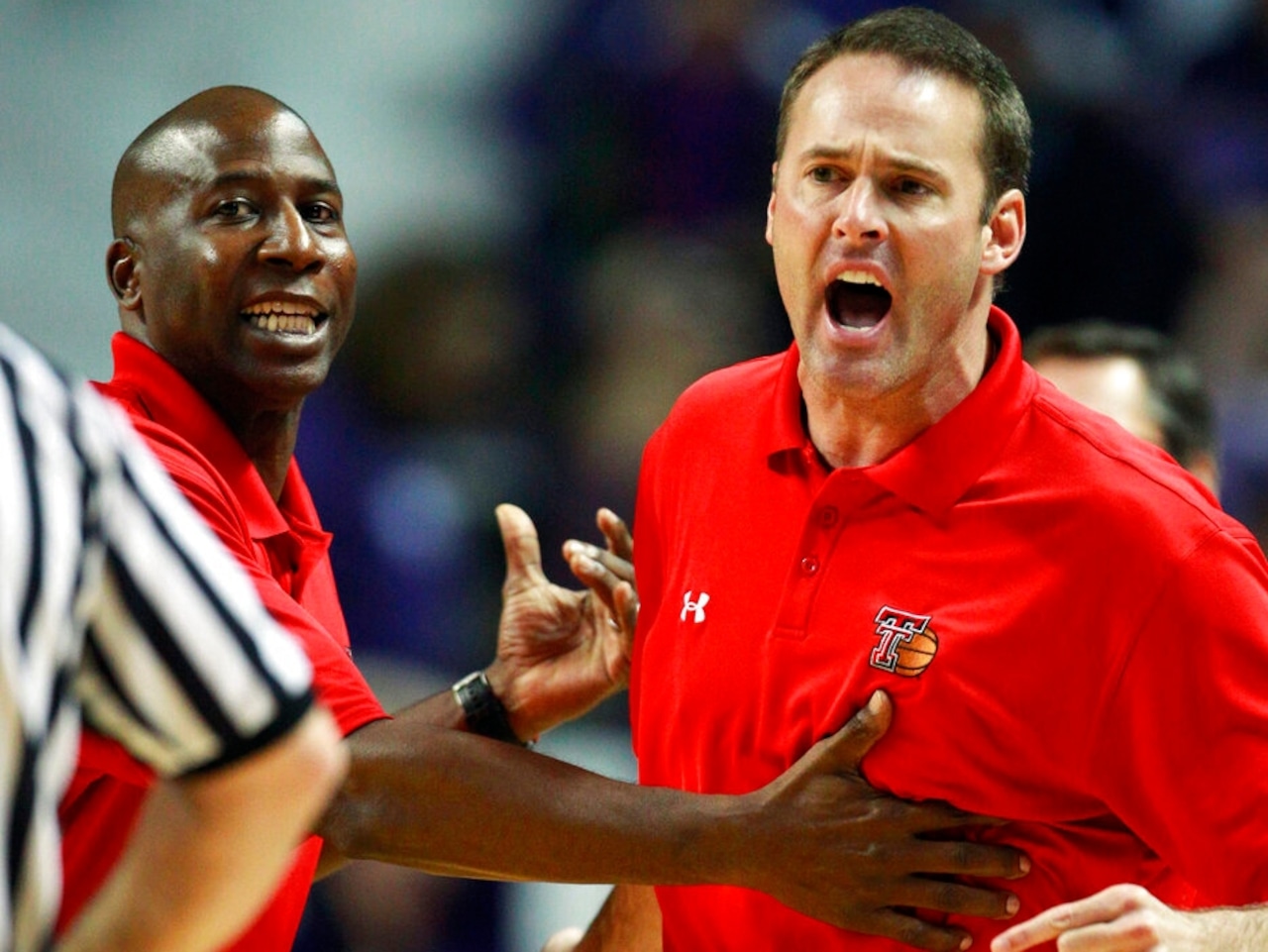 In a Jan. 15, 2011 file photo, Texas Tech coach Pat Knight, right, is held by assistant coach Stew Robinson after being called for a technical foul during the first half of an NCAA college basketball game against Kansas State, in Manhattan, Kan. (AP Photo/Orlin Wagner, File)ASSOCIATED PRESS6. Pat Knight, Texas Tech (2008)
Certainly no one on this list lived in his father’s shadow more than Pat Knight, whose father, Bob, virtually defined college basketball in the 1970s and 80s. Bob Knight won more than 600 games and three national championships, reached five Final Fours and claimed 11 Big Ten titles in 29 seasons at Indiana before he was fired just prior to the 2000-01 season following numerous on- and off-court incidents. Pat had played for Bob with the Hoosiers in the early 1990s, and also served as an assistant during his final season.
When Bob took the Texas Tech job in 2001, Pat came along as part of the staff. Bob Knight resigned abruptly midway through his seventh season, and Pat was named interim coach. He was elevated to the position permanently before the 2007-08 season, but recorded just one winning record in three years before he was fired.
Pat then coached three seasons at Lamar, also without much success. After a decade out of coaching, he was hired in 2024 as head coach at Marian University, an NAIA school in Indianapolis. The Knights (seriously, that’s their name) went 11-17 in his first season.
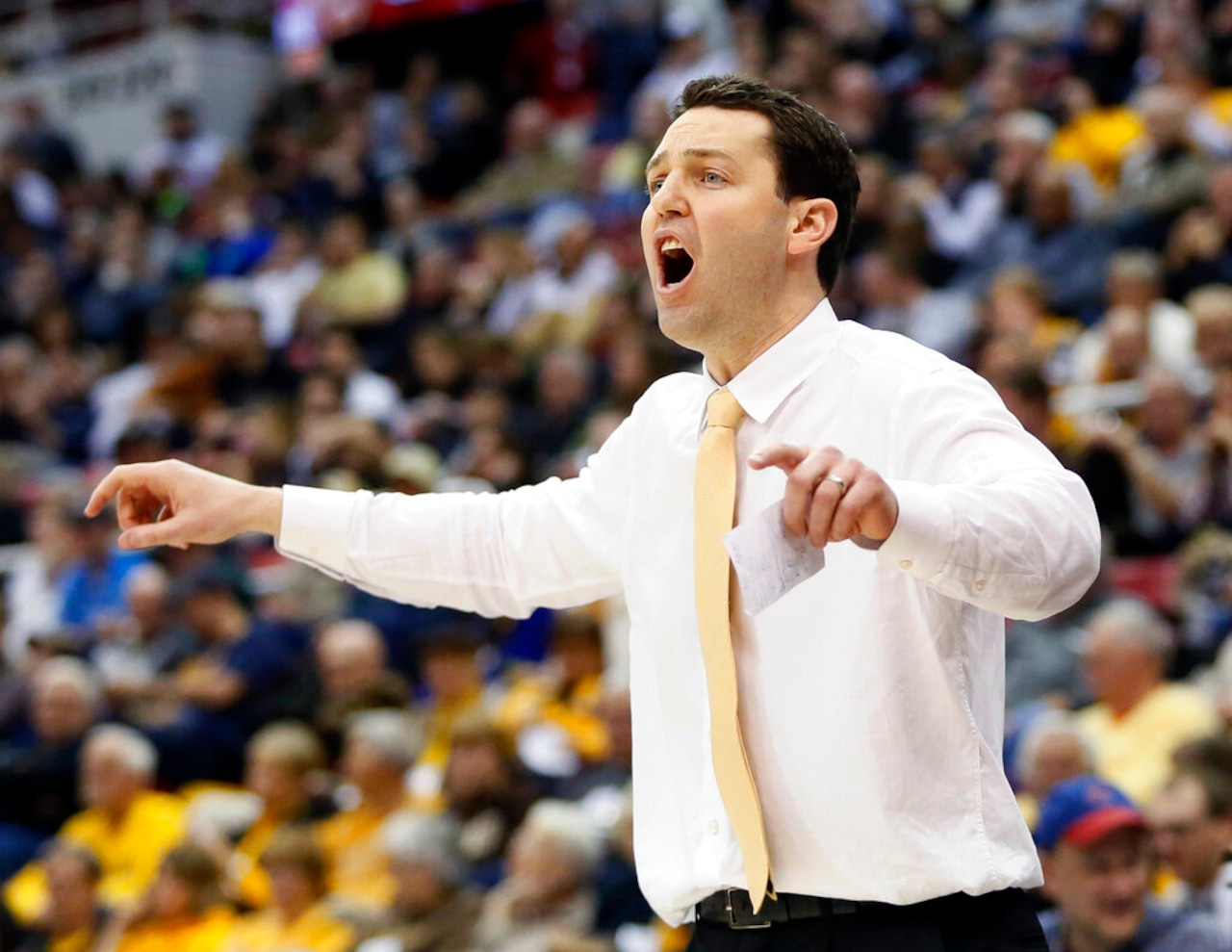 In this March 7, 2016, file photo, Valparaiso head coach Bryce Drew shouts instructions to his team during an NCAA college basketball game against Green Bay in the Horizon League tournament in Detroit. (AP Photo/Duane Burleson, File)AP7. Bryce Drew, Valparaiso (2011)
When Homer Drew retired for the second (and final) time in 2011, it was another son who replaced him. Bryce Drew was Indiana’s Mr. Basketball as a high school player, then starred at point guard for Valparaiso in the late 1990s. He made one of the most-famous shots in NCAA tournament history, an off-balance 3-pointer at the buzzer to upset Ole Miss in the 1998 opening round.
After spending nearly a decade playing in the NBA and overseas, Bryce joined Homer’s Valpo staff in 2005 before ascending to the top job five years later. He coached the Crusaders for five seasons, winning 124 games and reaching the NCAA tournament twice.
After an NIT runner-up finish in 2016, he was hired away by Vanderbilt. Things didn’t go so well in Nashville (though he did make the NCAA tournament in his first season), and Drew was fired after an 0-18 SEC finish in Year 3. He has since resurfaced at Grand Canyon, which he has coached to four NCAA tournaments in the last five years.
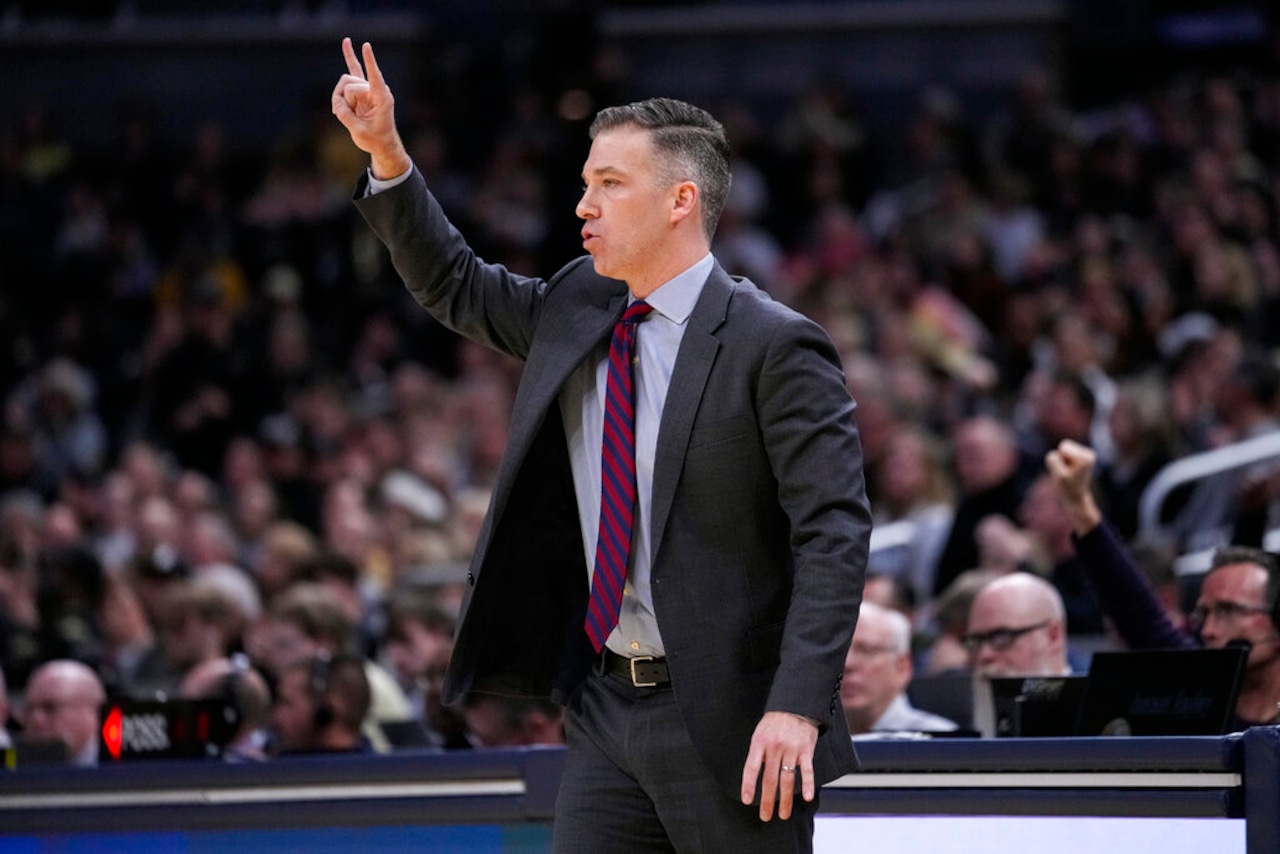 Davidson head coach Matt McKillop signals to his team as they play against Purdue in the first half of an NCAA college basketball game in Indianapolis, Saturday, Dec. 17, 2022. (AP Photo/Michael Conroy)AP8. Matt McKillop, Davidson (2022)
Bob McKillop spent 33 seasons coaching at Davidson, winning 634 games, 11 Southern Conference regular-season championships, seven SoCon tournament titles and reaching the NCAA tournament 10 times (his 2008 team, led by future NBA superstar Steph Curry, reached the Elite Eight). Matt McKillop was a three-year starter for his father from 2002-06, and was an assistant for one season at Emory before joining the Davidson staff the year after the Elite Eight run.
He was a Wildcats assistant for 14 years before Bob retired following 27 wins and an NCAA tournament appearance in 2022. Matt’s three seasons as head coach have not seen much success, with an overall record of 48-49 and no postseason appearances.
If you purchase a product or register for an account through a link on our site, we may receive compensation. By using this site, you consent to our User Agreement and agree that your clicks, interactions, and personal information may be collected, recorded, and/or stored by us and social media and other third-party partners in accordance with our Privacy Policy.