
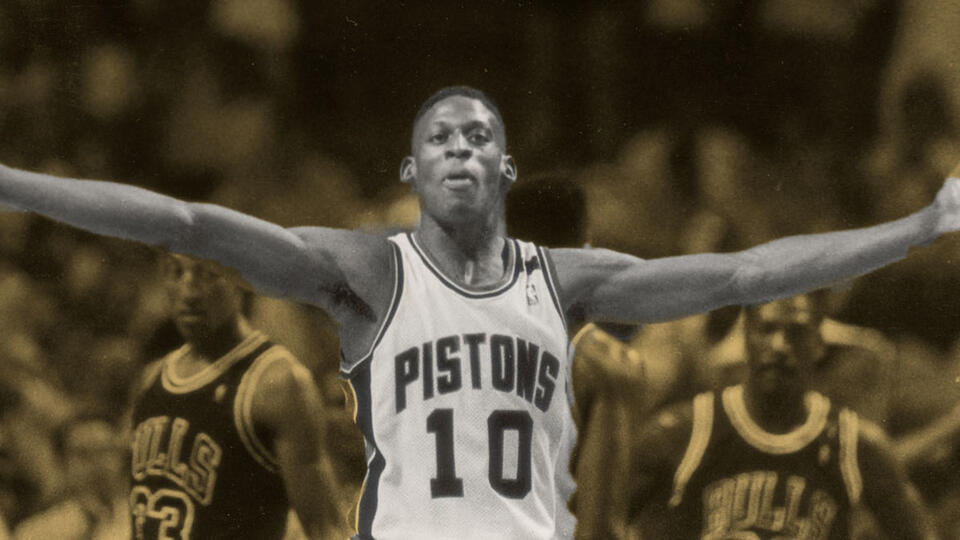
Dennis Rodman‘s rough exterior and bad-boy image belied a deeply troubled man inside.
Rodman claimed he never felt the love of a parent, since neither his mom nor his dad was there during his formative years. That absence left him carrying wounds he could never quite shake. When Rodman felt abandoned because of basketball-related circumstances in 1993, the only solution he could think of was to end his life.
“I wanted to be loved by somebody or someone because I was never loved by my mother or father because they were never there,” Rodman opened up in a 2019 Bleacher Report interview with Sean Highkin. “So when I got to Detroit, they embraced me as one. And then when things started to disassemble [after the Pistons’ Bad Boys run], I started to feel betrayed. I said, ‘What the f—k’s going on?'”
“I was so enamored of the way that they loved me and being embraced by the people in Detroit. So once a lot of the people that loved me were gone, and [former Pistons coach] Chuck Daly was gone, I was all by myself. I had nobody to turn to,” added the two-time Defensive Player of the Year.
Pearl Jam saved Rodman’s life
According to Rodman, the time came when he was almost ready to take his own life at the parking lot of The Palace of Auburn Hills, then serving as the Detroit Pistons‘ home arena. He had already written a note and selected a firearm in his gun rack.
However, for no particular reason, Rodman turned the radio on to listen to music while he was debating with himself whether to pull the trigger.
“This song came on. It was Pearl Jam. ‘Even Flow’ and ‘Black’ and stuff like that. And I had the gun in my lap, and next thing you know, I fell asleep listening to Pearl Jam. Then I woke up, and all the cops and everyone was there. I didn’t know what was going on. I totally forgot I had a gun in my hand. They got me out of the car. That was pretty much what it was,” the Hall of Famer recalled.
Rodman admitted the betrayal he felt was too much and drove him straight to that suicidal point in his life. He said he did not understand the business side of the league — why a franchise would suddenly dismantle the core of a team that had grown close over the years.
For someone who valued loyalty above all, the sudden breakup of that brotherhood felt like abandonment all over again.
Rodman wished help were available
Talking about your feelings and mental health was taboo back then. Rodman also never had a mature figure in his life who could talk some sense into him. More importantly, there was no form of help available through concerned organizations or government agencies.
“Back then, we didn’t have those things. You didn’t have people you could call right away. We didn’t have the Suicide Hotline. Those things weren’t open like it is today. Back then, you shoot yourself and you’re just a number,” the legendary forward stated.
Because of what happened to him, Rodman felt he had opened the door to such important talk and allowed fans to realize that NBA players are humans, too.
Rodman was fortunate that he burned himself out with his internal debate. It is possible that the lengthy, distressing episode of introspection physically drained him, and that his body decided sleep was the only escape from it.
Additionally, it seems that Dennis created the flamboyant persona fans saw in San Antonio and Chicago to combat the struggles he couldn’t express.
Whatever the case, the human mind is too complex to fit neatly into the labels of “tough” or “weak.” Rodman’s heartbreaking story illustrates that even the most famous individuals can become lost in their own emotions as they fight their silent battles.